
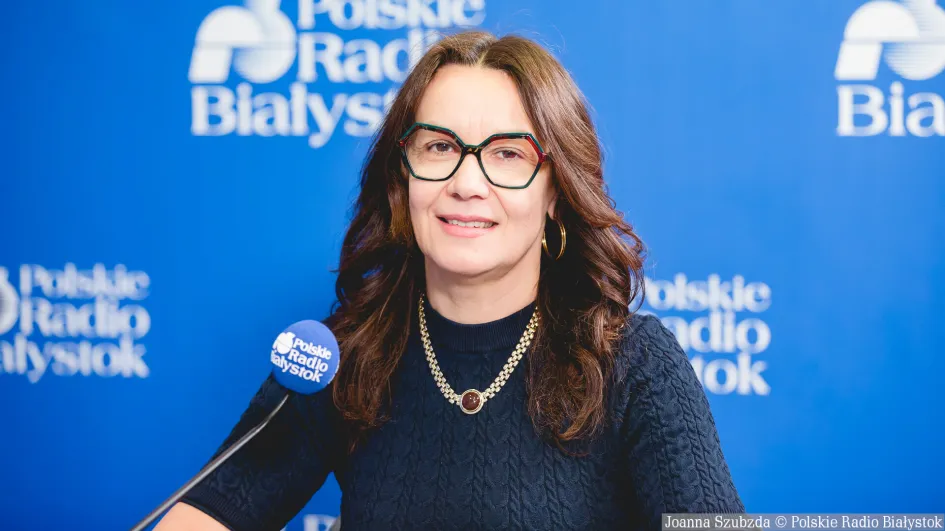
Milk purchase prices are declining across all countries of the European Union. The main reason is overproduction, which exceeds the pace of consumption growth. This was stated by Agnieszka Maliszewska, President of the Polish Chamber of Milk. According to her, producers, including those in the Podlaskie region, face at least several extremely difficult months ahead. The situation is further complicated by the planned EU agreement with the Mercosur countries and increased Chinese tariffs on Polish dairy products.
Prices Are Falling Across the EU
According to Agnieszka Maliszewska, the decline in farmgate milk prices is observed not only in Poland but across all EU countries. The market is operating according to the classic overproduction scenario, which in recent months has hit farmers particularly hard.
“Over the past several months, we have seen prices falling not only in Poland but across Europe,” she emphasized.
Overproduction Instead of Supply Reduction
As the President of the Polish Chamber of Milk notes, contrary to expert forecasts, milk production volumes in the EU did not decrease but, on the contrary, increased significantly. This was supported by relatively cheap feed and favorable weather conditions.
“The experts were wrong. Everyone started producing a lot of milk — and we have overproduction,” Maliszewska stressed.
At the same time, global consumption is not growing at the same pace, which puts pressure on prices and complicates product sales.
Difficult Months for Producers
For farmers, especially in dairy regions such as Podlaskie, this means a challenging period. Many farms will be forced to suspend or reduce investments.
“Most farmers will likely be forced to slow down their investment plans,” she noted.
According to her estimates, at least half a year of “tightening belts” lies ahead, meaning a real reduction in farmers’ incomes.
Intervention Purchases Will Not Save the Situation
The idea of launching intervention purchases, which is increasingly appearing in public discussions, is not an effective solution in Maliszewska’s view.
EU mechanisms are based on prices from 10–15 years ago, which today do not reflect real production costs.
“Even if this mechanism is activated, it will change nothing,” she stated, adding that it may only increase speculation on the market.
Why Don’t Prices Fall in Stores?
Despite falling farmgate prices, retail prices in stores remain stable and depend mainly on promotions. According to Maliszewska, the biggest beneficiaries of this situation are retail chains.
“In a crisis, retail chains always earn the most. Farmers lose, processors lose, and consumers do not see it in their shopping baskets,” she emphasized.
Mercosur Agreement — A New Blow to the Agri-Food Sector
An additional risk for the European and Polish dairy sector is the planned trade agreement between the EU and the Mercosur countries. According to Maliszewska, the political decision to sign it has effectively already been made, despite farmers’ protests.
Although promises of financial support amounting to €45 billion are being voiced, she considers them rather an attempt to calm farmers.
“It will only be a plaster on the wound,” she noted.
Chinese Tariffs Hit Exports
Another problem is Chinese tariffs on Polish milk and dairy products. Enterprises in the Podlaskie region, which are leaders in exports to China, are suffering the most.
According to Maliszewska, this concerns approximately €400 million in exports, which is of huge importance for the sector and the regional economy.
“This is an extremely serious blow — not only for producers, but for the entire country,” she concluded.
The full interview text and video are available on the Polskie Radio Białystok website.