
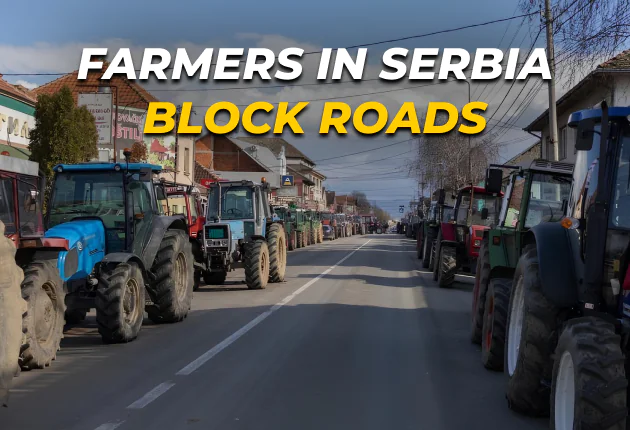
As reported by bne IntelliNews, on February 25 farmers in Serbia blocked dozens of highways and regional roads in an escalation of protests over low farm-gate prices and delayed payments for milk.
The demonstrations have now entered their 14th day. Initially led by dairy producers, the protests have expanded to include grain, vegetable, and fruit growers. According to local media, around 80 major and local roads were targeted for blockades. Tractors remained stationed on the Ibar Highway, a key transport corridor linking Belgrade with Montenegro and Kosovo.
Industry associations stated that protest actions would intensify until four key demands are met, including restrictions on imports of milk, meat, fruits, and vegetables, as well as higher procurement prices for domestic producers. Farmers have also announced a suspension of dialogue with Agriculture Minister Dragan Glamocic.
The Ministry has introduced additional levies on imports of milk powder while simultaneously lifting duties on piglet imports. In addition, consultations with the European Commission are planned regarding potential measures affecting imports of certain dairy products.
Analysts note that a full import ban would be complicated by Serbia’s trade commitments with the European Union. Temporary quotas or short-term tariffs may serve as possible tools to stabilize the market. In the longer term, sector stability will depend on improving competitiveness, product quality, and access to financial support.
Source: bne IntelliNews