

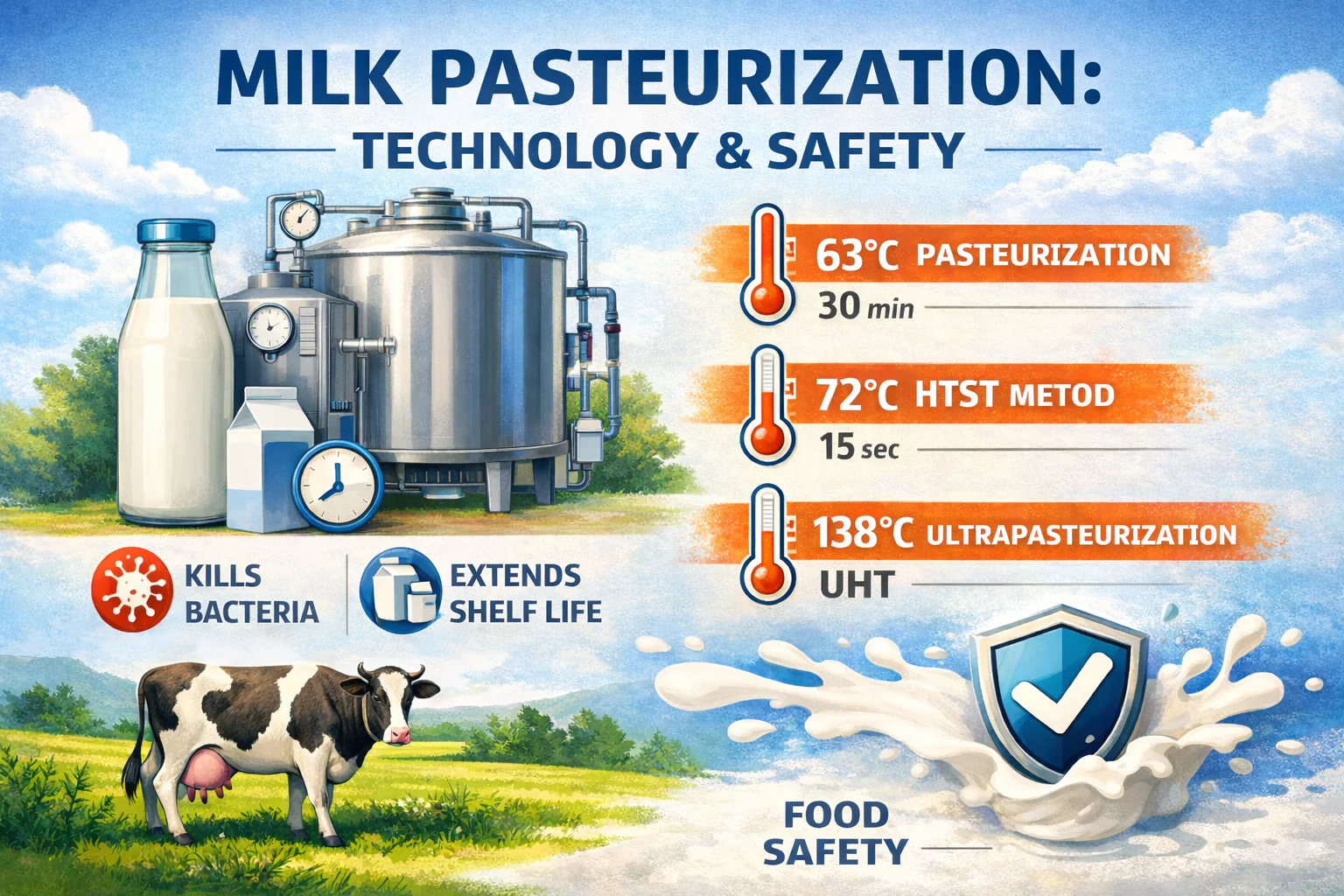
According to AgDaily, pasteurization remains one of the most important technologies in the dairy industry, ensuring product safety and extending shelf life.
Pasteurization involves heating milk to a specific temperature for a defined period in order to destroy pathogenic microorganisms that may cause foodborne illness or product spoilage. While most bacteria naturally present in milk are harmless under proper production conditions, even minor contamination during milking or transportation can pose risks to consumers.
Historical Background
The widespread adoption of pasteurization began in the early 20th century following the introduction of the Standard Milk Ordinance in 1924.
In 1938, about 25% of all food and waterborne disease outbreaks were linked to milk consumption. Today, that figure has fallen to less than 1%.
Main Pasteurization Methods
Several pasteurization technologies are used in the dairy industry:
- Vat Pasteurization — milk is heated to 63°C for at least 30 minutes.
This traditional method is still widely used in cheese production and fermented dairy products. - HTST (High Temperature Short Time) — the most common industrial process, heating milk to about 72°C for at least 15 seconds, followed by rapid cooling.
- HHST (Higher Heat Shorter Time) — uses higher temperatures for even shorter exposure periods to achieve microbial reduction.
- Ultra-pasteurization — milk is heated to roughly 138°C for several seconds, significantly extending shelf life.
- UHT (Ultra High Temperature) — combines ultra-high heat treatment with aseptic packaging, allowing milk to be stored at room temperature until the package is opened.
Despite ongoing debates about raw milk consumption, pasteurization remains one of the most significant advances in food safety. Although heating can lead to minor losses of certain nutrients, these reductions are minimal compared with the safety benefits and the prevention of foodborne disease.
Source: AgDaily