
According to Deutsche Molkerei Zeitung, Germany’s food industry recorded a modest recovery in 2025 after several years of decline. Preliminary data from the Bundesvereinigung der Deutschen Ernährungsindustrie (BVE) show that the sector’s real turnover increased by 0.2%, while nominal revenues grew by 3.9%.
Industry Turnover Exceeds €240 Billion
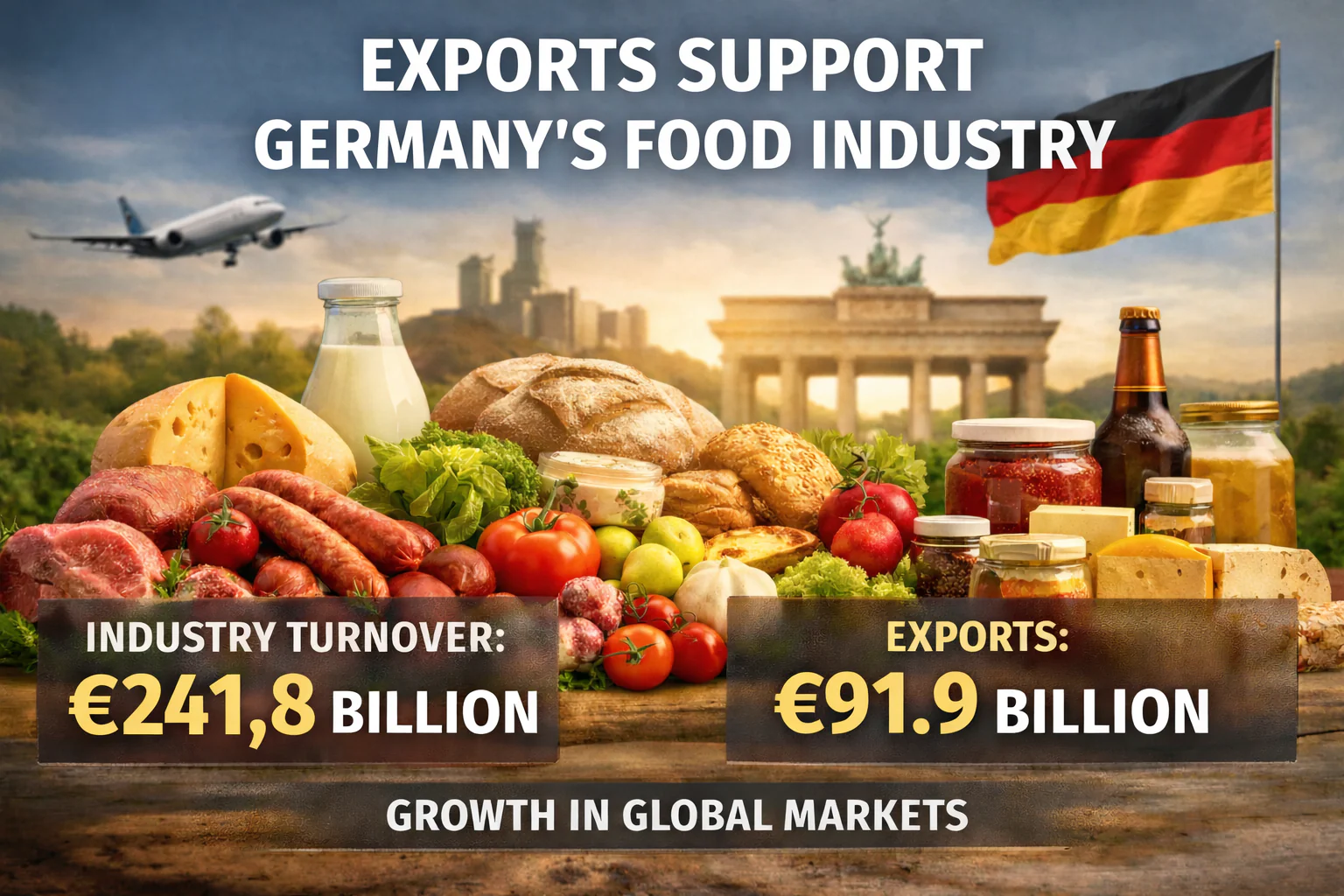
In 2025, the total turnover of Germany’s food industry reached approximately €241.8 billion.
- €149.9 billion (62%) was generated on the domestic market.
- €91.9 billion came from exports.
The food industry remains the third-largest industrial sector in Germany. In terms of both turnover and employment, it is also the largest food industry sector within the European Union.
Exports Drive Growth
The main driver of positive performance in 2025 was export growth. According to BVE data, external shipments increased by 9% in nominal terms and by 3.9% in real terms after adjusting for inflation.
In contrast, the domestic market remained weak. While domestic sales increased by 1% in nominal terms, they declined by 1.9% in real terms, reflecting reduced purchasing power.
Growth in Companies and Employment
In 2025, the number of food industry companies in Germany increased by 1.8%, reaching 6,082 enterprises.
Employment in the sector also expanded, rising 2.3% to around 659,600 workers.
Declining Investment
Despite the increase in turnover, the sector faces structural challenges. According to BVE, production capital and investment in the food industry have been declining in recent years, and at a faster pace than in the broader manufacturing sector.
A BVE survey indicates that 81% of companies believe that business conditions in Germany have deteriorated over the past five years.
Companies Criticize Regulatory Conditions
The most problematic factors for manufacturers include:
- complex bureaucratic procedures
- high tax burdens
- elevated energy prices
- rising labor costs
Industry representatives argue that these factors reduce the attractiveness of Germany as an investment destination.
At the same time, companies emphasize that Germany continues to offer strong market potential for food products.
According to Christoph Minhoff, CEO of BVE, the sector’s export success despite trade restrictions and other risks demonstrates the strong global competitiveness of German producers. He noted that the “Food Made in Germany” brand remains an important mark of quality worldwide.
Source: Deutsche Molkerei Zeitung