
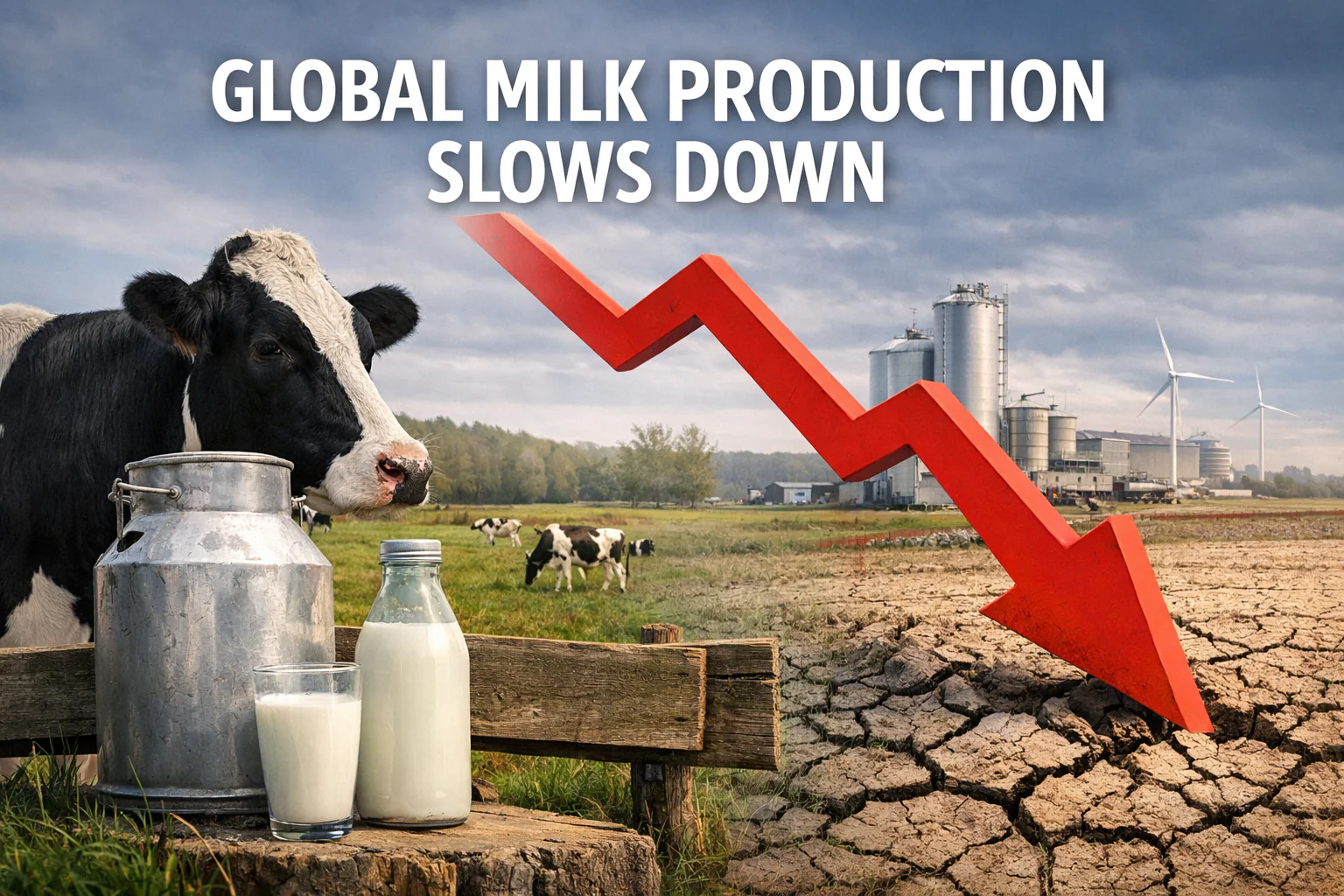
According to Farmers Journal, global milk production is set to slow significantly in 2026. According to Rabobank estimates, global milk volumes will grow by just 0.2% compared to 2025, indicating stagnation in the dairy market.
At the same time, analysts are forecasting a slight decline in production of 0.1% in the first half of 2027, due to rising costs at farm level, particularly for fertilisers.
Milk production under cost pressure
Rabobank notes that profit margins in dairy production are falling, which is holding back the growth in supply.
Furthermore, in the world’s key dairy-producing regions, cow slaughter rates are below average, which can be explained by:
- high livestock prices;
- the limited availability of young cows to replenish the herd.
At the same time, the first signs of a shift in this trend are already emerging in the EU.
Milk prices remain under pressure
Analysts expect that milk purchase prices will remain under pressure in the first half of 2026. This is due to historically high supply levels, which are holding back price rises for dairy products.
The European market is seeing rising prices
Despite the general downward pressure, European markets have seen a rise in dairy product prices this week.
On the Dutch spot market:
- The price of butter has risen to €4,700/t;
- skimmed milk powder (SMP) — up to €2,680/t;
- whole milk powder (WMP) — up to €3,450/t.
SMP showed the strongest growth — +€580/t (22%) since mid-January.
The price of butter rose by €800/t (17%), whilst WMP rose by 15% over the same period.
Geopolitics and demand are supporting the market
The rise in SMP prices is linked, in particular, to the situation in the Middle East. Iran, which is one of the four largest exporters of this product, has effectively halted supplies due to the closure of the Strait of Hormuz, forcing buyers to seek alternative sources.
Additional factors contributing to growth included:
- increased demand for protein in the food industry;
- active procurement of powdered milk by baby food manufacturers;
- seasonal increase in demand ahead of Easter;
- an overall reduction in stocks;
- rising oil prices.