
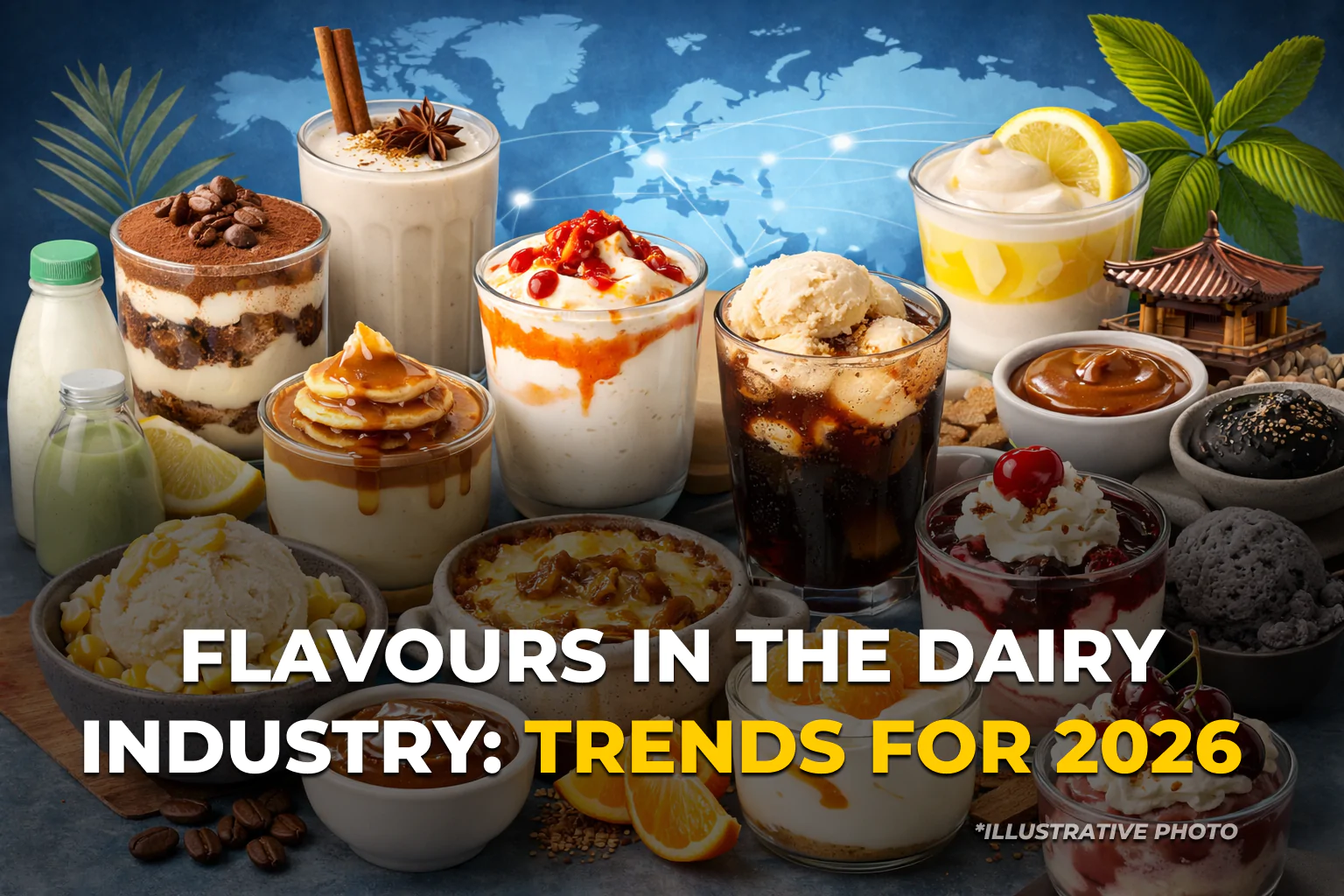
The global dairy industry is actively seeking new flavours capable of boosting sales and attracting consumers, as traditional options such as chocolate and vanilla remain popular but no longer drive growth. According to Dairy Foods, citing the Tastepoint by IFF report, the key drivers in 2026 will be a combination of nostalgia, global influences and flavour experimentation.
10 key flavour trends in dairy products
According to the study, the most promising flavours for dairy products include:
- Tiramisu — the combination of espresso, mascarpone and cocoa creates a balance of bitter, sweet and creamy flavours
- Chai Spice— a blend of black tea, cinnamon, cloves, ginger and cardamom
- Sweet heat (sweet and spicy flavours) — the ‘spicy’ trend is changing perceptions of spiciness
- Pancakes — moving beyond the breakfast category into the all-day dessert segment
- Cola — a return to classic flavour
- Limoncello — intense citrus flavours with a balance of sweetness and bitterness
- Sweet Сorn — a blend of sweet and subtle salty notes
- French Onion Soup — the flavour of caramelised onions, stock and cheese in new formats
- Mandarin — a bright citrus profile
- Cherry — a blend of nostalgia and rich flavour
The report notes that consumers are increasingly opting for flavours that combine familiarity with novelty, and which reflect the influence of global gastronomy.
Current flavour trends in the dairy industry
Market experts note that there remains a demand for complex and ‘premium’ flavours in the dairy sector.
According to Anna Lada, Senior Marketing Specialist at Flavor Producers (a Glanbia company), the following remain popular:
- brown butter
- pistachio
- caramel variations
- layered chocolate (dark cocoa, cocoa beans, textural combinations)
She emphasises that culinary techniques—such as frying, smoking and light toasting—add new nuances to familiar flavours.
Sidney Byrne, Marketing Manager at Sensient Flavours & Extracts, notes that the ice cream and coffee cream segments are dominated by flavours inspired by baked goods:
- doughnuts
- muffins
- strudels
- biscuits, brownies, cakes
The use of warming spices is also growing rapidly:
- cinnamon
- nutmeg
- chai
- caramelised and roasted flavours
Global influences on dairy flavours
International culinary trends are playing an increasingly significant role in the dairy industry.
According to the IFF report, the market is influenced by:
- European café culture
- Asian spices
- Mediterranean citrus profiles
- Latin American street food
Among the ingredients gaining popularity are:
- yuzu
- dulce de leche
- black sesame
There is also growing interest in fermented dairy products from various regions:
- Kefir (Eastern Europe)
- Skyr(Nordic countries)
- Lassi (India)
- Ayran (Middle East)
- Labneh (Levant)
- Filmjölk (Sweden)
Functionality and flavour in dairy products
Today’s consumers expect dairy products to combine taste with health benefits.
According to experts:
- Protein remains a key driver of innovation
- Dessert flavours (chocolate brownie, cinnamon bun or peanut butter) work well in high-protein products
- Flavour-enhancing technologies are becoming crucial when adding functional ingredients
Companies are also developing products that strike a balance:
- high protein content
- reduced sugar content
- appealing flavour profile
The future of flavours in the dairy industry
Experts predict that the development of the dairy sector will be driven by a combination of three factors:
- flavour
- functionality
- consumption format
Promising areas include:
- tropical and Asian fruits (mango, guava, yuzu)
- culinary and botanical notes (honey, pistachio, spices, floral notes)
- new formats: drinkable yoghurts, protein drinks, on-the-go snacks
Ice cream is expected to remain the main arena for flavour experimentation, whilst high-protein yoghurts and cheese products are set to become the new drivers of innovation in the dairy sector.
Source: Dairy Foods