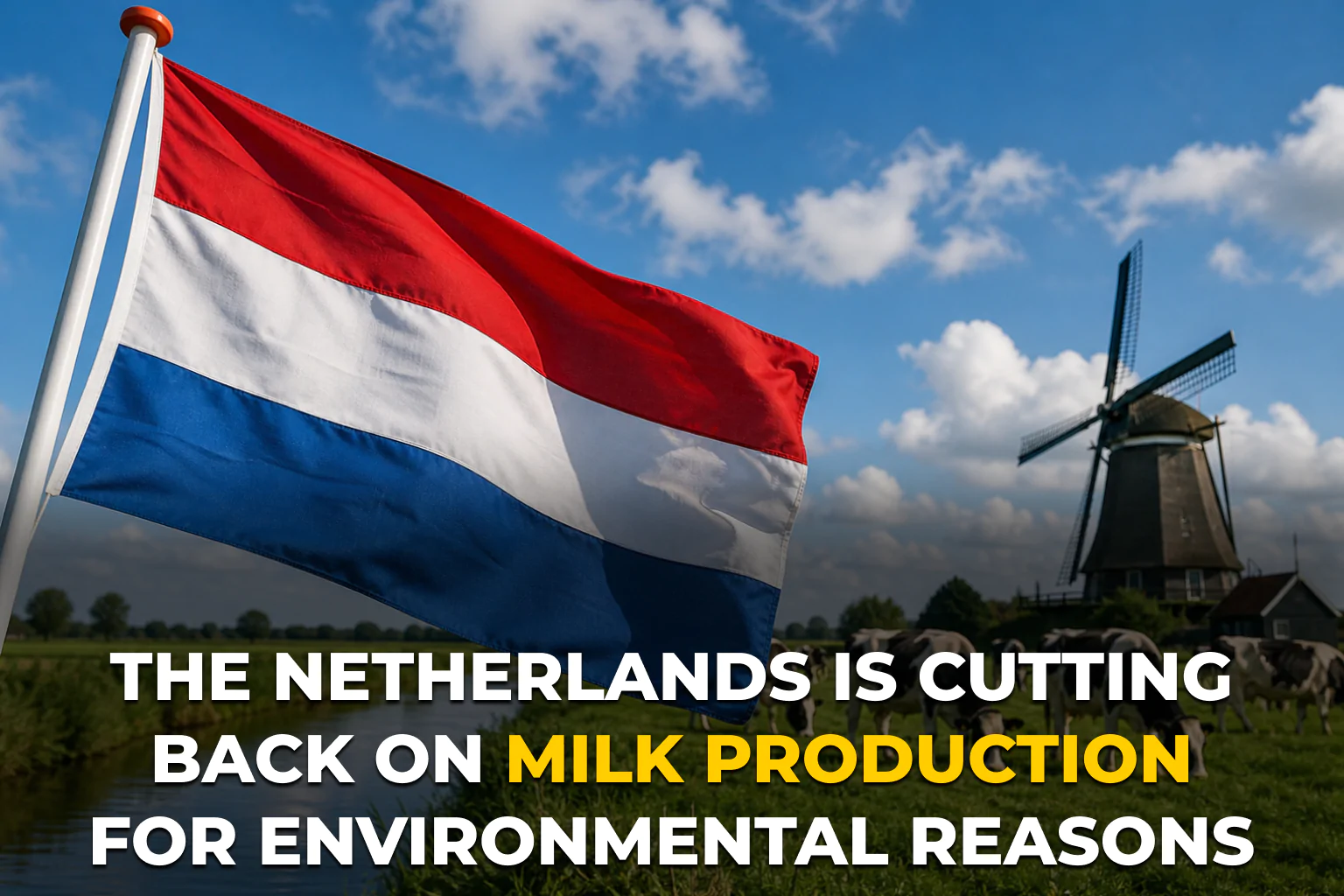
A new government support scheme in the Netherlands could shift the balance of the EU dairy market. According to ADHB, the reduction in the cow herd as part of environmental measures will affect milk production volumes in the long term.
Support programmes and herd reduction schemes
The European Commission has approved a €615.7 million Dutch government programme aimed at reducing emissions in the dairy sector. Farmers producing milk in 2025 may receive direct grants covering up to 100% of costs, provided they reduce their herd size. The programme is set to run for five years.
This scheme complements another support programme worth €700 million, which provides compensation for the voluntary closure of livestock farms and will remain in place until 1 October 2029.
According to the European Commission, these measures are designed to reduce greenhouse gas and ammonia emissions, and may also encourage a shift towards less intensive production models. The Commission emphasises that the programme is ‘necessary and appropriate’ for achieving the EU’s climate and environmental objectives.
The Netherlands’ role in milk production
Milk production in the EU has been on the rise since the second half of 2025. According to CLAL, production volumes in December were 5.8% higher than the previous year, in January 2026, they were 5.0% higher, and in February, they were 4.5% higher.
The Netherlands is the third-largest milk producer in the EU and plays a significant role in this growth. In February 2026, the country recorded an increase of 58.2 million litres, or 5%, trailing only Germany and France.
The increase in production, even with the low base of comparison, is placing additional strain on processing capacity.
Potential impact on the dairy market
Despite their environmental focus, the new schemes are effectively reducing milk production. Combined with falling purchase prices and rising costs, this could accelerate the exodus of farmers from the sector.
In the short term, the impact on production volumes will be limited; however, in the coming months, Dutch producers may come under pressure due to falling profitability and the expiry of the nitrate exemptions.
The European Commission emphasises that the programme is proportionate and will have a limited impact on competition and trade between Member States.
In the long term, these initiatives may reinforce the trend towards a shift in milk production from Western to Eastern Europe, where environmental restrictions are less stringent. This may also create additional opportunities for other markets, particularly the UK.
Source: ADHB