
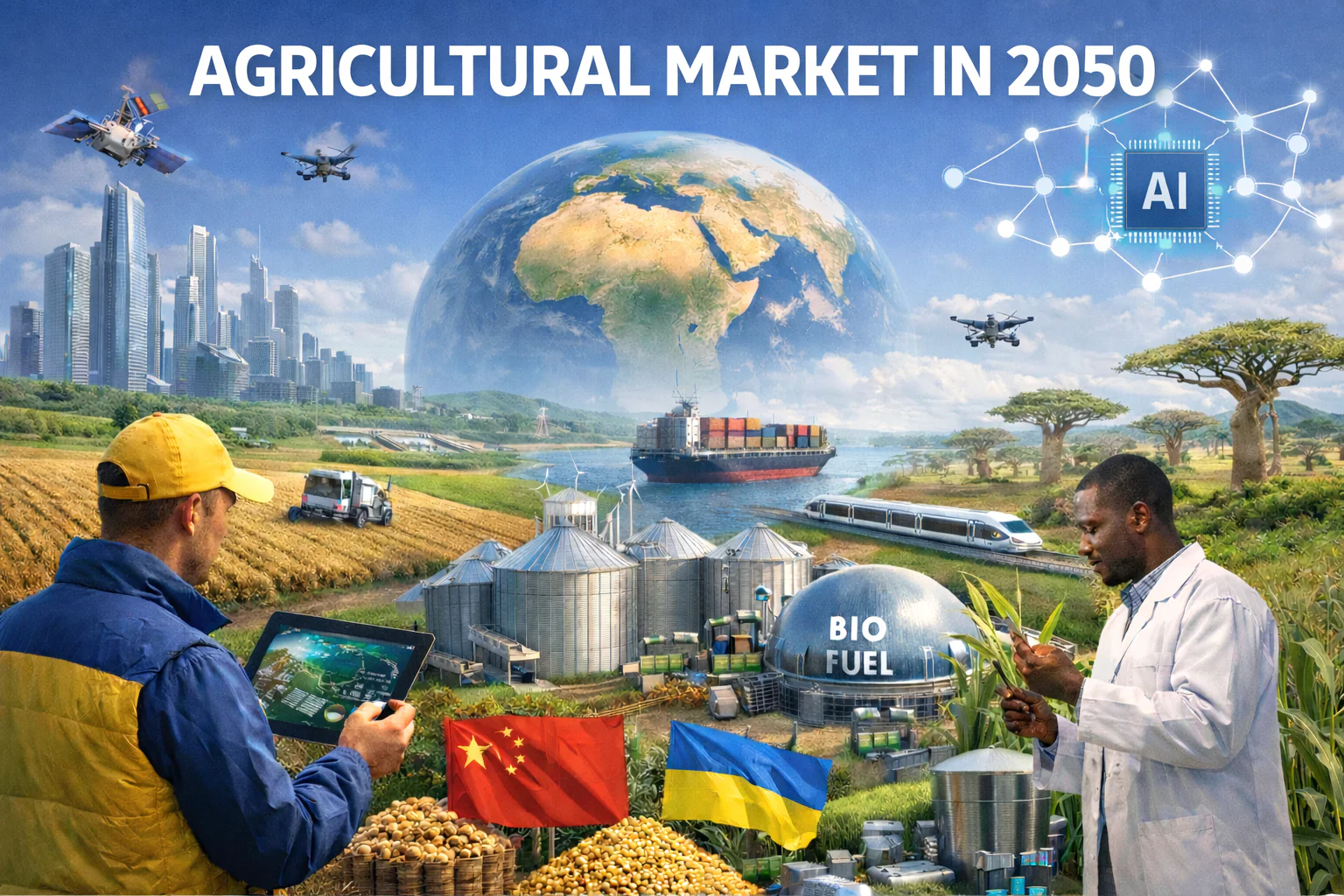
As reported by Latifundist.com, trader and analyst Cesar Soares published a detailed analysis of the evolution of the grain market from 2000 to 2025 and presented a forecast for its development through 2050. Ukrainian experts Yurii Kravchuk and Yurii Ruban supplemented the material with comments on the implications of these changes for Ukraine’s agricultural sector.
What has happened over the past 25 years
Between 2000 and 2025, global exports of grains increased by 88%, while oilseeds exports grew by 210%. The world’s population expanded by 34%, and production of grains and oilseeds rose by 47%. Almost 80% of this growth came from five countries: Russia, Ukraine, the United States, Brazil, and China.
The sector underwent large-scale consolidation. Independent players such as Andre & Cie, Glencore Agriculture, Nidera, Noble, and others disappeared. Market power became concentrated on the supply side — fewer than 25 companies now control more than 75% of global trade and exports of grains and oilseeds through seaports and land corridors.
Forecast to 2050
Population growth will slow. The UN forecasts an increase to 9.7 billion people (+18%, or 0.72% annually, compared with 1.4% annual growth over the past 25 years). Most of the increase will occur in sub-Saharan Africa, which has 300 million hectares of arable land.
Africa will become a key player. The continent will add both demand and supply. Domestic production will grow faster than the construction of export infrastructure.
China will achieve self-sufficiency. The author predicts that China will become a net exporter of corn by 2035 and will fully meet its own soybean needs by 2050 (currently importing more than 100 million tonnes).
Demand for biofuels is uncertain. The transition to electric vehicles could reduce ethanol consumption. Today, the United States channels 129 million tonnes of corn into bioethanol production — nearly one-third of the harvest.
Changing consumer habits. Efforts to combat obesity and a shift toward healthier diets may reduce consumption of simple carbohydrates, especially wheat and corn.
What this means for Ukraine
Ukrainian experts highlight several important aspects:
- The African trend may reduce demand for Ukrainian products but open opportunities for agronomists and consultants in African projects.
- The Chinese factor is critical for Ukraine, which supplied significant volumes of corn and barley to China during periods of high prices (USD 300 CRT). Diversification of export markets is required.
- Bioethanol plants are an emerging trend, with a number of Ukrainian enterprises already investing in this area.
Market transformation
Soares forecasts a fundamental shift: power will move from the supply side to the demand side. New global buyer “champions” will emerge, while major ABCD traders will lose leverage. Technologies such as AI, blockchain, and stablecoins will democratize financing and allow smaller specialized players to return to the market.
Overall volatility will decline, but weather shocks will trigger stronger price spikes in a structurally “short” market.
According to Ukrainian experts, the transformation has already begun — large corporations are cutting costs and mergers are taking place. Despite pessimistic price forecasts, agricultural commodities may become a driver of growth under adverse macroeconomic scenarios.
Source: Latifundist.com