
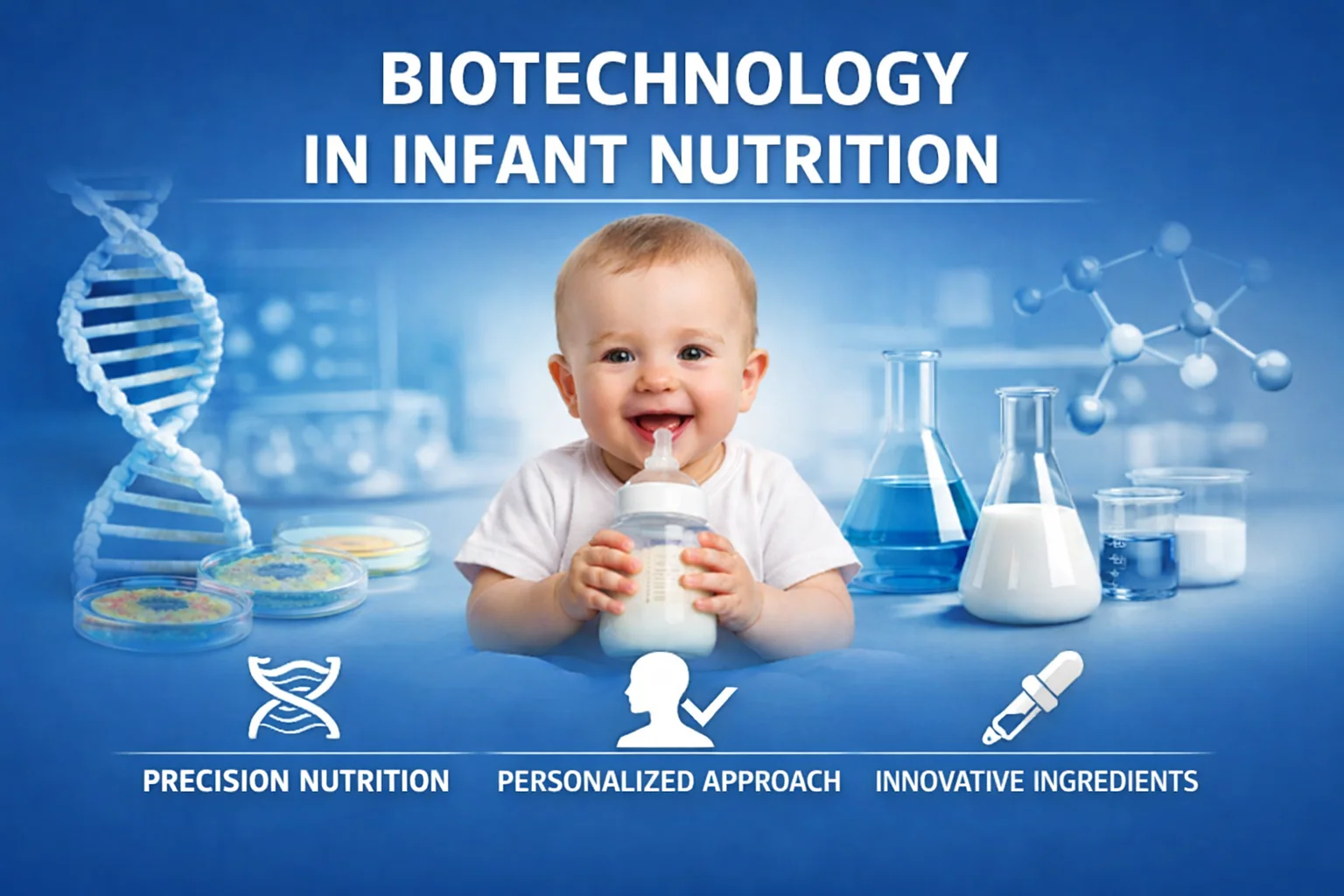
As reported by edairynews, biotechnology is ceasing to be purely a laboratory field and is increasingly shaping the transformation of the food industry. The changes are particularly noticeable in the infant nutrition segment, where the combination of genetics, microbiology, and nutrition science forms the approach known as precision nutrition — accurate, personalized nutrition.
From Personalized Medicine to Precision Nutrition
The essence of the new approach lies in analyzing an individual’s genetic, metabolic, and microbiological profile in order to influence not only symptoms but also the root causes of disorders. In infant nutrition, this means the development of formulas and functional products capable of adapting to individual needs from the first months of life.
Genetics, epigenetics, and microbiome research open opportunities to optimize cognitive, immune, and metabolic development. For the dairy industry, this is of strategic importance, as milk contains highly bioavailable proteins, lipids, and carbohydrates that play a key role in early childhood development.
Functional Proteins: From Standard to Engineering
Biotechnological tools make it possible to move from mass products to ingredients with predefined properties. Caseins, whey proteins, bioactive peptides, and lipid fractions can be selected or modified to perform specific functions — from improving digestibility to supporting immune response.
In the infant formula segment, this means approaching the composition of breast milk and enabling more precise adaptation to different nutritional profiles. For manufacturers, it represents a path toward creating products with high added value and scientific differentiation.
Microbiota and Fermentation
A separate focus is the interaction of nutrients with the gut microbiota. The development of specialized enzymes, probiotics, and prebiotics in combination with dairy matrices opens new opportunities to support health in the early stages of development.
The dairy industry’s traditional competence in fermentation becomes a competitive advantage. Biotechnology does not replace this expertise but expands it, allowing results to be standardized and clinical effects to be confirmed.
Regulatory Requirements and Scientific Evidence
The growing technological complexity is accompanied by stricter regulatory requirements. Infant nutrition remains one of the most tightly regulated market segments; therefore, the implementation of biotechnology requires clinical trials, an evidence base, traceability, and transparent communication.
For dairy companies, this means investing not only in R&D but also in regulatory expertise and partnerships with scientific centers.
Opportunities and Challenges
The new approach opens a number of opportunities:
- development of high value-added ingredients;
- expansion in the infant and clinical nutrition segments;
- differentiation based on evidence-based science.
At the same time, there are challenges:
- high costs of innovation and scaling;
- competition from non-dairy biotechnological solutions;
- public debate regarding the technological nature and “naturalness” of products.
Strategic Transformation
Biotechnology in infant nutrition is not a short-term trend but a structural shift in approaches to product creation and value formation. For the dairy industry, this is an opportunity to transform traditional raw materials into a platform for high-precision nutrition.
In an environment where personalization and scientific evidence are becoming the standard, dairy products can take a position as technologically advanced nutritional solutions. Biotechnology does not displace the industry — it drives its evolution and opens new horizons for growth.
Source: edairynews