
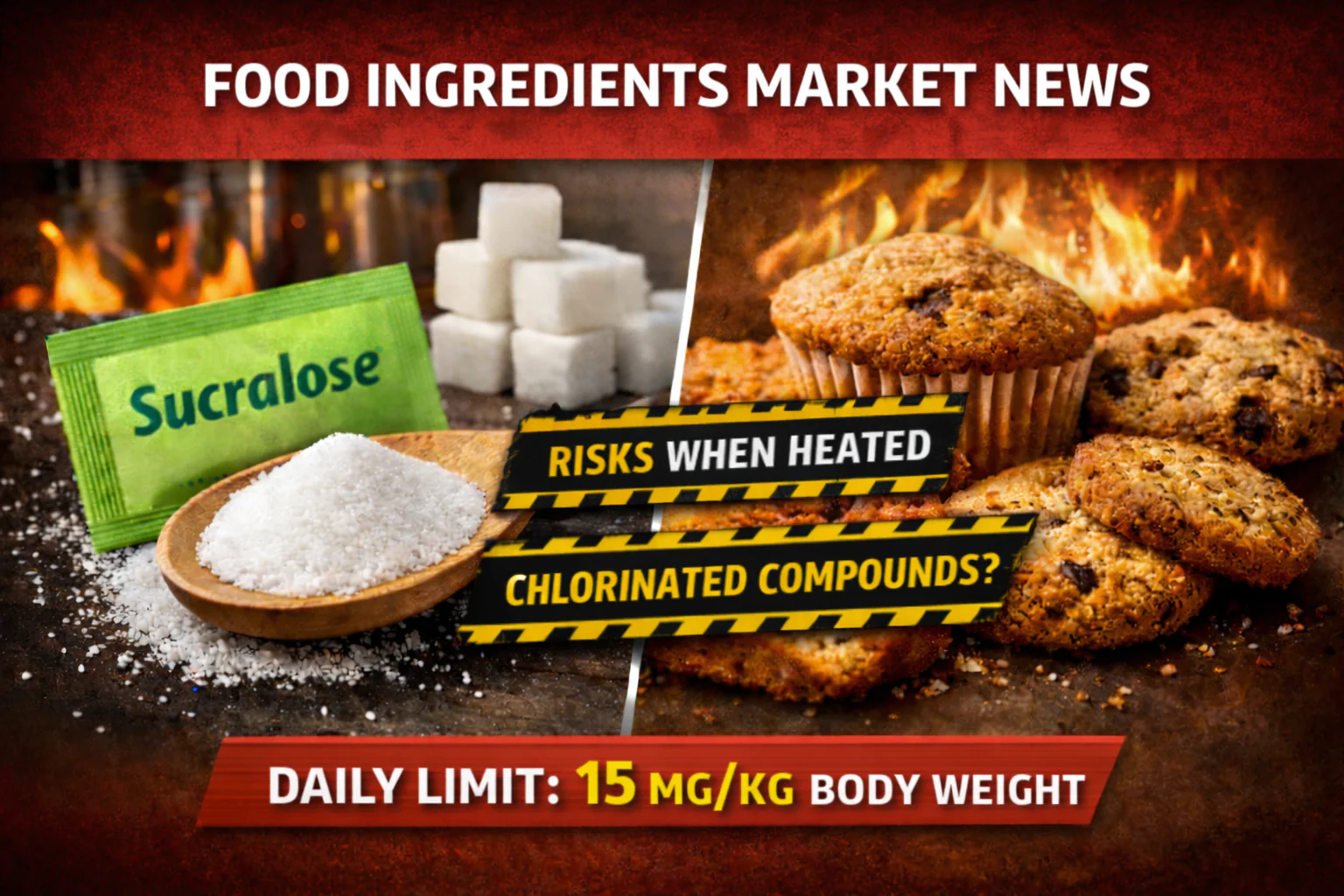
As reported by Food Ingredients 1, the European Food Safety Authority (EFSA) has been unable to confirm the safety of sucralose (E 955) for new applications involving prolonged exposure to high temperatures.
At the same time, EFSA experts emphasized that within its currently authorized uses, sucralose remains safe for consumers. Following a comprehensive review of scientific data, the acceptable daily intake (ADI) has been maintained at 15 mg/kg of body weight, and actual intake levels in the EU do not exceed this threshold.
Why Have Concerns Arisen?
EFSA refers to recent studies indicating that prolonged heating of sucralose may lead to the release of chlorine and the formation of chlorinated compounds. Their potential impact on human health has not yet been conclusively determined.
For this reason, the regulator was unable to confirm the safety of extending E 955 use to new categories of fine bakery products that involve intensive thermal processing. The issue also applies to home cooking, as the formation of chlorinated compounds during frying or baking at high temperatures cannot be completely ruled out.
EFSA has recommended that the European Commission further examine this matter. The assessment is expected to be discussed with EU Member States.
Sucralose — The Most Widely Used Sweetener
Sucralose is approximately 600 times sweeter than sugar and is widely used in sugar-free and low-calorie beverages, desserts, confectionery products, and jams.
According to Innova Market Insights, during the period from July 2024 to June 2025, sucralose was the most commonly used sweetener in new product launches (30%), ahead of glycerol (23%) and stevia (16%). Europe accounted for the largest share of launches (34%), followed by Asia (29%).
Demand for Sugar Reduction Is Growing
According to the Innova Health & Nutrition Survey 2025, 72% of consumers worldwide are actively reducing their sugar intake. Over the past five years, global product launches featuring sweeteners have recorded an average annual growth rate of 8%.
Following the publication of EFSA’s assessment, the international industry association Calorie Control Council stated that sucralose remains safe within its approved uses and has undergone one of the most rigorous scientific reviews in the past two decades.
At the same time, ingredient manufacturers are increasingly shifting from single-sweetener formulations to blended systems, combining rare sugars, stevia, citrus flavonoids, and protein-based sweeteners to improve taste and texture.
Source: Food Ingredients 1