
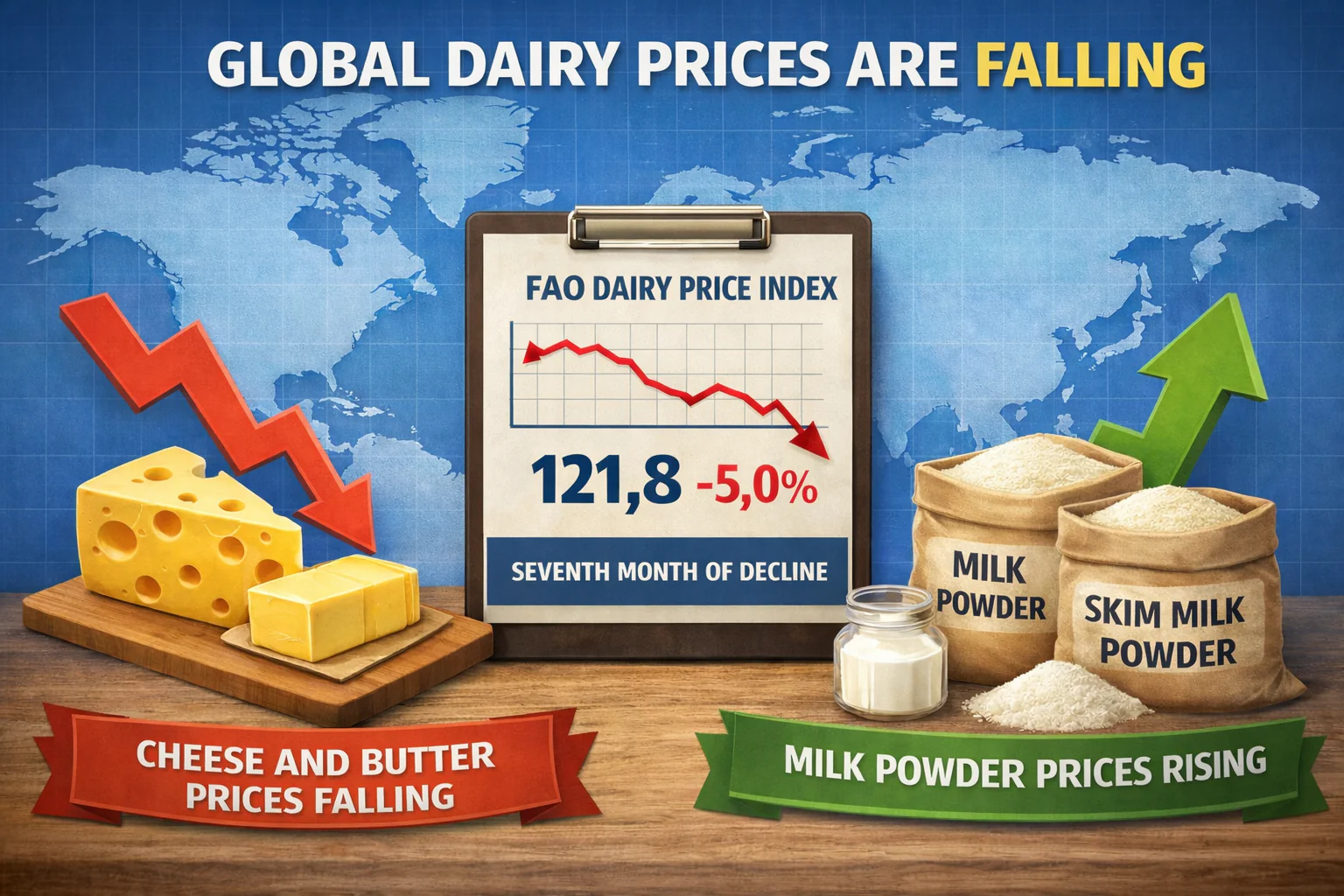
According to FAO data, the FAO Dairy Price Index averaged 121.8 points in January, down 5.0% (–6.4 points) from December and 14.9% below its level in January last year. This marks the seventh consecutive monthly decline of the index.
The key driver of the decrease was lower global prices for cheese and butter, which more than offset modest increases in quotations for milk powders. Cheese prices fell the most in January amid intensified global competition and large supplies in Europe and the United States. Although prices in New Zealand remained relatively resilient, this was insufficient to reverse the overall trend.
Butter prices also continued to decline. The market was pressured by seasonal increases in the availability of milk fat, accumulated stocks in Europe, and sufficient export volumes from other key producing regions.
At the same time, prices for milk powders edged higher. Skim milk powder recorded the most notable increase, linked to a recovery in price-sensitive import demand after several months of decline – primarily from the Middle East, North Africa, and certain Asian markets. Prices for whole milk powder rose only slightly, as demand remains below historical averages, limiting the potential for recovery.
Overall, FAO data indicate that downward pressure on the global dairy market persists, especially in the cheese and butter segments, while powder products are showing early signs of demand stabilization.
Source: FAO.org