
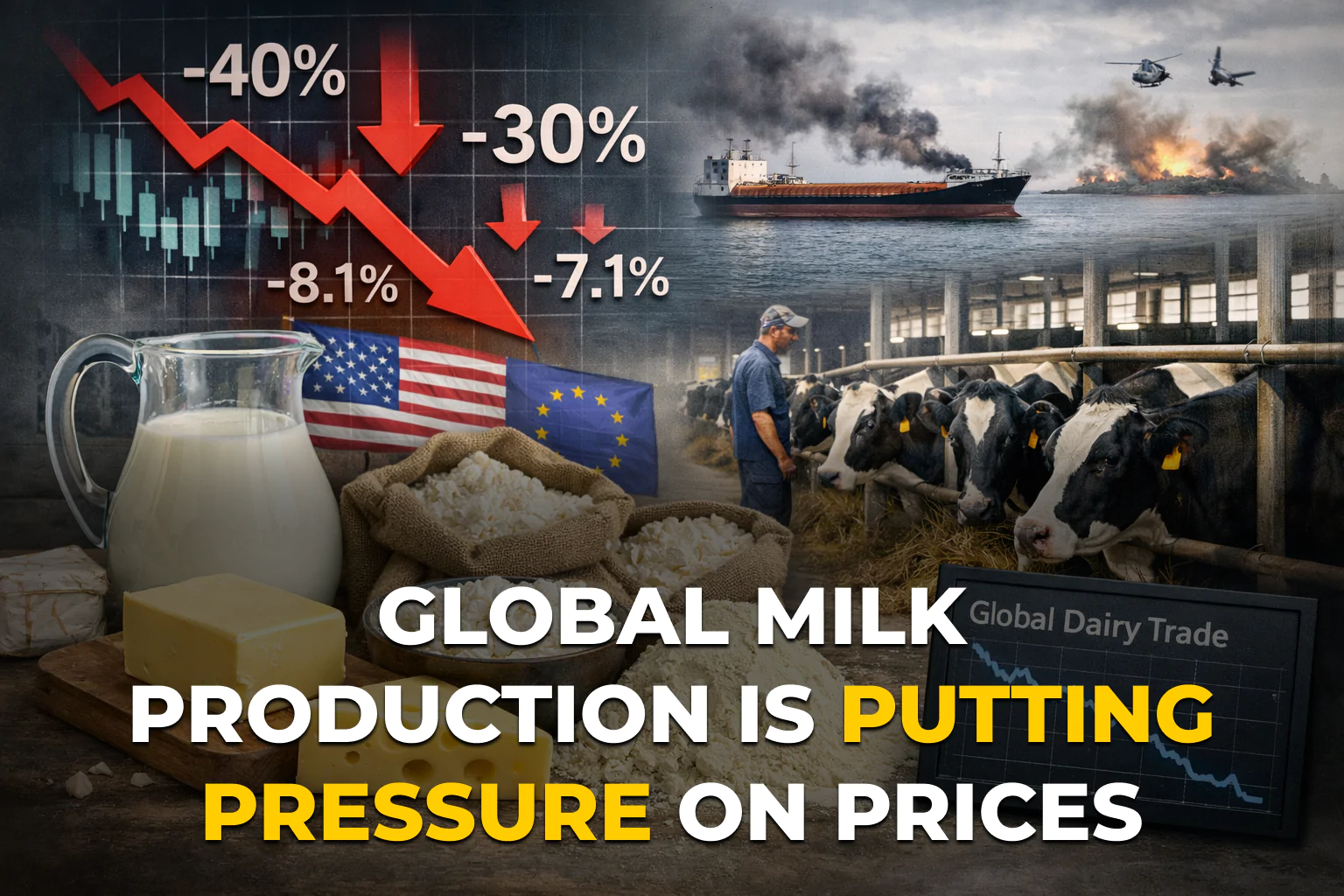
Global milk production in 2026 remains at a high level, which continues to put pressure on prices in the dairy sector, as noted by Dairy Reporter. High supply volumes and geopolitical factors, particularly the situation in the Middle East, are having a negative impact on milk producers’ margins.
Prices for dairy products are falling
Between September and February, the sharpest declines were recorded in the following sectors:
- fats (–40%)
- whole milk powder (–30%)
Protein products—such as skimmed milk powder, cottage cheese and whey—remain more resilient, although they too have fallen by around 15%.
After six months of growth, the Global Dairy Trade index has also turned negative. The biggest falls were seen in:
- butter — down 8.1%
- anhydrous milk fat — down 7.1%
Milk production remains high
In the first quarter of 2026, most major milk exporters increased their milk production.
The US remains one of the main drivers of growth:
- +3% year-on-year in February
- forecast: +2% for the year
- The herd has exceeded 200,000 cows — the highest figure since the 1990s
In Europe, volumes have also reached high levels:
- +6% in December
- around +5% in January
- down by 2% in February
This growth was driven by affordable feed and low costs. However, production is expected to fall by 0.9% in the second half of the year.
Other regions are also showing growth:
- New Zealand — +2%
- Brazil — +1%
- Argentina — +2%
Australia remains the only major exporter to have seen a decline (–1.2%) due to weather conditions and high culling rates.
Demand for protein is buoying the market
Despite the general downward pressure on prices, demand for protein products remains more stable. In particular, Australia has significantly increased its imports of whey—by 76%—due to high demand for protein products.
Geopolitics is affecting the dairy industry
The conflict in the Middle East poses additional risks to dairy production, particularly due to its impact on the fertiliser market.
Around a third of global fertiliser trade passes through the Strait of Hormuz, where shipping restrictions remain in place. This could affect the availability of supplies for dairy farmers in the second half of the year.
Industry bodies are already calling on governments to be prepared to intervene should the situation deteriorate.
Milk production forecast
Overall, global milk production is forecast to fall by 0.2% year-on-year, which is significantly lower than the 2.6% growth recorded in 2025.
Source: Dairy Reporter