
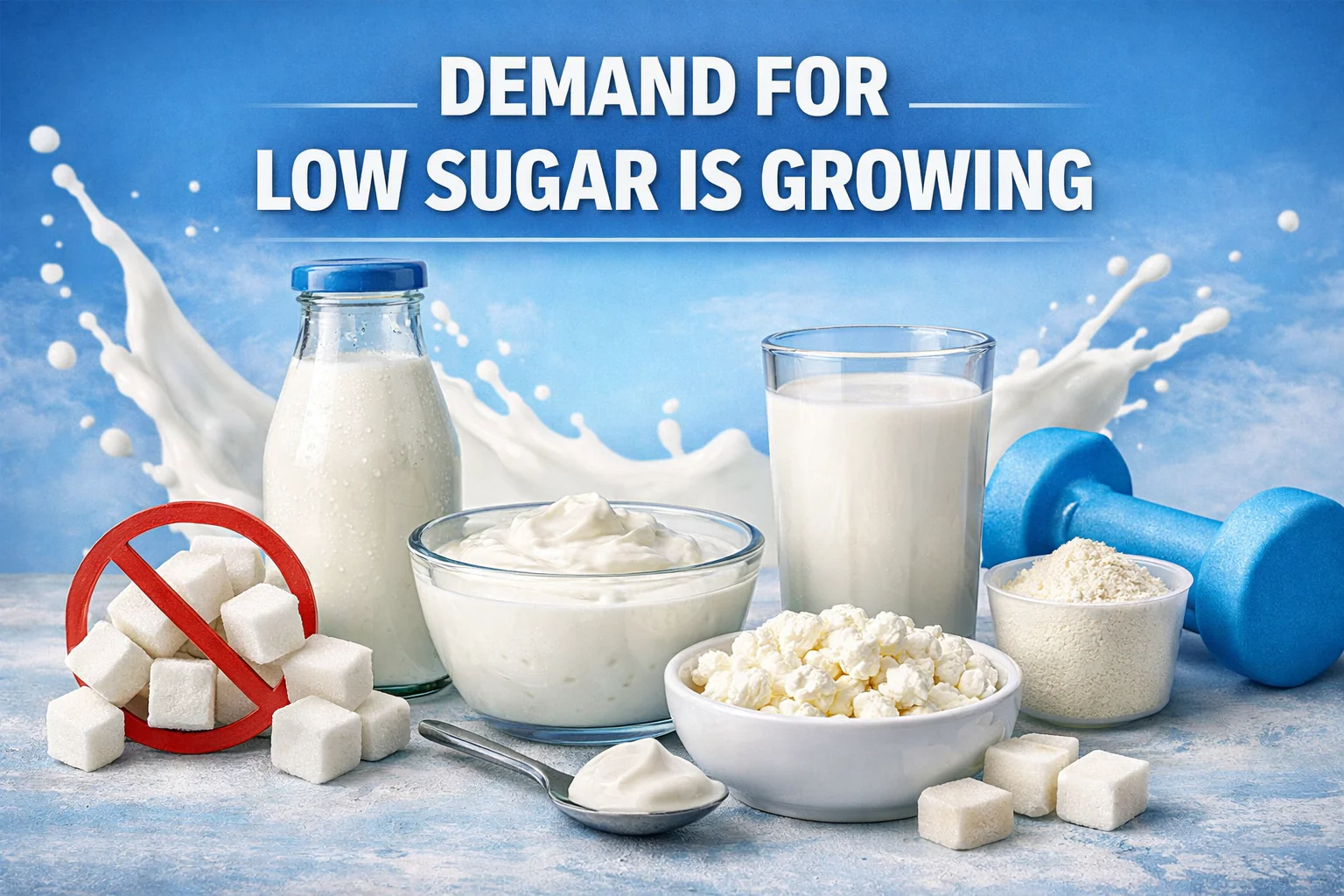
Demand for low-sugar, high-protein dairy products is rapidly increasing, shaping a new development trajectory for the dairy market. According to Dairy Foods, modern consumers are increasingly choosing products without added sugar, creating significant opportunities for the dairy industry and milk producers.
Shift Toward Lower Sugar Intake
New Dietary Guidelines for Americans 2025–2030 emphasize reducing added sugar consumption while increasing protein intake. In particular, consumers are advised to limit added sugar to no more than 10 grams per eating occasion and to prioritize dairy products without added sugar.
According to Cargill, around 40% of consumers actively avoid sugar, while more than one-third carefully read product labels to monitor sugar content. At the same time, trust in artificial sweeteners is declining, prompting manufacturers to reformulate products.
Dairy Gains a Competitive Advantage
Dairy products have a natural advantage in the sugar-reduction trend, as they typically contain minimal added sugars while providing protein, fats, and calcium.
“Dairy products naturally contain minimal added sugar, creating strong opportunities for reformulation without compromising taste and texture,” notes Malcolm Greenberg, chief sweetener specialist at Adallen Nutrition.
Fermented products such as yogurt and kefir further reduce natural sugar levels through fermentation. Meanwhile, full-fat dairy products—such as yogurt, ice cream, and cream—help maintain creaminess and flavor even with reduced sugar levels.
“Reducing added sugar while increasing protein creates significant opportunities for full-fat dairy,” emphasizes Stuart Braid, Director of Technical Solutions at ADM.
GLP-1 Trend and New Consumer Segments
The growing use of GLP-1-based weight management drugs is another key demand driver. These consumers prefer products that are:
- high in protein
- low in sugar
- nutritionally dense
According to McKinsey & Company, the share of GLP-1 users in the U.S. could increase from 4% to 9–12% by 2030, further boosting demand for functional dairy products.
Additionally, about 80% of these consumers are willing to pay a premium for products with added health benefits.
Health Benefits of Sugar Reduction
Reducing sugar intake offers several health benefits, including:
- improved blood glucose control
- reduced risk of type 2 diabetes
- better gut health
“Low-sugar diets support gut health, as excess sugar can negatively affect the microbiome,” adds Malcolm Greenberg.
Low-sugar dairy products align well with these trends, especially due to their protein content and potential for fiber enrichment.
Technological Challenges for Manufacturers
Despite strong demand, reducing sugar in dairy products is technologically complex. Sugar affects not only sweetness but also texture, mouthfeel, and overall sensory perception.
“Sugar reduction in dairy requires a holistic formulation approach—it’s not just about replacing one ingredient,” explains Allie Schneider, food technologist at Cargill.
Manufacturers are using multiple strategies, including:
- natural sweeteners (stevia, monk fruit)
- sugar alternatives (erythritol, allulose)
- prebiotic fibers such as inulin to maintain texture and taste
Fastest-Growing Categories
The strongest growth is observed in:
- yogurts
- protein dairy drinks
- lactose-free milk
- low-sugar desserts
“Categories like yogurt and dairy beverages are leading growth in reduced-sugar products, especially with natural sweeteners,” notes Emily Berg, Marketing Manager at Cargill.
In particular, yogurts with natural sweeteners are growing by 28%, while products with artificial sweeteners are losing popularity.
Market Moves Toward “Healthy Taste”
Dairy producers are increasingly combining low sugar with high protein, targeting consumers seeking a balance between health and taste.
“Even traditional dairy brands are actively launching high-protein, reduced- or zero-sugar products,” says Maria Brandt from Kerry Group.
The key challenge remains: delivering low-sugar products that match traditional dairy in taste and texture. This will define the success of innovation in the dairy sector in the coming years.
Source: Dairy Foods