
About the author: Brian Berk is a journalist and editor with over 25 years’ experience. He has served as editor-in-chief of *Music & Sound Retailer* and managing editor of *Convenience Store News*—leading industry publications in their respective sectors. He has worked in the pharmaceutical retail, photography and natural products sectors. He holds a bachelor’s degree from SUNY Cortland and a master’s degree from Quinnipiac University. He lives in Port Washington, New York, USA.
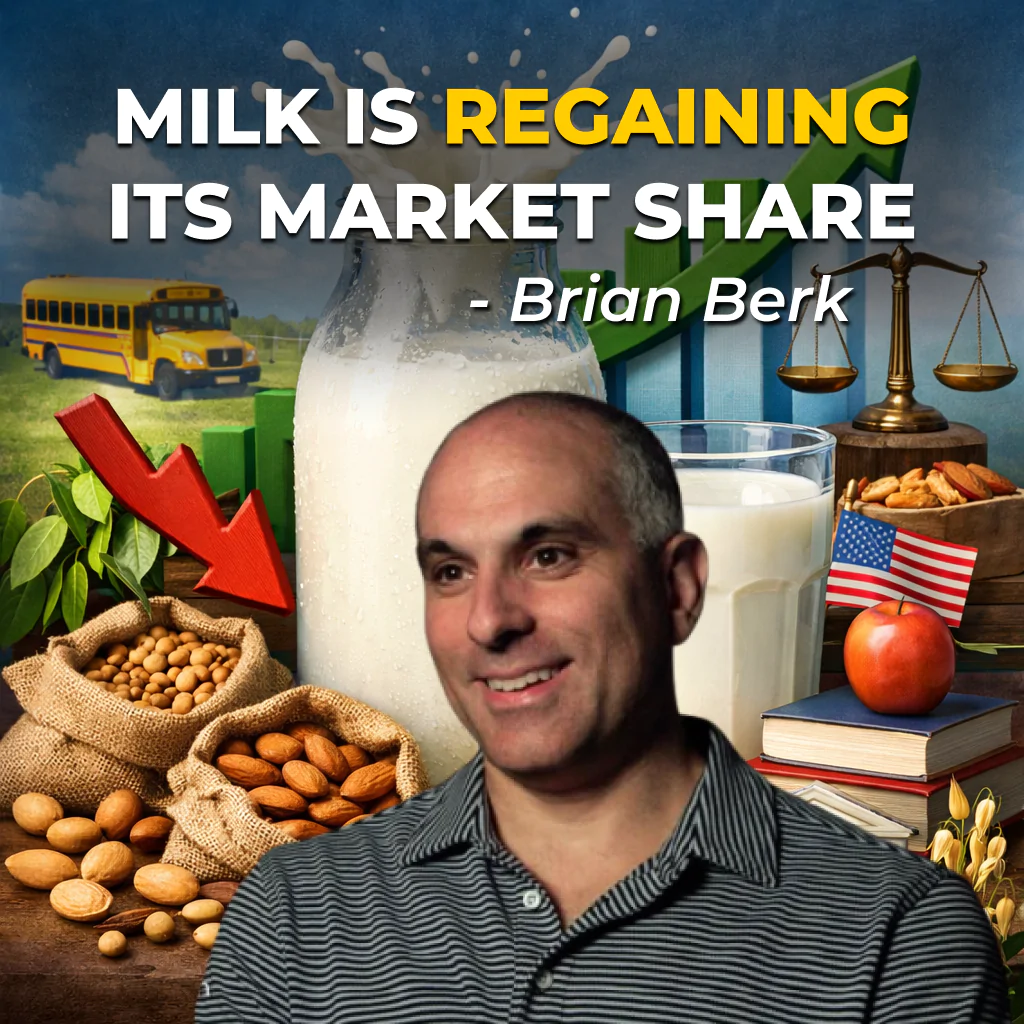
In his editorial for Dairy Foods, Brian Berk analyses the competition between traditional milk and plant-based drinks, emphasising that by 2025 the dairy industry had managed to strengthen its position. The author draws a parallel with a ‘golden victory’, noting that sometimes it takes time and patience to achieve results.
According to data from Circana, sales of liquid milk remained stable in 2025. At the same time, plant-based drinks saw a decline, with volumes falling by 6% year-on-year to 358.4 million gallons.
Milk is gaining market share
According to the National Milk Producers Federation, milk has been increasing its share of the dairy and alternative drinks market for the fourth consecutive year. In 2025, this figure reached 90.7%, compared with 89.4% in 2021.
The industry notes that consumers are gradually returning to traditional milk, choosing it for its combination of nutritional value, affordability and trust in the product. It is also emphasised that milk and plant-based drinks have significant differences in their composition and nutritional characteristics.
Plant-based drinks are reshaping the market
Despite the overall decline, the plant-based drinks segment is not disappearing, but undergoing a transformation. The sharpest decline has been recorded in the following key categories:
- Almond drinks (63% of the market) — down 8.6%
- soya drinks — down 8.3%
At the same time, oat-based drinks saw a 1.8% increase, gradually establishing themselves as the second most popular category after almond-based drinks.
Why milk retains its competitive edge
The author notes that, despite the aggressive marketing campaigns for plant-based drinks in recent years, dairy products remain dominant. This is due to milk’s unique nutritional profile and the more informed choices of consumers, who assess the actual nutritional value of products.
Legislation supports the dairy sector
Government policy could play a significant role in this growth. In the US, the Whole Milk for Healthy Kids Act has been passed, bringing whole milk and 2% milk back into school meals for the first time in over a decade.
The document allows schools to offer a wider range of dairy products, including:
- whole milk
- 2%, 1% and skimmed milk
- lactose-free milk
- flavoured and organic options
It is expected that this could boost milk sales as early as 2026 and widen the gap with plant-based alternatives.
The need for clear regulation
The National Milk Producers Federation also emphasises the importance of adhering to product identity standards. In particular, it proposes to enshrine the definition of milk as a product of animal origin and to restrict the use of dairy terms for alternative beverages.
In conclusion, the author emphasises that both scientific evidence and consumer behaviour are gradually working in milk’s favour. The sector is proving resilient and continues to strengthen its market position.
Source: Dairy Foods