
According to the industry publication Dairy Foods, U.S. milk production in September 2025 increased by 4% year on year, significantly exceeding the forecast (+3.2%). Taking into account higher fat and protein content, component-adjusted production rose by as much as 6.1%.
The key factor was a sharp increase in herd size. The August estimate was revised upward by 21,000 cows. As a result, cow numbers increased by 42,000 head between July and August and by a further 40,000 between August and September. Over the past 15 months, U.S. farmers added 258,000 cows (+2.8%), the fastest pace of expansion since the mid-1980s. Notably, 186,000 of this increase occurred in just the last seven months.
With slaughter volumes remaining stable, such growth is possible only through active introduction of heifers. Estimates suggest that over the past seven months, around 95,000 more heifers entered the herd than a year earlier. About half of the increase came from new cows, while the remainder resulted from keeping animals in the productive herd for longer. The vast majority of the expansion (222,000 head) took place in states with new processing capacity, primarily cheese plants (Texas, Kansas, New York, South Dakota, Minnesota, and Idaho).
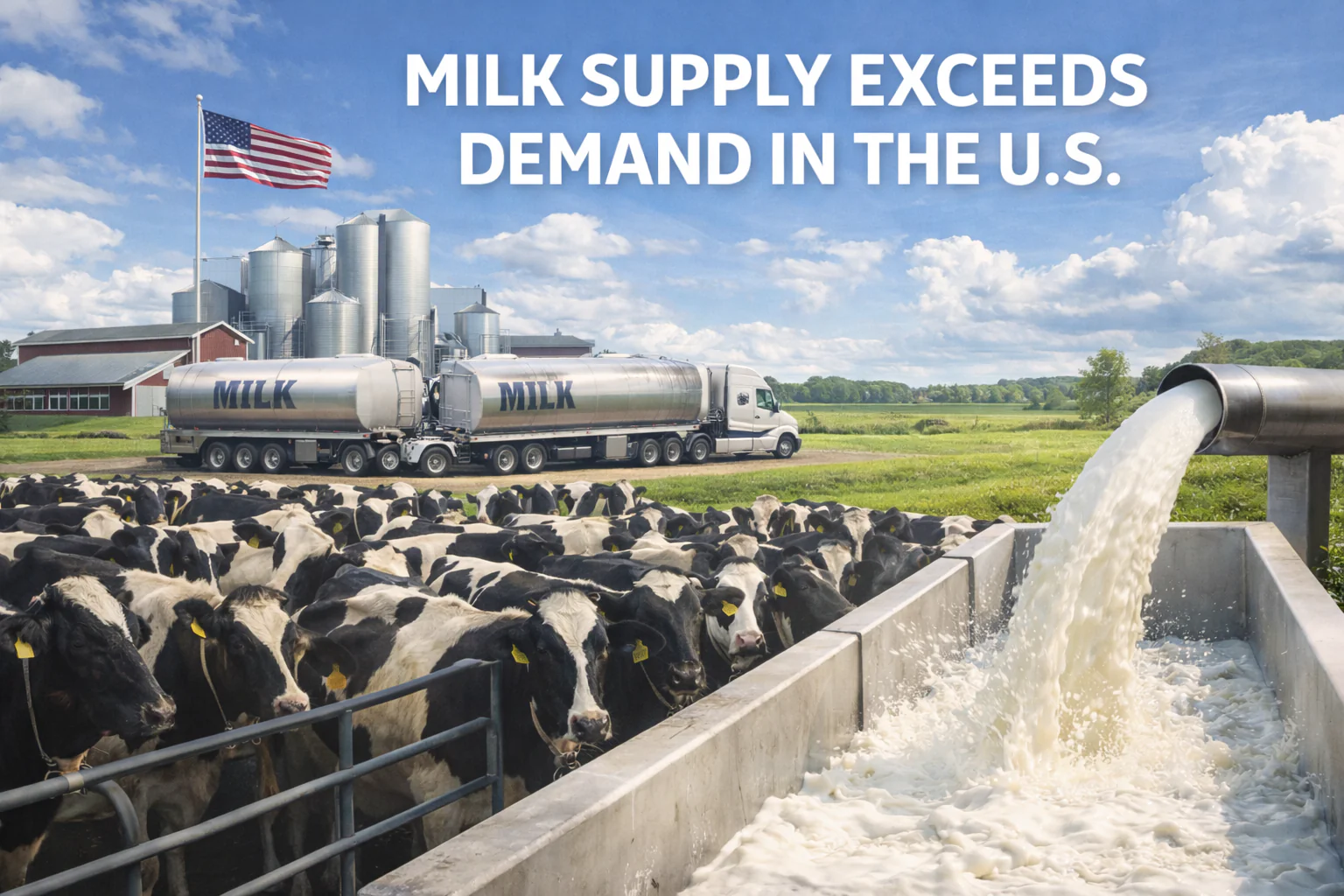
Against this backdrop, milk supply is significantly outpacing demand. With average annual demand growth at around 1.9%, production rose by 6.1% in September, and full-year growth is expected to reach about 4.2%. This creates sustained downward pressure on prices. Although revenues from calf sales and slaughter partially supported farm income, cattle prices have already begun to adjust downward.
Analysts believe that expansion may slow in 2026; however, the launch of new processing facilities will continue to stimulate herd growth. At the same time, USDA data for September are considered preliminary due to the government shutdown and may be revised. Regardless of potential adjustments, the overall trend is clear: supply is growing faster than demand, making lower prices necessary to rebalance the market.
Source: DairyFoods.com