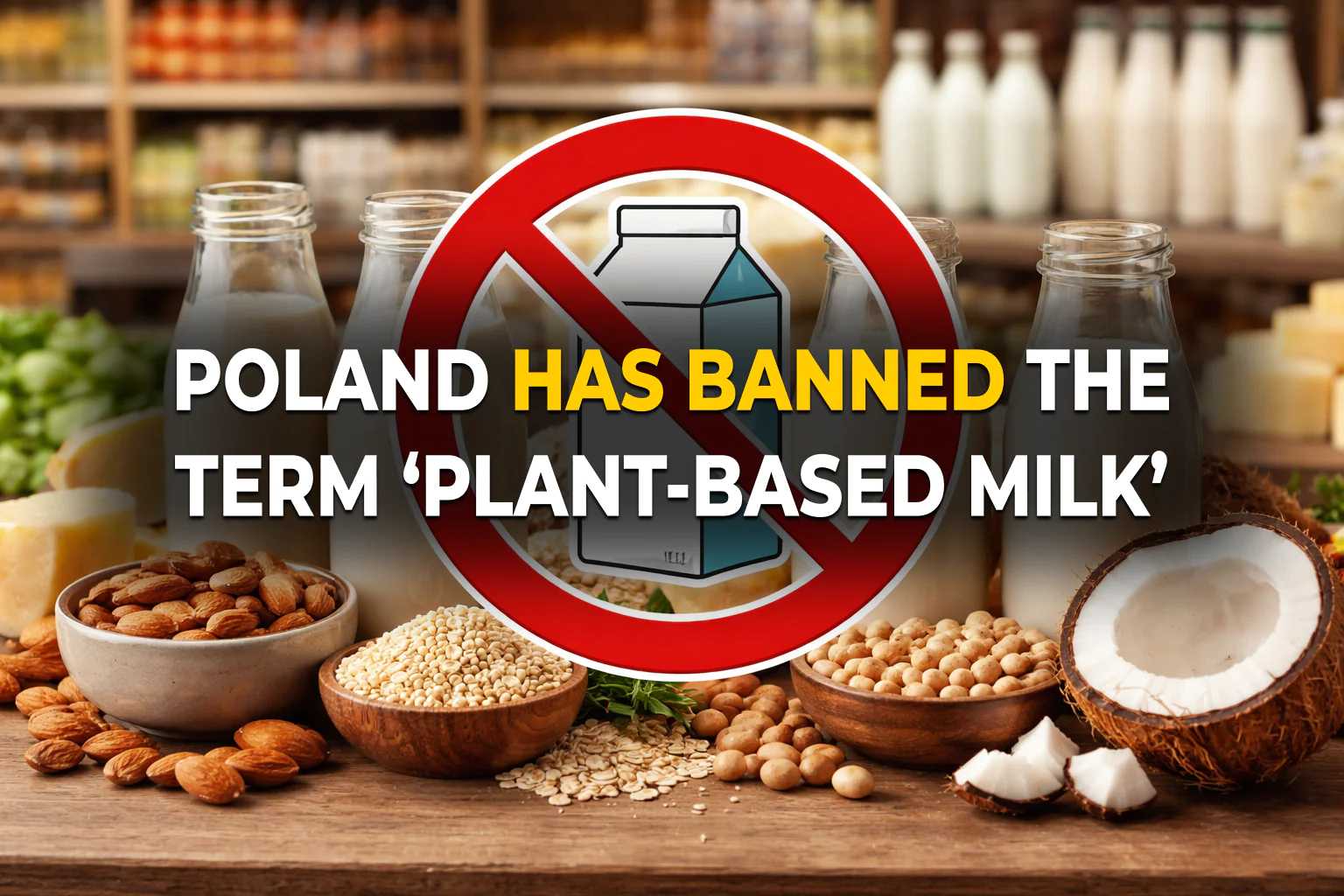
In Poland, the Inspectorate for the Quality of Agricultural and Food Products (IJHARS) has emphasised that plant-based products may not use the term ‘milk’. As noted by the Polish information portal InPoland, this requirement is based on EU legislation, which clearly regulates the use of terms in the dairy sector.
What counts as milk
Under EU regulations, milk is defined as the natural secretion of the udder, obtained without the addition or removal of any components.
Dairy products, for their part, may only be made from milk, with the exception of permitted processing aids that do not replace its natural components.
Ban on plant-based products
Consequently, the terms ‘milk’, ‘cheese’, ‘yoghurt’, ‘kefir’, ‘butter’ and ‘cream’ are legally reserved exclusively for dairy products.
Their use in plant-based products is prohibited:
- as a direct designation;
- as a hint of similarity;
- even when combined with clarifications (for example, ‘plant-based milk’);
- or in the form of a negation (‘this isn’t milk’).
Labelling requirements
The inspectorate stresses that the rules apply not only to product names but also to the entire manner in which the product is presented.
Labelling, advertising and product descriptions must not mislead consumers as to the nature, composition and properties of the product.
Legal basis
IJHARS’s position is based on European Union legislation and the case law of the Court of Justice of the European Union, which has repeatedly considered the issue of the use of ‘dairy’ names for plant-based products.
Market and consumer protection
The department notes that these rules are designed to protect consumers, ensure fair competition and maintain the quality of dairy products.
This also helps to avoid confusion in the market and promotes transparency within the dairy sector.
Source: InPoland