
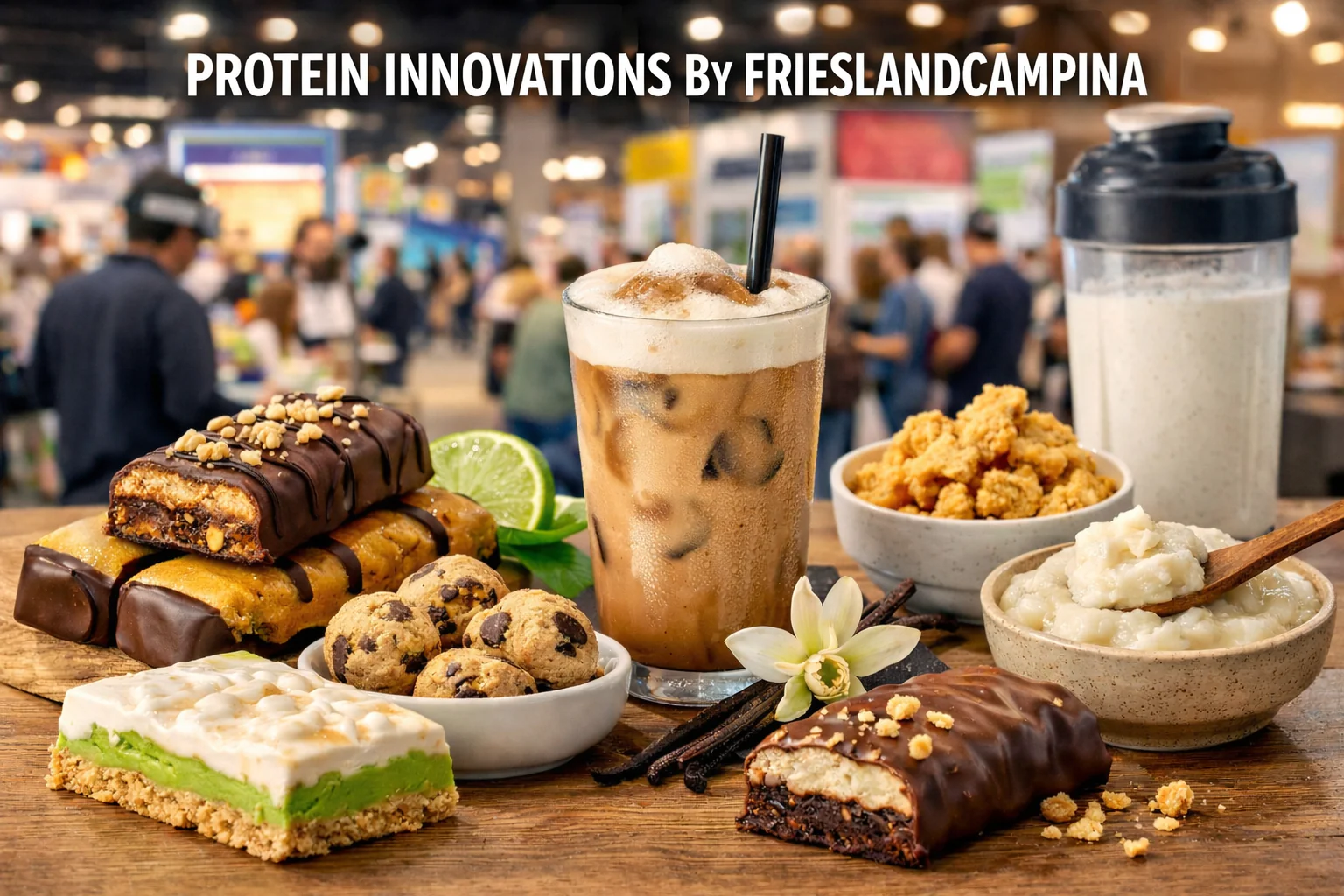
According to FoodIngredientsFirst, FrieslandCampina Ingredients showcased new high-protein product concepts at Natural Products Expo West 2026 in the United States, reflecting evolving consumer trends in functional nutrition.
Growing Demand for High-Protein Products
According to Innova Market Insights, about 42% of consumers identify protein as the most important ingredient in food products. In response, manufacturers are increasingly developing products that combine high nutritional value with appealing taste and texture.
At the exhibition, the company presented several concept products, including:
- protein bars
- high-protein snack formats
- fermented whey protein bites
- functional protein beverages
Examples included a protein bar inspired by “Dubai chocolate,” a lime pie-flavored bar, cookie-dough protein snacks, and a vanilla coffee beverage enriched with protein.
Fermentation and the “Gut–Muscle Axis”
A key concept highlighted by the company is the so-called “gut–muscle axis.”
To support this approach, FrieslandCampina Ingredients uses Biotis Fermentis, an ingredient combining:
- whey protein
- prebiotic galacto-oligosaccharides (GOS)
- probiotic cultures
This combination aims to support both digestive health and muscle function.
Company representatives note that intense physical activity and stress can negatively affect digestive health. Research suggests that around 86% of athletes experience gastrointestinal issues during training or competition.
By combining high-quality protein with prebiotics and probiotics, the formulation helps restore gut microbiota balance while delivering essential amino acids to support muscle maintenance.
Challenges in Product Development
One of the main technological challenges in developing new high-protein products is maintaining appealing taste and texture.
According to the International Food Information Council, 85% of U.S. consumers consider taste the most important factor when choosing food products, even ahead of price and health benefits.
Fermented whey protein can have a slightly sour flavor similar to kefir, requiring careful flavor profile development during formulation. To improve mouthfeel, the company uses specialized protein ingredients designed to maintain softness and structural stability in high-protein bars.
Opportunities in the GLP-1 Consumer Segment
Another emerging driver of innovation is the growing use of GLP-1 medications for weight management.
Because these medications often reduce appetite, users may consume fewer calories, which can increase the risk of nutrient deficiencies, particularly protein.
Research indicates that during rapid weight loss, 40–60% of weight reduction may come from lean muscle mass. As a result, functional food manufacturers are developing products that help maintain muscle mass while providing satiety.
Protein Becomes a Mainstream Trend
Analysts emphasize that high-protein products are moving beyond the niche sports nutrition segment into the mainstream food market.
Consumers increasingly expect protein to be integrated into everyday foods, including:
- beverages
- snacks
- desserts
- dairy products
Experts believe the future growth of this segment will depend on combining nutritional value, functional benefits, and appealing sensory characteristics.
The Natural Products Expo West 2026 takes place in Anaheim and brings together more than 3,000 exhibitors and around 60,000 visitors from the food and ingredients industry.
Source: FoodIngredientsFirst