
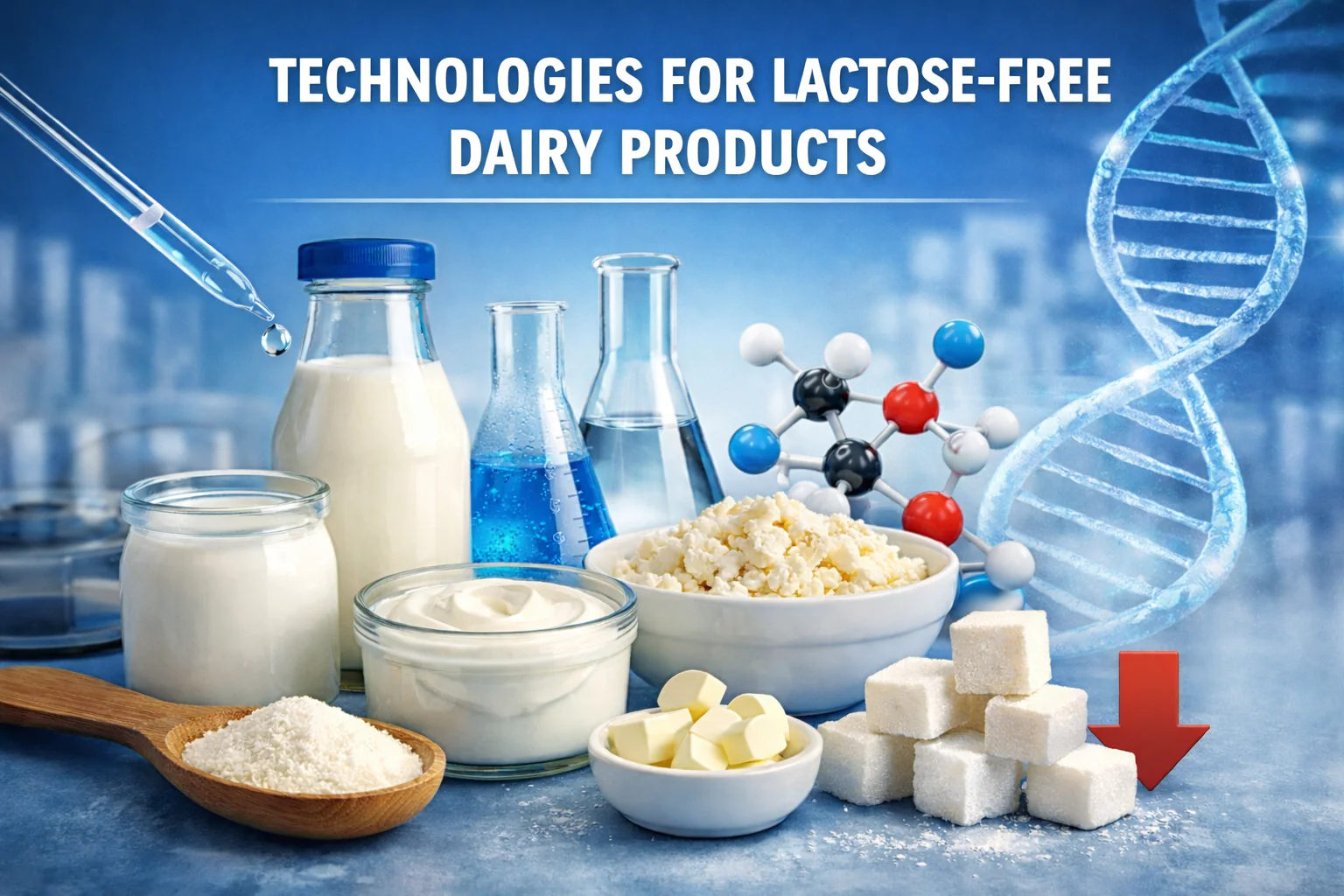
According to FoodIngredientsFirst, the dairy industry is increasingly adopting biotechnological solutions to develop lactose-free and reduced-sugar products in response to changing consumer preferences and stricter regulatory requirements regarding sugar content in food.
Demand for Lactose-Free and Reduced-Sugar Products
Growing demand for these products is largely linked to increased consumer attention to digestive health. According to Kerry’s Dairy Decode research, 58% of European consumers say that a “lactose-free” label makes a dairy product more attractive.
A specific consumer segment described by analysts as “digestive driven” deliberately chooses lactose-free products to avoid digestive discomfort.
At the same time, consumers are paying closer attention to sugar levels. The study shows that 53% of consumers consider sugar content when choosing dairy products, while 35% actively try to reduce their sugar intake. Despite these trends, taste and texture remain the primary drivers of repeat purchases.
Use of the Lactase Enzyme
One of the key technological approaches involves the use of the lactase enzyme, which breaks lactose into glucose and galactose.
This process enables manufacturers to produce lactose-free dairy products while also increasing the natural sweetness of milk.
Since glucose and galactose have a stronger perceived sweetness than lactose, producers can reduce the amount of added sugar without compromising the product’s sensory characteristics.
Reducing Added Sugar
When combined with technologies that enhance sweetness perception and help restore creamy texture, manufacturers can reduce added sugar in dairy products by up to 70%.
Such technological solutions are particularly relevant for:
- flavored milk
- yogurt
- dairy beverages
- functional nutrition products
In these categories, reducing sugar often negatively affects taste and mouthfeel, making formulation technologies essential.
Role of Biotechnology and Fermentation
Biotechnology and fermentation processes play a key role in scaling these solutions. They help ensure production stability, quality control, and consistent results in industrial manufacturing.
Enzyme technologies also align with consumer expectations for clean-label products, as they allow manufacturers to reduce reliance on artificial sweeteners.
Areas with the Greatest Innovation Potential
Analysts note that the greatest opportunities for innovation are emerging in functional and fermented dairy products.
- In Europe, sales of lactose-free flavored milk are growing by 14.2%.
- In North America, the lactose-free milk market is expanding by 15.2%.
- Demand for fermented dairy products is also rising rapidly, particularly Icelandic yogurt (+28.1%) and Greek yogurt (+18.7%).
Source: FoodIngredientsFirst