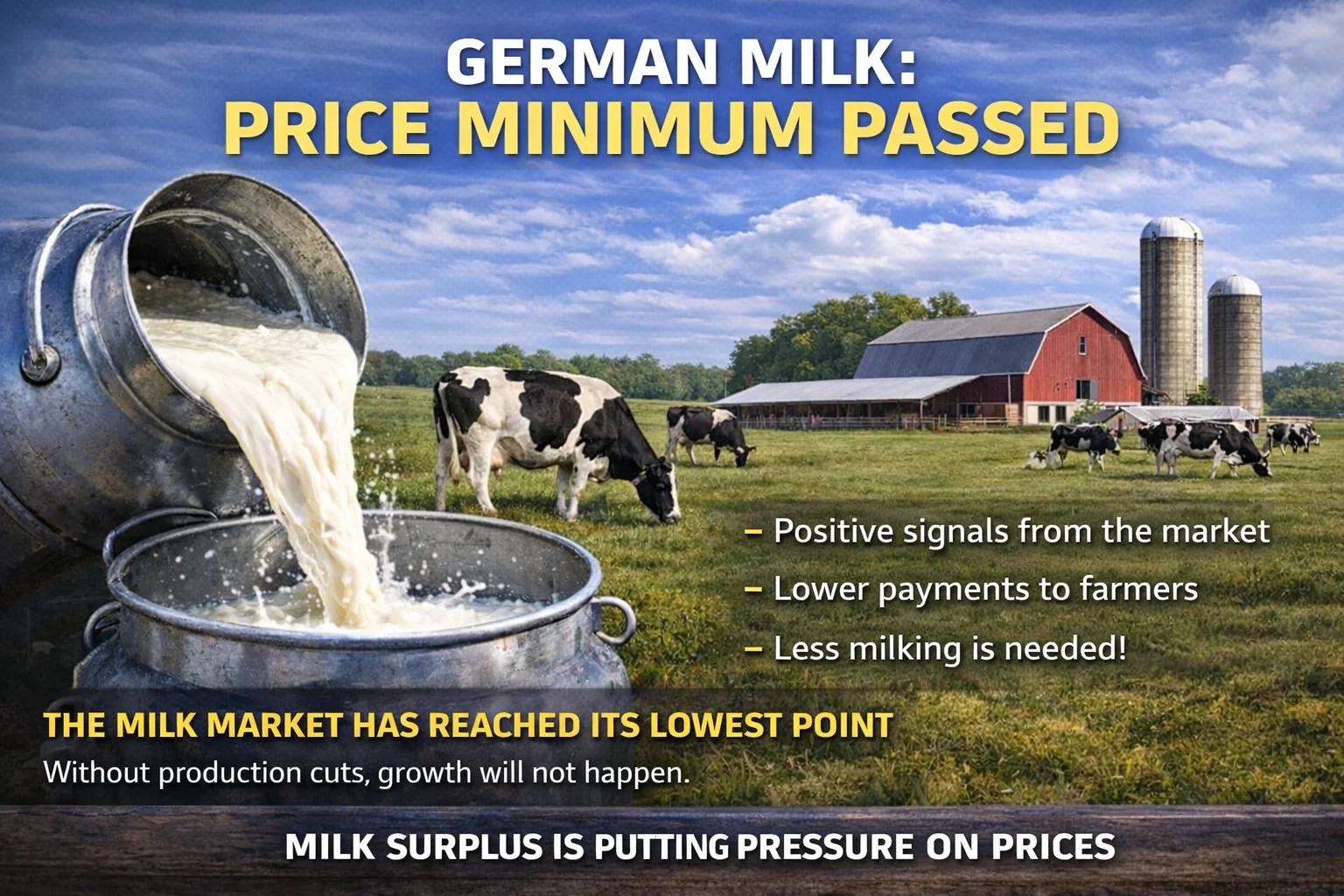

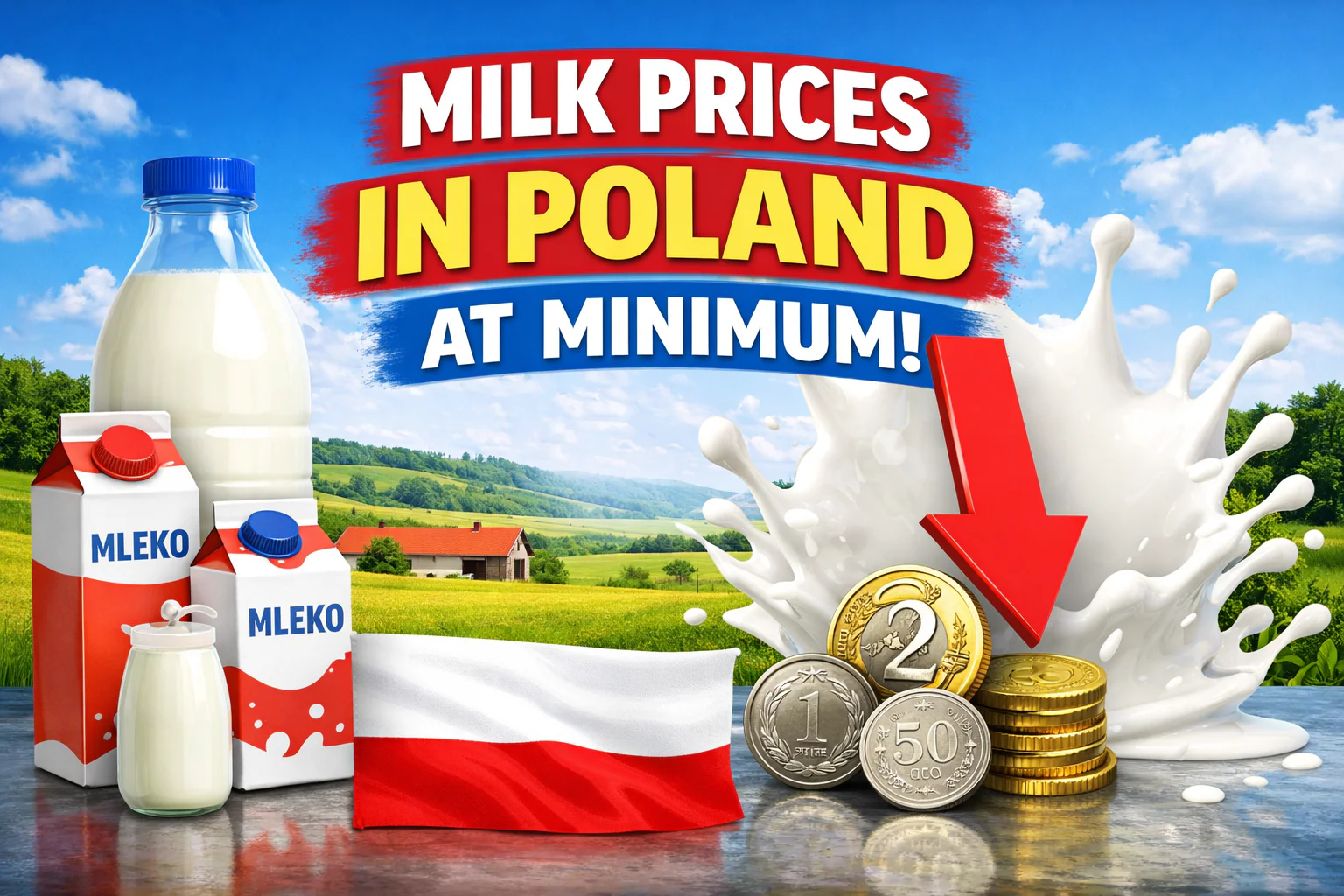
According to agroprofil.pl, in the first quarter of 2026, milk prices in the European Union—particularly in Poland—fell to their lowest level in nearly 30 months.
Despite signs of stabilization, the market remains at the price “bottom” last observed in autumn 2023.
Prices Return to 2023 Levels
Aggregate data published by the European Commission (EC) confirm that March 2026 saw stagnation in Poland, albeit at a level that offsets the gains made in previous seasons. The Polish exchange rate coincided almost perfectly with the local price low recorded in October 2023:
- January 2026: Average price announced by the EU: €45.23/100 kg (approximately PLN 1.94/kg).
- February and March 2026: the price fell and stabilised at €43.86 per 100 kg (approximately PLN 1.87 per kg).
As a result, the market has effectively lost all price gains accumulated over the past two years, driven by oversupply of milk and export constraints.
“Price Scissors” Pressure Farmers
Despite declining farmgate prices, retail prices have not followed the same downward trend.
- Procurement prices fell 5.2% month-on-month in January
- Retail milk prices increased by 0.4% in February
- On an annual basis, food prices rose 2.1%, while raw milk prices remained 2.4% lower
This widening gap reflects the so-called “price scissors” effect, where producers receive less income while consumer prices remain stable or even increase.
GDT Signals Potential Recovery
A positive signal for the market comes from global dairy trading activity.
The Global Dairy Trade (GDT) price index has increased by 25% since the beginning of 2026 across five trading sessions.
This upward trend may indicate a potential recovery of prices in Europe in the coming weeks.
The average EU milk price level (around €44.19/100 kg) suggests that the market has likely already reached its bottom.
Risks for the EU Dairy Sector
Analysts note that the current milk oversupply may be temporary, but long-term structural challenges could lead to reduced production in Europe.
Key factors include:
- stricter environmental regulations
- rising production costs
- increasing regulatory pressure on farmers
Persistently low prices may accelerate herd reductions and farm exits, which could ultimately impact future milk supply.
Source: agroprofil.pl