
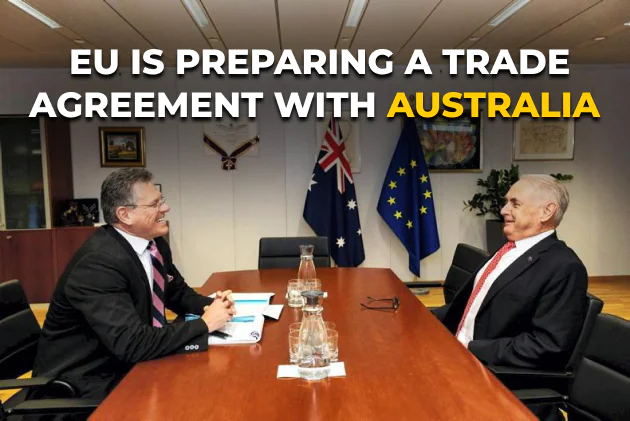
According to Irish Irish Farmers Journal, the European Union is approaching the final stage of negotiations on a free trade agreement with Australia, which would grant preferential access for Australian dairy products, beef, and lamb to the EU market.
Negotiations Near Completion
European Commission President Ursula von der Leyen, together with Trade Commissioner Maroš Šefcovic, is set to visit Australia for talks with Prime Minister Anthony Albanese. This signals that years of negotiations are entering their final phase.
However, the final signing of the agreement may still depend on external factors, including geopolitical conditions and potential disruptions to international travel.
Long Road Since 2018
Negotiations between the EU and Australia began back in June 2018, but remained deadlocked for a long time. In 2023, the parties were close to signing an agreement during the G7 summit in Japan, but the deal fell through due to disagreements over access to agricultural markets.
In particular, Australia was unhappy with the export quotas for beef, lamb, dairy products and sugar. The negotiation process only resumed in June 2025.
Agriculture Remains the Key Barrier
Access for agricultural products to the EU market remains a key issue. Similar difficulties have arisen in other EU trade negotiations, notably with Canada and the Mercosur countries.
The core issue is the size of import quotas for:
- beef
- lamb
- dairy products
- sugar
These quotas have prevented agreement for years.
Australia’s Demands
Australia is pushing for significantly expanded access to the EU market, including:
- at least 50,000 tonnes of beef (carcase weight)
- at least 67,000 tonnes of lamb and goat meat
These figures are based on the terms previously granted by the EU to other partners. For example, Mercosur countries were allocated a quota of 99,000 tonnes of beef, whilst Canada was allocated 50,000 tonnes.
The likely conclusion of the deal
Despite previous setbacks, the current round of negotiations looks the most promising. It is expected that the final terms will not match those of Mercosur and are likely to fall short of Australia’s demands regarding beef.
At the same time, the parties may reach a compromise on lamb more quickly, as the EU has been a net importer of this product for several years.
Implications for the dairy market
The agreement will also open up new opportunities for the export of Australian dairy products to the EU. This could intensify competition in the European dairy market, particularly in high-value-added segments.
Australia already has experience of making effective use of export quotas, particularly in the UK market, and is likely to make active use of similar opportunities in the EU.
Source: Irish Farmers Journal