

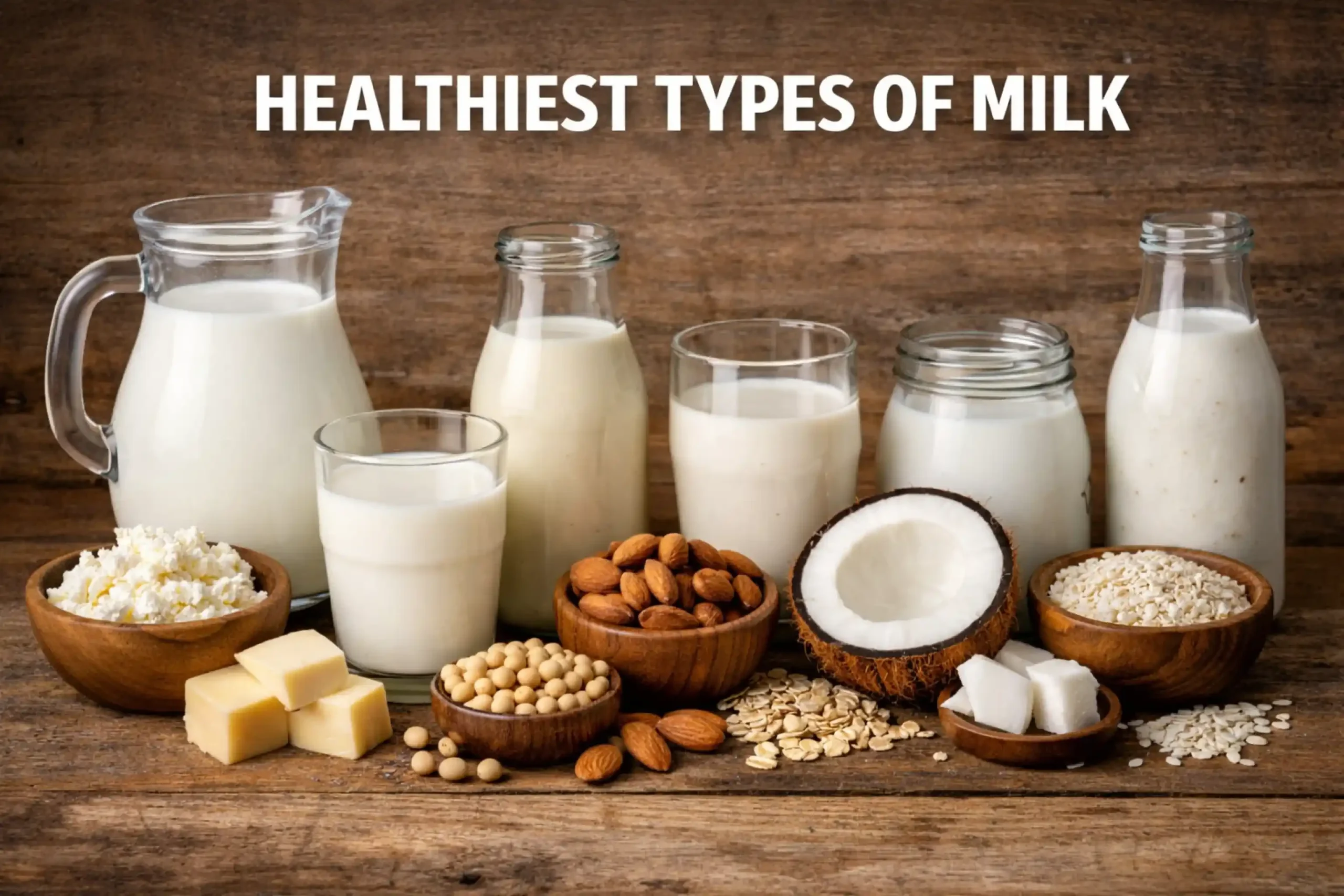
The choice of milk — from traditional cow’s milk to plant-based alternatives — depends on dietary needs, allergies and lifestyle. Each type has its own advantages and disadvantages in terms of protein, calcium and other nutrients, according to Verywell Health
Cow’s milk is the most nutritious
Cow’s milk remains one of the most nutritious options:
- around 8 g of protein per cup;
- high levels of calcium and vitamin D;
- a source of vitamin B12, which is not found in plant-based foods.
Milk is available in various fat contents — from whole milk to skimmed milk. There are also alternatives:
- lactose-free milk — for people with lactose intolerance;
- A2 milk — may be easier to digest, but it is more expensive.
At the same time, experts stress that raw milk can be dangerous, so it is recommended to consume only pasteurised products.
Soya milk is the closest alternative
Among plant-based drinks, soya milk is the closest to cow’s milk in terms of nutritional value:
- contains a high protein content;
- often fortified with calcium and vitamin D;
- may have a positive effect on cholesterol levels and blood pressure.
However, soya is a common allergen, which limits its consumption for some people.
Almond milk — lower in protein
Almond milk is popular because it is low in calories, but:
- contains significantly less protein;
- has a limited content of vitamins and minerals.
The production of almond milk also requires significant amounts of water.
Oat milk — more carbohydrates
Oat milk is rapidly gaining popularity, but it has its own unique characteristics:
- lower levels of protein and calcium;
- a higher content of carbohydrates and fibre.
Coconut milk is high in fat
Coconut milk contains:
- high levels of saturated fats and calories;
- a minimum amount of protein.
For this reason, it cannot fully replace cow’s milk in terms of nutritional value.
Rice milk is the least nutritious
Rice milk:
- has a low protein and fat content;
- contains mainly carbohydrates;
- may contain traces of arsenic, which is a cause for concern.
What to look out for when choosing
Plant-based alternatives are often fortified with calcium and vitamin D, but may contain:
- added sugar;
- stabilisers and other additives.
Experts recommend reading the ingredients list carefully, especially if you consume such products regularly.
Source: Verywell Health