
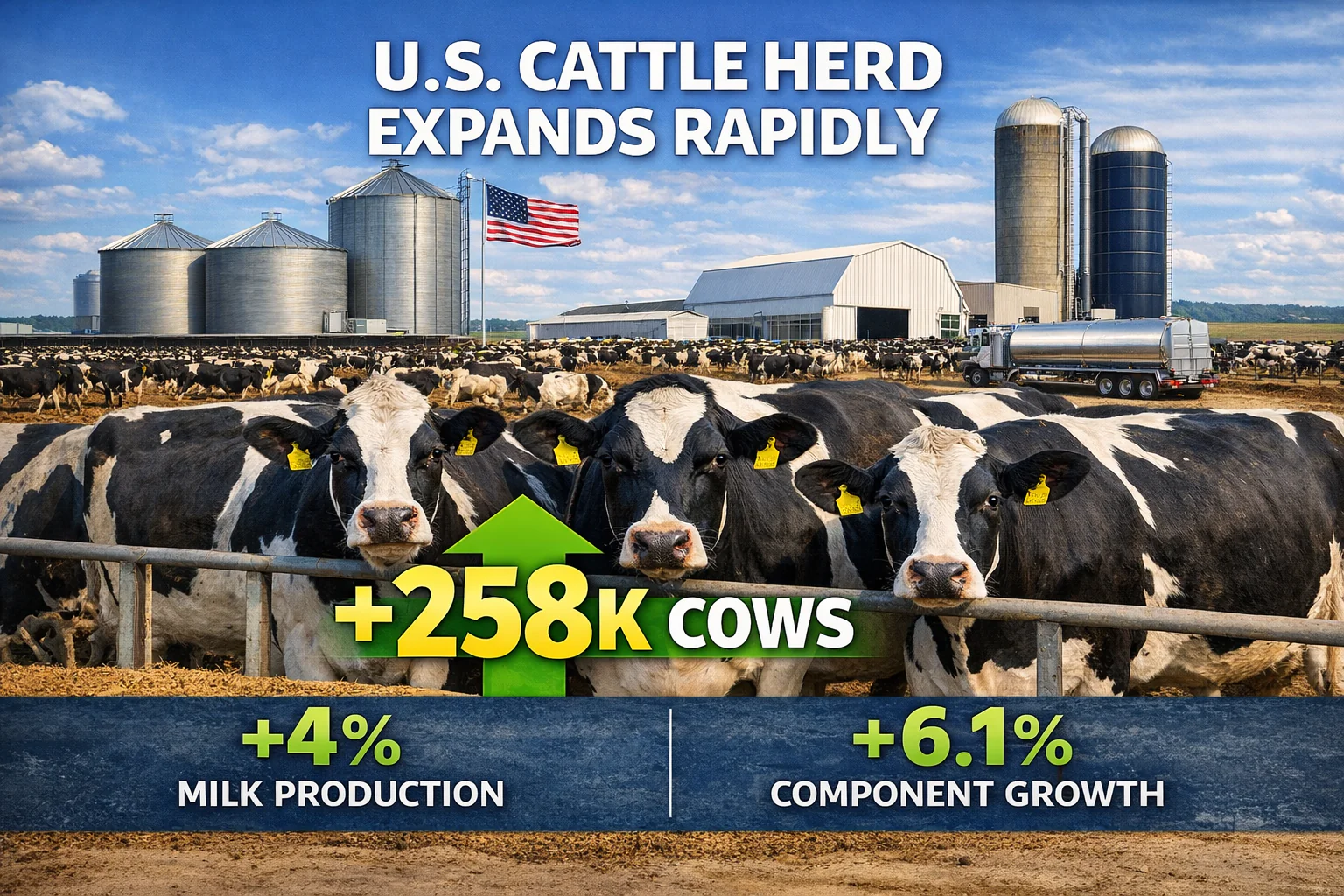
As noted by analyst Nate Donnay in an article published on the Dairy Foods website, milk production growth in the United States significantly exceeded expectations in September. Output increased by 4% year-over-year (forecast: 3.2%), and when adjusted for higher fat and protein content, component-adjusted production rose by 6.1%.
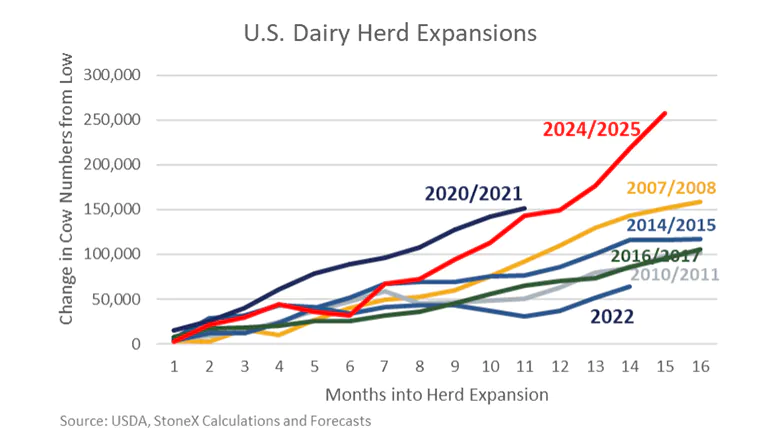
The biggest surprise was the sharp increase in herd size. After a revision of August data, the cow inventory was found to be 21,000 head higher than previously reported. Overall, between July and September alone, the herd expanded by 82,000 head. Over the past 15 months, U.S. farmers have added 258,000 cows (+2.8%) — the fastest pace of expansion since the mid-1980s.
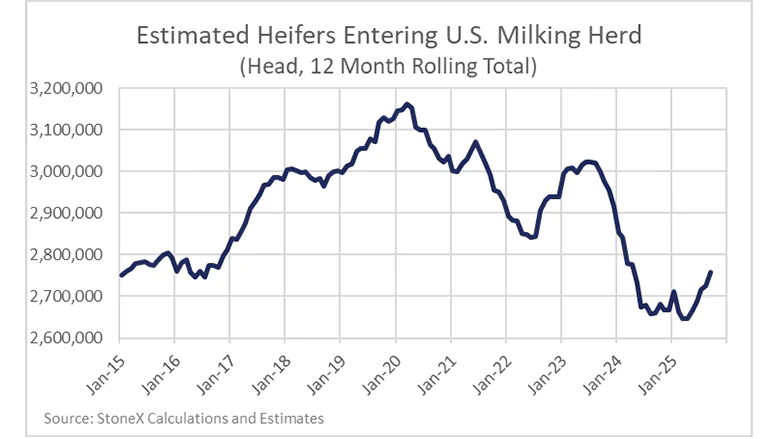
Approximately 186,000 of this increase occurred within the last seven months. The main growth was concentrated in states with newly launched processing capacity — Texas, Kansas, New York, South Dakota, Minnesota, and Idaho. The commissioning of new cheese plants has been the primary driver of farm investment and heifer expansion. According to the author’s estimates, nearly half of the herd growth is attributable to the introduction of new cows rather than extended productivity of existing animals.
At the same time, milk supply is now significantly outpacing demand. The long-term average annual growth rate of demand for dairy components in the U.S. is around 1.9%, while production increased by 6.1% in September, with full-year growth projected at 4.2%. This imbalance is exerting downward pressure on prices.
The analyst suggests that expansion may slow in 2026 as farm profitability declines due to lower milk prices and a correction in cattle markets. However, if new processing plants operate at full capacity, further herd growth is theoretically possible — although market demand does not currently justify it.
Attention is also drawn to the quality of statistical data. Due to the temporary shutdown of the U.S. federal government, USDA reports were published under tight timelines, which may result in future revisions. Nevertheless, the overall trend is clear: production is growing faster than demand, and the market requires price correction to restore balance.
Source: Dairy Foods