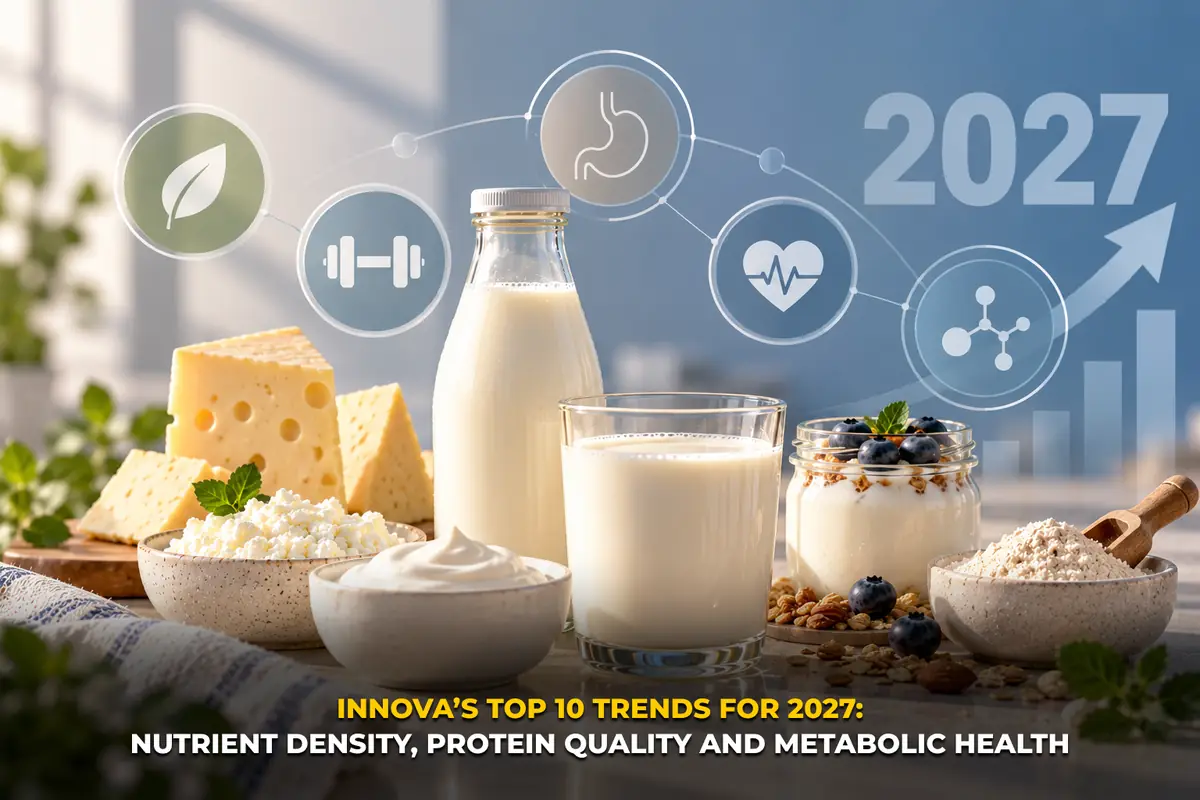
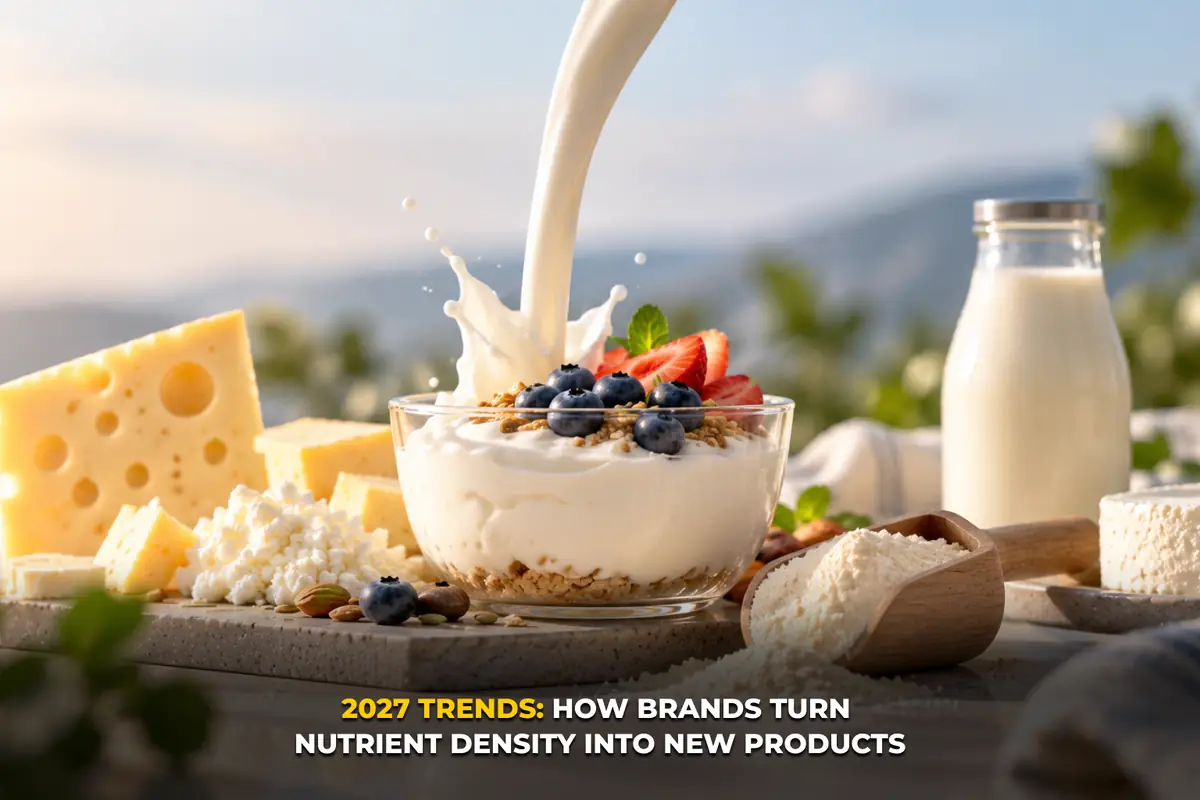
Food and beverage innovation in 2027 will need to satisfy consumers who want more from each purchase: targeted nutrition, enjoyable experiences and ingredients they trust. Innova Market Insights’ latest forecasts bring these demands together, with nutrient density leading its top ten trends, Food Ingredients First reports.
Key points:
- Innova’s 2027 trends emphasise nutrient density, protein quality and targeted health benefits;
- GNT highlights bold colours and surprising textures that combine functionality with enjoyment;
- fermentation, regenerative sourcing and artificial intelligence (AI)-driven discovery are shaping product development and consumer choices.
While manufacturers refine protein quality and develop products for metabolic health, bold colours and unexpected textures help familiar formats feel new.
«The modern world can be a challenging place, and consumers are increasingly looking to food and drink to provide a sense of escapism», says Dieuwertje Raaijmakers, marketing communications specialist at GNT Group. «Traditionally, that’s tended to mean pure indulgence, but we’re seeing a growing trend for products that tap into that need state with playful creativity, surprising textures, and bold colours».
Making every serving count
Innova’s «Nutrient Density Design», «Precision Protein» and «Metabolic Edge» trends point towards more deliberate nutritional choices, spanning reformulation, protein selection and steady energy. Its research finds that 59% of consumers globally read all or most nutritional information on packaging.
Nestlé’s glucagon-like peptide-1 (GLP-1) strategy shows how smaller appetites are prompting development around nutritional value per serving, with the company exploring protein-rich and collagen-containing products.

The protein ingredient base is also broadening. At IFT FIRST 2026 in Chicago, US, suppliers showcased clear plant and yeast proteins for refreshing beverages, alongside collagen-whey blends that address nutritional, texture and cost requirements.
«We’re seeing much more innovation in the functional product space. Consumers are looking for food and drink with ingredients like protein, collagen, nootropics, and vitamins and minerals», says Raaijmakers.
«While the functional benefits are the main driver for purchases, consumers today look for options that tick multiple boxes. Convenience is important, so they want something that fits into their lifestyle. They also want interesting and enjoyable consumption experiences with good taste and texture. As health-conscious consumers, there’s also a growing expectation that products will have natural ingredients».
A sensory playground
Innova’s «Sensory Playground» trend captures demand for experiences involving texture, aroma, colour and flavour.
The direction is visible in recent mochi and popping-pearl launches. In May, Bazooka debuted Mini Mochi Gummy, combining gummy chew with a soft, mochi-inspired texture, and in August Boba Pops introduced Pop & Go cocktails with alcohol-filled popping pearls.
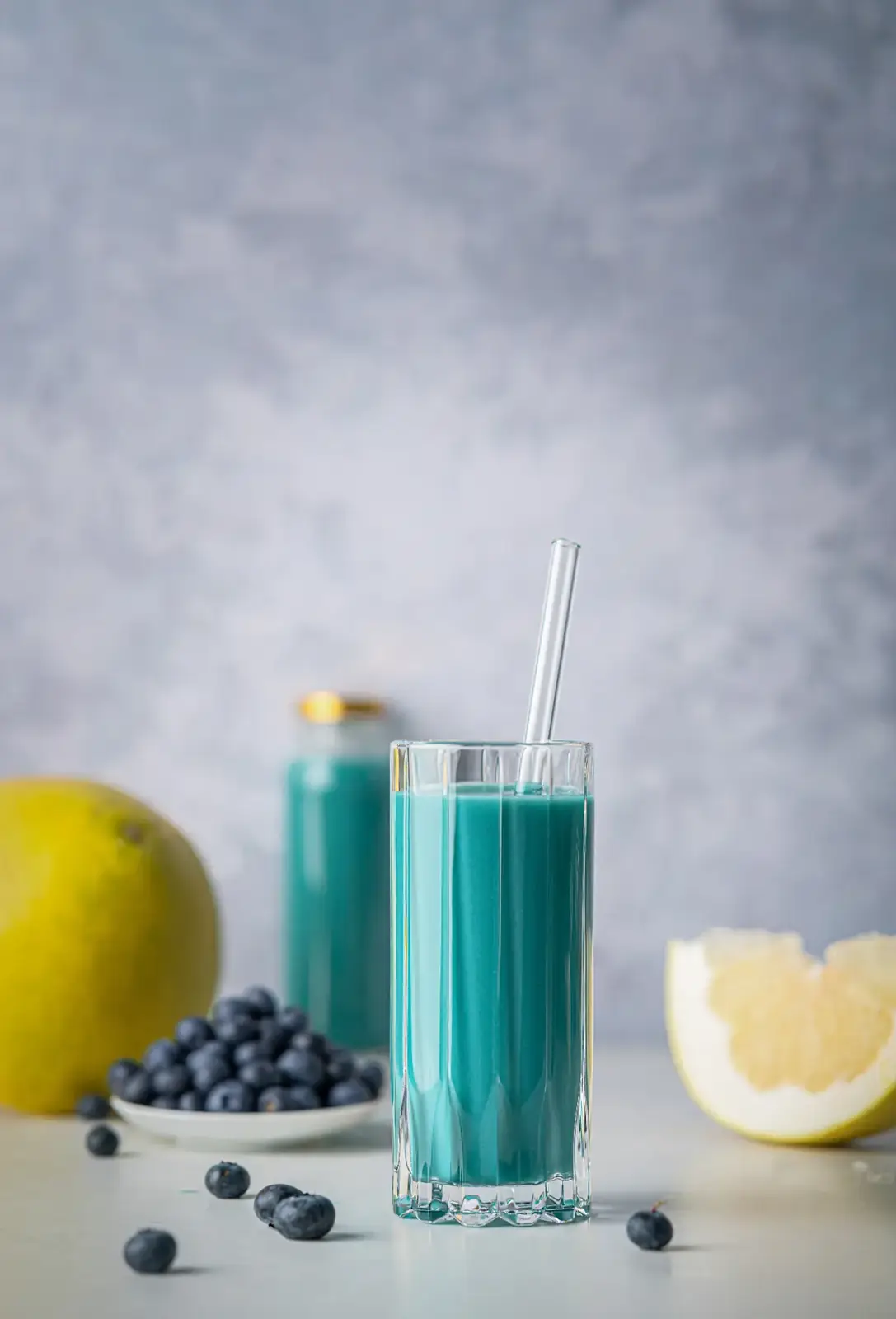
«In beverages, you might see layered hues, glowing gradients, or high-impact contrasts as well as textural elements such as chewy tapioca pearls», says Raaijmakers. «These products allow individuals to experience a moment of magic, but they’re also ideal for sharing with friends and on social media».
«Two of the biggest trends of recent times are Dubai chocolate and matcha-strawberry, and they both have strongly recognisable colours that helped make them viral successes. Ube is another colour-driven success story that has room to grow across new product categories. Blue is becoming a much more important colour across the industry, too».
Wellness beyond the nutrition panel
«Longevity Engineering», «Peace of Mind» and «Radiance Rituals» extend Innova’s outlook into healthy ageing, mental wellness and edible beauty.

Suppliers are interested in taking ashwagandha’s stress-support positioning into beverages, chocolate, bars and dairy alternatives, although bitterness, sedimentation and ingredient consistency remain practical hurdles. Cargill has developed a collagen-and-electrolyte hydration prototype, and Kerry a beauty-from-within beverage concept.
«Consumers want clinically substantiated health benefits, but they do not want to sacrifice enjoyment», said Amy Smith, senior director of medical affairs at Kerry.
«Colour is an important innovation opportunity for functional brands that want to stand out from the crowd. It can be used to help showcase enticing flavour profiles, functional benefits, and attract attention», says Raaijmakers, adding that colours in fortified recipes must be carefully selected.
Fermentation and farming
Innova’s «Ferment Forward» and «From Soil to Shelf» trends highlight fermentation’s expanding applications and closer attention to agricultural sourcing.
Revo Foods recently brought fermentation into a protein-focused dairy alternative, Cottage Protein, made with upcycled apricot kernels, water, salt and vegan cultures and offering a reported 17 g of protein per cup. Strong Roots previewed Feel Good Fries, combining algae oil with potatoes grown using regenerative practices.

Credibility will matter as these stories reach packaging. SAI Platform’s regenerative agriculture framework, launched in June, includes independent verification and benchmarking to support more consistent sourcing claims.
Getting discovered in 2027
The final trend, «Prompt to Plate», addresses AI and social media’s influence on food discovery. Unilever, for example, is adapting Knorr and Hellmann’s recipe content for AI-driven search and recommendations.
For manufacturers, the opportunities span both products and their presentation: delivering a worthwhile eating experience, then making its benefits easy to understand and discover.
Source: Food Ingredients First