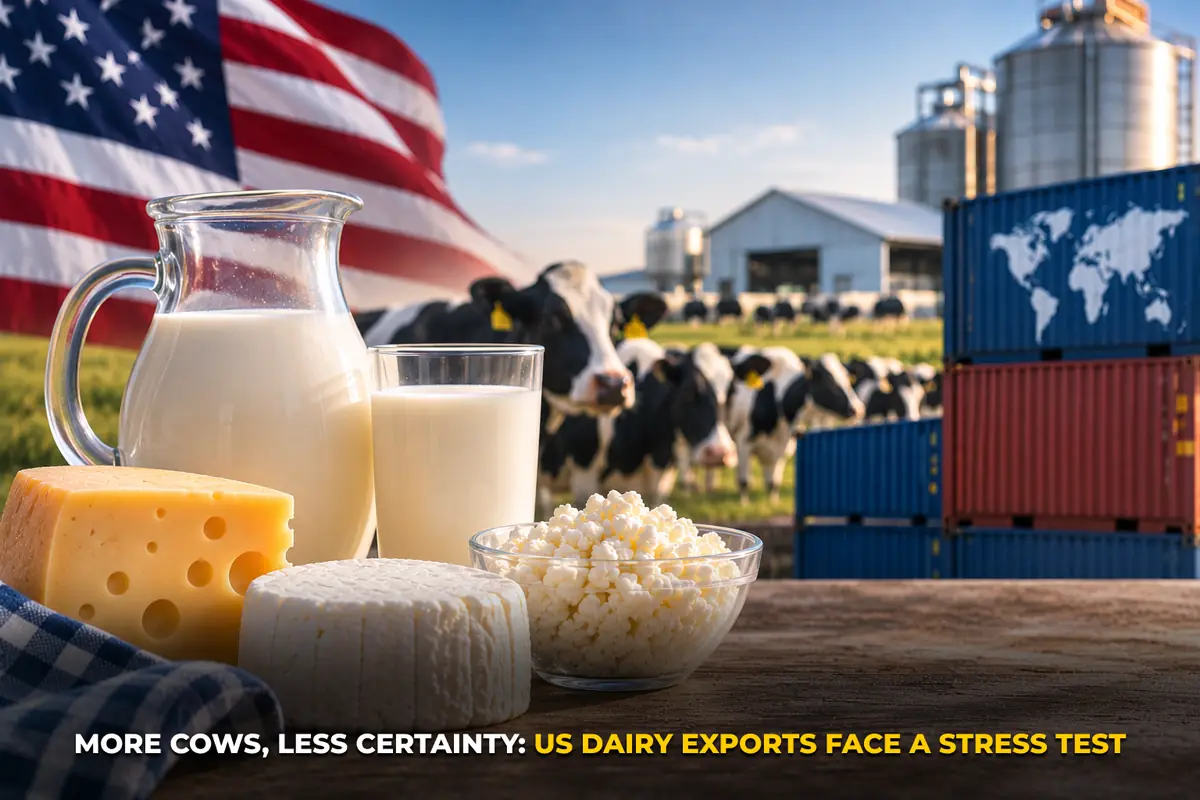
A sustained phase of rapid production growth in the US dairy sector is colliding with macroeconomic and trade headwinds, prompting risk managers to question the long-term resilience of US export momentum, eDairy News reports, citing AgNet West.
Key points:
- US dairy cow numbers are approaching 30-year highs;
- the domestic market can no longer absorb all the additional milk, making exports a necessity;
- cheese, especially Cheddar and Gouda, is the main export driver;
- trade uncertainty and possible tariffs pose a risk to farmgate milk prices.
Exports are a necessity, not a secondary outlet
While growing global appetite for dairy protein and strong cheese shipments have cleared record volumes in recent years, the combination of rising domestic milk production and international trade volatility presents a complex risk profile for producers and processing cooperatives alike.
Will Babler of Pinion Risk Management said the US dairy industry is navigating unprecedented production and export volumes. However, with national dairy cow numbers near 30-year highs, the sheer volume of milk entering processing plants makes continued exports an absolute necessity rather than a secondary outlet.
«We’ve seen tremendous growth in milk supply. We’ve seen tremendous growth in exports, but at some point those things can’t go on forever», Babler said. «We watch the consumer pick up more protein. We watch cheese get exported all across the world. But when we’re pushing 30-year highs on cow numbers and we’ve got a lot of uncertainty with trade, it’s hard to say how long those things persist».
Key factors in the US dairy balance
- Production capacity. Sizable processing investments, chiefly in high-throughput cheese plants and protein fractionation across the Central Plains and Upper Midwest, have encouraged herd expansion. As milk output grows, domestic fluid and commercial markets cannot absorb the extra volume alone, requiring international buyers to prevent surplus stocks.
- Cheese as the core export driver. Surging international demand for US Cheddar, Gouda and specialised curd formats has been pivotal in supporting milk prices. US dairy has grown its presence in Latin America, East Asia and the Middle East, thanks to competitive pricing versus European and Oceanian exporters.
- Trade policy and geopolitical headwinds. Potential changes to bilateral trade frameworks, tariff barriers and non-tariff technical hurdles add considerable volatility to long-term export lanes. Retaliatory measures, regional trade renegotiations or changes to preferential market access could disrupt established export flows.
- Customer retention. Babler stressed that protecting farmgate milk margins requires the US dairy industry to invest heavily in relationships with foreign buyers and to adapt product specifications to regional culinary uses and manufacturing needs.
What it means for the market
From an agribusiness and dairy trade perspective, Pinion Risk Management’s warning reflects the structural reality of the modern US dairy sector. With expanded herds and billion-dollar processing plants running at full capacity, any slowdown in exports would directly pressure Class III and Class IV price formulas under the federal milk pricing system, compressing margins.
Keeping international trade lanes open and predictable remains the single most important factor in turning on-farm output into sustainable milk check returns.
Source: eDairy News