
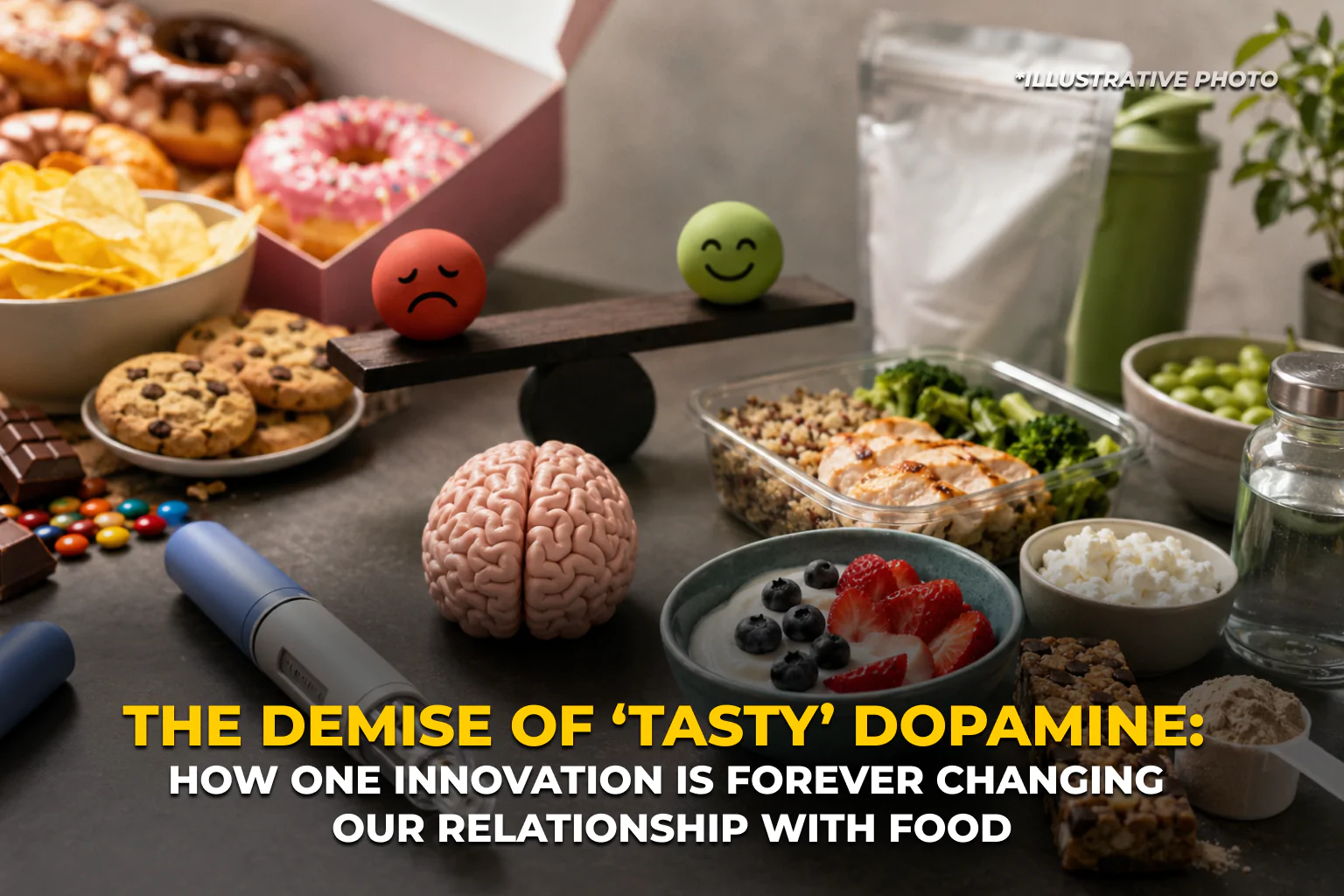
GLP-1 drugs are having an increasingly significant impact not only on appetite but also on consumers’ eating habits. According to Food Navigator, researchers and food manufacturers are beginning to assess how Ozempic, Wegovy, and other GLP-1 drugs alter food cravings, impulsive eating and the habit of ‘emotional snacking’.
The emergence of the ‘Ozempic personality’ is raising increasing questions about how GLP-1 agonists affect appetite, impulsive eating and pleasure-seeking behaviour
The reasons behind indulging in treats are never solely down to hunger. They are linked to a desire for pleasure, a sense of reward, nostalgia, rituals, and those little emotional moments that consumers associate with food throughout the day — biscuits with coffee, a post-work snack to relieve stress, ordering takeaway on a Friday evening, or a dessert to mark a special occasion.
Now this emotional dynamic is beginning to change.
Patients taking popular GLP-1 drugs such as ‘Ozempic’, Wegovy, Mounjaro and Zepbound, are increasingly reporting a sharp reduction in appetite, compulsive overeating and ‘food noise’ — constant thoughts about snacks and temptations.
Some say that, for the first time in many years, they finally feel at peace with food. Others report a more general emotional numbness, which has been dubbed the ‘Ozempic personality’ on social media, describing reduced impulsivity, muted excitement and a diminished desire to pursue what once brought them pleasure.
Healthcare experts caution that this phenomenon remains rare and poorly understood. However, the commercial implications are already attracting significant attention, as GLP-1 appears to affect far more than just appetite. Researchers increasingly believe that they influence dopamine signalling, reward anticipation and reinforcement pathways — systems closely linked to food cravings, emotional overeating and snacking habits.
This is rapidly bringing what was once a relatively niche psychiatric term into the mainstream.
In clinical terms, anhedonia refers to a reduced ability to derive pleasure or motivation from activities that once brought joy. Traditionally associated with depression and mood disorders, researchers describe it as a disruption of reward processing, reinforcement behaviour and emotional sensitivity — areas of the brain that are now attracting increasing attention in GLP-1 research.
The problem is not necessarily that GLP-1 users become emotionally detached. Many report feeling better and more confident. However, for food manufacturers, the more pressing question is: what will happen to indulgent food categories when consumers no longer respond to reward cues in the same way as before?

Food has always been linked to one’s mood
Modern snacking culture is largely driven by emotions. Consumers reach for tasty treats when they feel stressed, tired, anxious, bored, or are simply looking for comfort. Snacks often serve as a kind of emotional reset throughout the day — a chocolate bar after a tough meeting, crisps whilst binge-watching a series on Netflix at night, or pastries during celebrations or when feeling tired.
Studies have repeatedly demonstrated a link between highly palatable foods and the brain’s reward system. Foods rich in sugar and fat stimulate the release of dopamine and serotonin, temporarily improving mood and reducing stress responses. Studies examining comfort-eating behaviour link the consumption of tasty foods to nostalgia, emotional regulation and a sense of social belonging. Other observational studies link long-term consumption of ultra-processed foods and refined sugar with an increased risk of anxiety, stress and depression.
A study published this year in the journal *Food Quality and Preference* found that mood has a significant impact on snacking behaviour. Participants who were feeling sad or stressed were significantly more likely to consume tasty snacks, particularly among those who were restricting their food intake and following a diet.
None of this comes as a surprise to the food industry. According to Mondelez International’s 2024 ‘State of Snacking’ report, during periods of economic uncertainty, consumers are increasingly turning to snacks as a source of emotional comfort and an affordable way to look after themselves. More than seven in ten respondents worldwide agreed that sharing snacks is a ‘language of love’.
However, GLP-1-based drugs appear to disrupt some of these emotional patterns.
Researchers studying semaglutide-based drugs are increasingly focusing on their impact on compulsive behaviour and reward anticipation. Many patients describe a sudden loss of interest in food that they previously found irresistible. Others report a reduction in impulsivity regarding shopping, alcohol consumption or spending in general.
Survey data examining ‘food noise’ among GLP-1 users showed that many described a calmer, less emotionally charged relationship with food, as well as a reduction in obsessive thoughts about food and cravings. Obesity treatment specialists hear similar comments from some patients, particularly regarding reduced arousal and an overall decrease in reward-seeking behaviour.
No one yet knows whether these effects are temporary, dose-dependent or limited to a specific group of users. But even the possibility of widespread behavioural changes is significant when so many forms of pleasure are based on instinctive, reward-seeking eating habits.
The next phase of the GLP-1 market’s development could intensify this pressure even further.
Much of the food industry’s initial response focused on injectable treatments, which some consumers eventually stop taking due to cost, side effects or fatigue from the injections. But the arrival of oral GLP-1 preparations — including ‘Foundayo’, Eli Lilly’s recently approved oroglipron tablet, and oral versions of ‘Wegovy’ from Novo Nordisk — could significantly prolong the duration of appetite suppression.
Research shows that oral GLP-1 medications can help users maintain their weight loss for longer, making treatment simpler, less burdensome and more sustainable in everyday life. The tablets remove one of the biggest psychological barriers associated with injectable drugs and are expected to accelerate their long-term uptake as they become more widely available on the market over the next few years.
Smaller portions, a reduced appetite and more restrained eating habits may cease to be temporary anomalies and instead become increasingly normalised patterns of consumption.
The momentum-driven economy is faltering
Food companies are already beginning to feel the commercial impact. According to Kantar, households with GLP-1 users are significantly cutting back on spending in several categories of goods typically purchased for pleasure, including confectionery, frozen foods and takeaways. Market analysts estimate that GLP-1-related behavioural changes have already led to a £136 million drop in food and drink sales in the UK.
However, reduced spending is only part of the picture. Consumers are not simply eating less; many seem to be becoming increasingly hard to tempt. Products that were once bought on impulse are now facing a situation where consumers take longer to make up their minds, feel less of a craving and think more carefully before indulging.
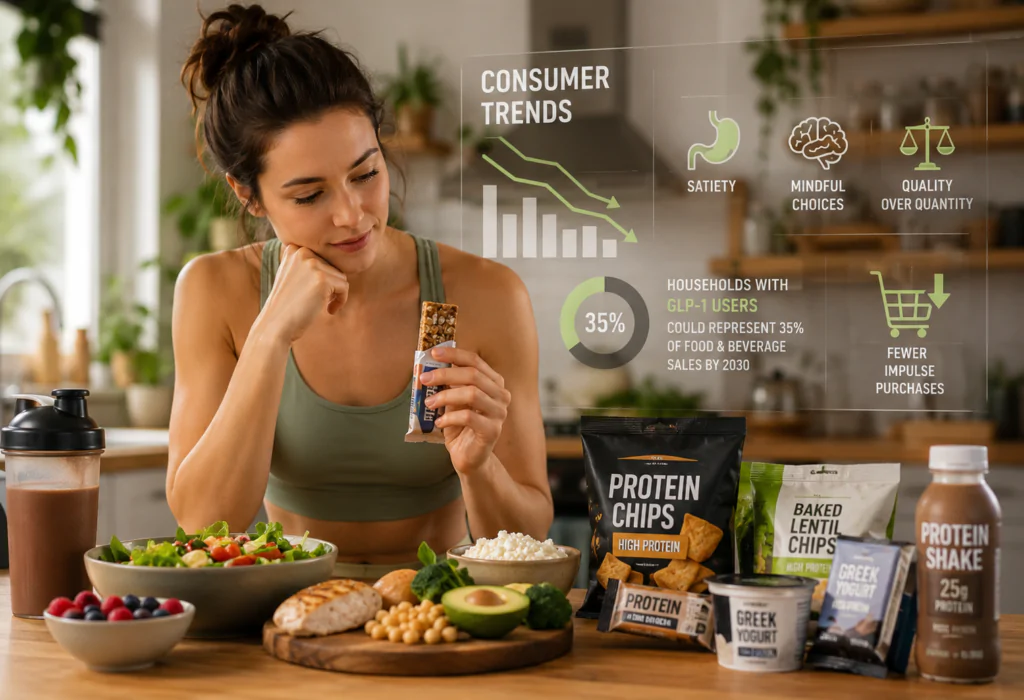
A Circana study shows that GLP-1 users are cutting out unnecessary snacking and impulse purchases. The company forecasts that by 2030, households with GLP-1 users could account for 35% of all food and drink sales.
Other studies suggest that the change in behaviour may be even more pronounced. A study by Morgan Stanley found that 66% of GLP-1 users reduced the frequency of their snacking from three or more times a day to two or fewer.
However, the situation is not entirely negative for the food industry. Demand for products marketed as high-protein, functional and filling is growing, as consumers become more thoughtful about what they eat and why they eat it. An ADM study found that four out of five consumers of GLP-1 preparations are willing to pay more for products with additional health benefits.
And manufacturers are responding to this: they are increasing investment in protein, fibre and functional ingredients, exploring smaller portion sizes and rethinking the positioning of treats in a market that is increasingly shaped by satiety, nutritional value and mindful eating.
Restaurants are adapting too. Operators across the US are introducing lighter menus, high-protein dishes and smaller portions designed to satisfy rather than overindulge.
However, the long-term outlook remains uncertain.
Euromonitor International predicts that semaglutide-based treatments could reshape global demand for food over the next decade, as cheaper and more accessible options enter the market. However, serious questions remain regarding long-term adherence to treatment, affordability, side effects and whether altered eating habits will persist once treatment is discontinued.
And despite the concerns surrounding GLP-1 drugs, this is not simply a story of decline.
Earlier this year, Swiss chocolate manufacturer Lindt & Sprüngli stated that an analysis of Circana data had shown that households taking GLP-1 medications actually increase their purchases of premium chocolate at a faster rate than those who do not. CEO Adalbert Lechner suggested that consumers have adopted a ‘less is more’ philosophy: they are eating smaller portions but choosing products that are perceived as more satisfying and worth savouring.
The problem for food manufacturers may not be the sweet taste itself, but rather the automatic consumption of low-quality products — mindless snacking habits that once drove huge sales of confectionery, baked goods and savoury snacks.
Indulging one’s desires is becoming an increasingly conscious choice
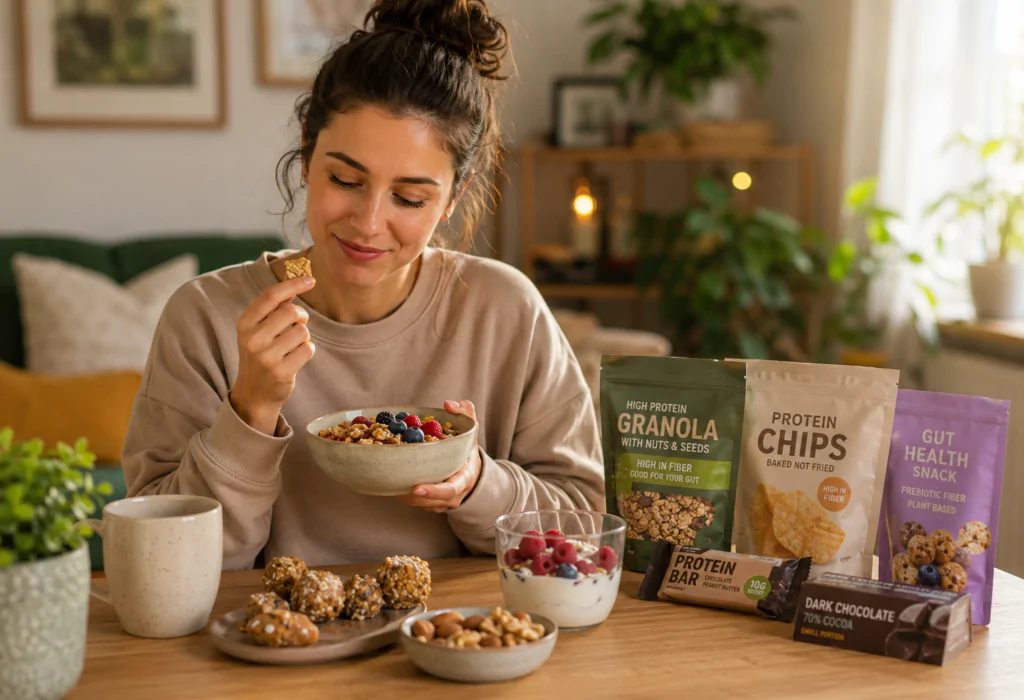
In the age of GLP-1, every bite suddenly has to prove its worth. Manufacturers need to step up investment in products that combine pleasure with functionality — for example, protein-enriched baked goods, high-fibre snacks, products marketed as gut-friendly, and portion-controlled treats designed to provide greater satisfaction with less.
But the main challenge for food brands is not simply a decline in appetite. It is the weakening of the habit of automatically indulging oneself.
For decades, many categories of indulgent products have capitalised on instinctive behaviour. GLP-1 appears to be shaping a consumer who pauses to think before indulging and increasingly asks themselves whether the product is really worth it.
This does not mean that consumers will stop seeking comfort, pleasure or an emotional connection through food. But it may mean that the era of mindless snacking to boost dopamine levels is beginning to fade.
Source: Food Navigator