
Aggressive promotional campaigns for butter in Poland’s largest retail chains have sparked outrage among industry representatives. According to AgroProfil, the National Audit Union of Food Cooperatives ‘Społem’ has approached the Polish Office of Competition and Consumer Protection (UOKiK), warning of the risks of market destabilisation and increased price pressure on milk producers.
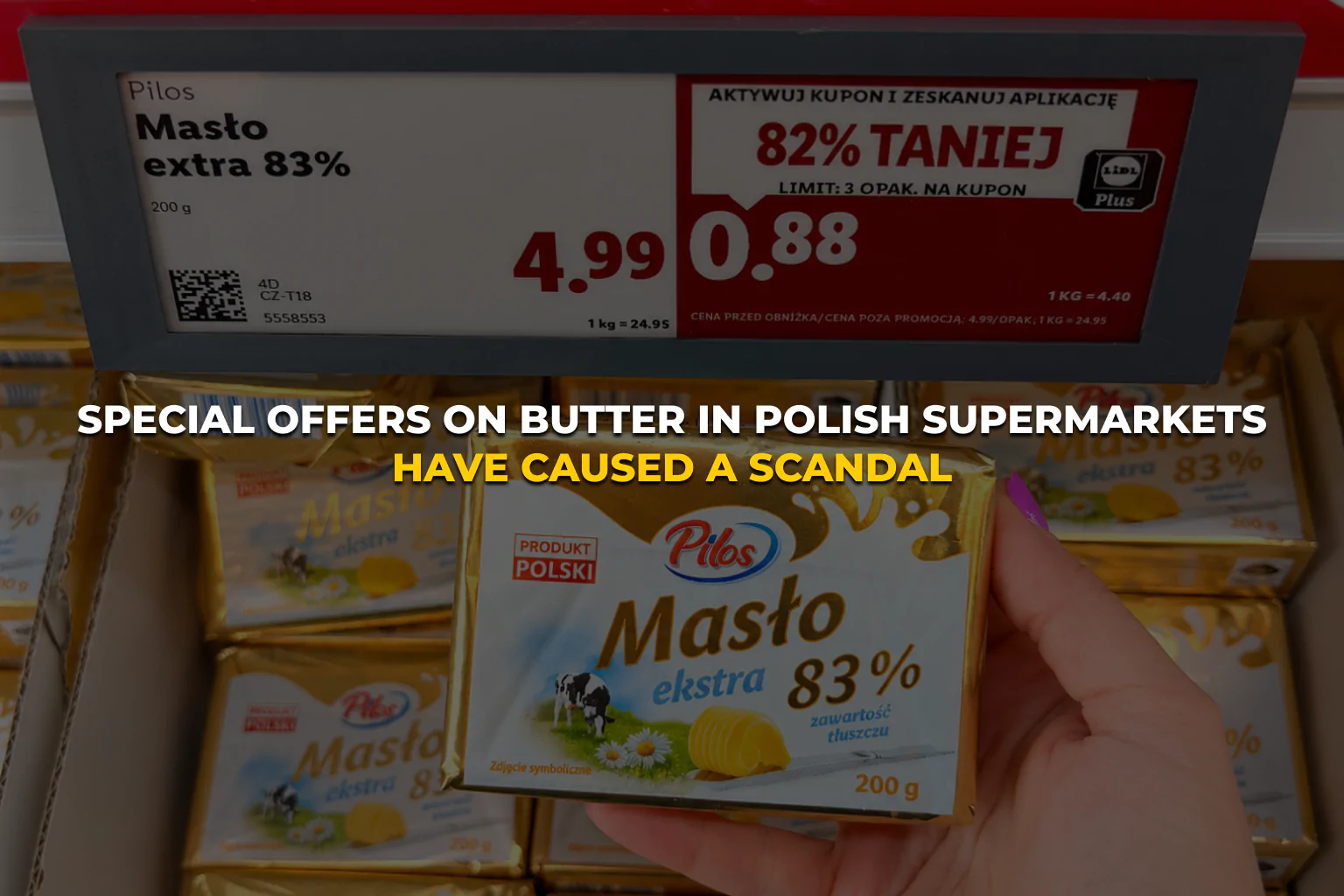
A fierce battle for customers has broken out on the Polish market between the largest discounters — Biedronka and Lidl. As part of promotional offers, 200g packs of butter were sold for 1.99 zlotys, 0.99 zlotys, and sometimes even for 88 groszy.
To consumers, this looks like a good deal; however, representatives of the agri-food sector regard this practice as an example of dumping and selling goods below cost in order to attract customers to shops.
The contrast is particularly striking when compared with other retail chains. During the same period, butter was selling for around 4.99 zlotys per pack at Aldi and Netto. According to industry experts, such a significant price difference cannot be explained by either production costs or the situation on the dairy market.
Społem claims that such a pricing policy effectively makes fair competition impossible for small shops and cooperatives. In its submission to the Office of Competition and Consumer Protection (UOKiK), the organisation highlights the risks of market monopolisation and the gradual displacement of small retail outlets.
The main concerns include allegations of dumping, breaches of fair competition principles, and long-term market deterioration. The industry fears that, once smaller players have been weakened, the market will become dependent on the decisions of a handful of the largest chains.
The potential impact of the price war on the dairy sector is a particular cause for concern. Although retailers claim that they are funding these promotions from their own margins, in the long term, the pressure to keep prices low could be passed on to processing companies.
Dairy processors seeking to retain contracts with major retail chains may be forced to seek savings by reducing the prices they pay for milk. Against a backdrop of high costs for feed and energy, and the requirements of the European Green Deal, this poses additional risks for Polish family farms.
The National Audit Union of Food Cooperatives expects the Office of Competition and Consumer Protection (UOKiK) to review contracts and invoices in order to assess the relationship between retail prices and the actual costs incurred by discounters when purchasing butter.
If the regulator concludes that large retail chains have engaged in unfair practices or exploited their contractual advantage, the companies could face substantial fines.
AgroProfil notes that the situation surrounding butter has become a prime example of how the marketing strategies of large retailers can influence not only the retail sector but also strategic sectors of agriculture. The short-term benefit for consumers in the form of butter at 88 kopecks may, according to critics, have much wider economic consequences in the long run.
Source: AgroProfil