For the European Commission, the dairy sector is no longer just about economics but a strategic asset — and Ukraine has been named a very important partner. Notes from the 2026 European Dairy Association congress.
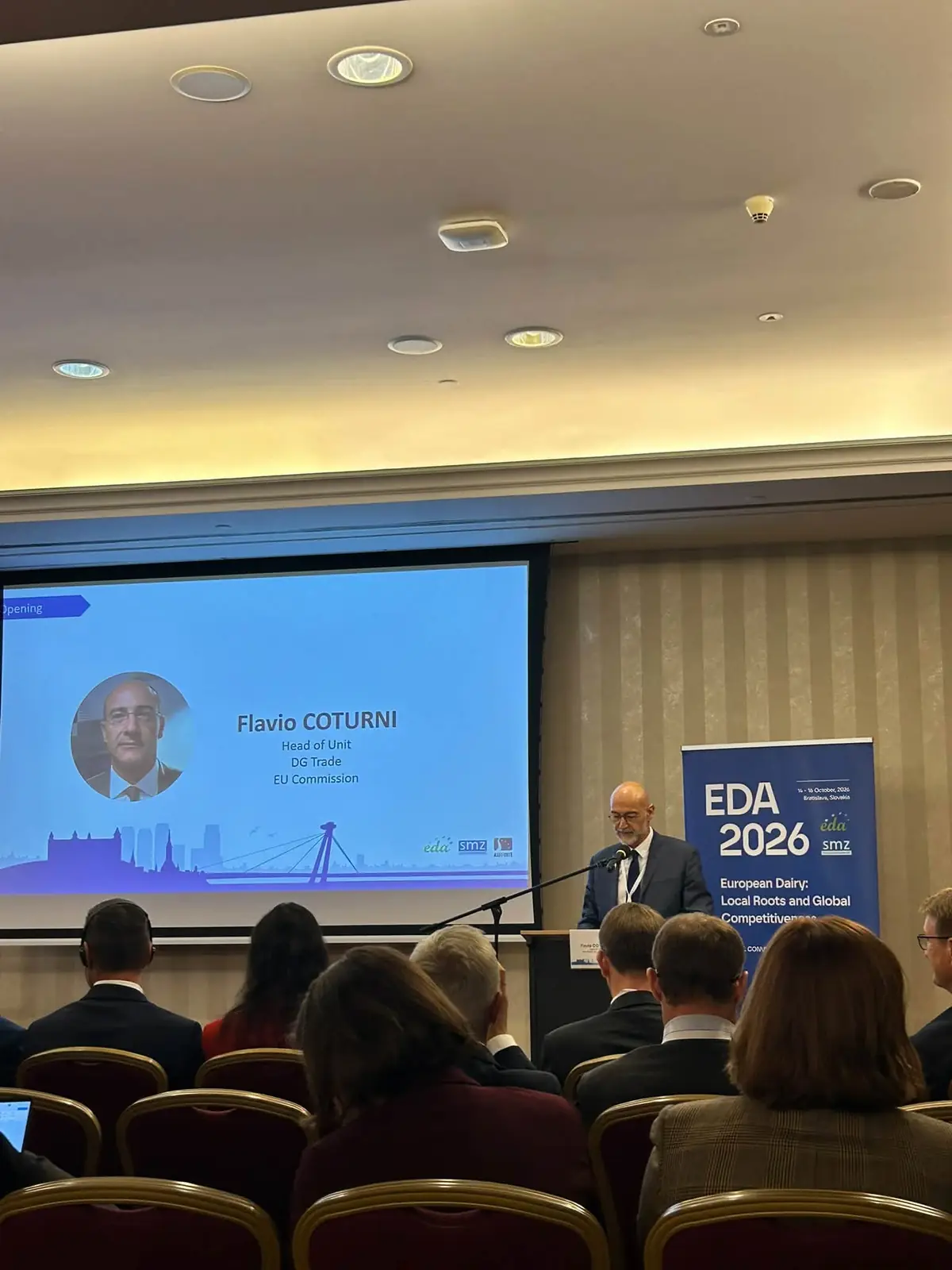
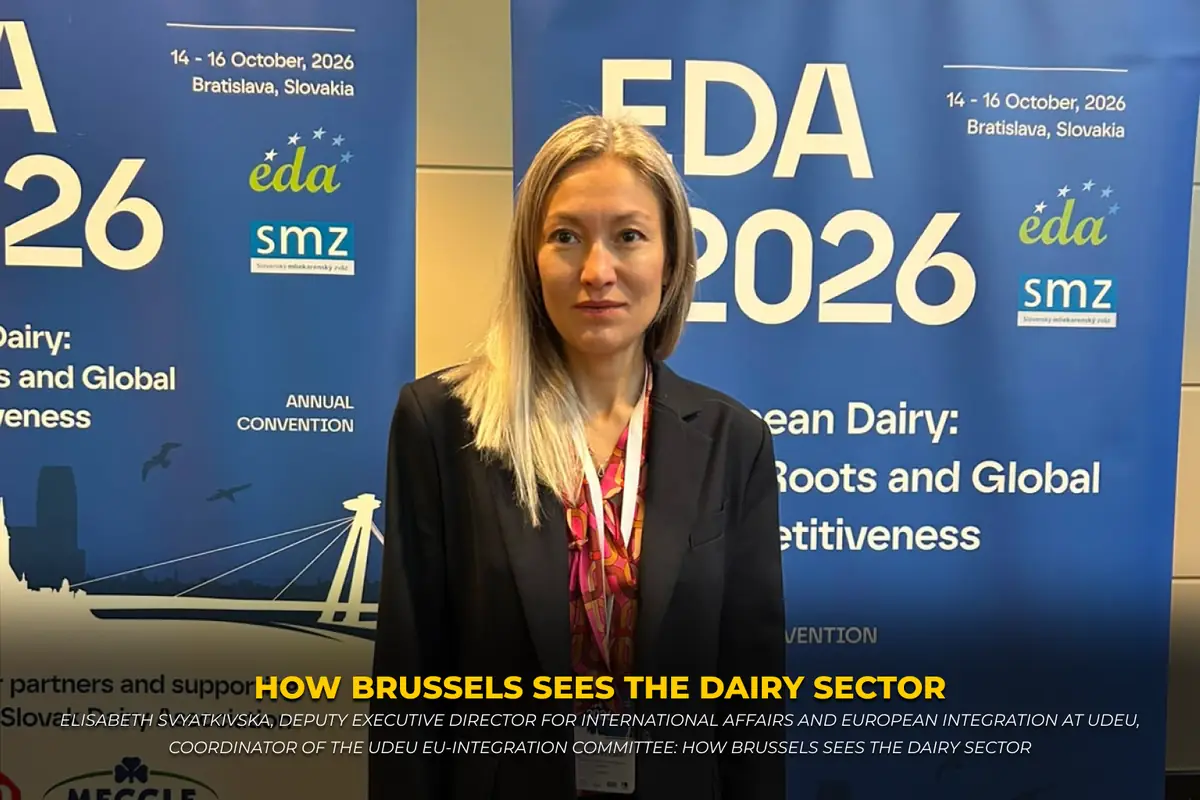
As reported by Elisabeth Svyatkivska, coordinator of the Union of Dairy Enterprises of Ukraine (UDEU) EU-Integration Committee, she is in Bratislava this week for the annual congress of the European Dairy Association, «European Dairy: Local Roots and Global Competitiveness».
One of the key presentations was given by Flavio Coturni, Head of Unit at the European Commission’s Directorate-General for Trade, on the state and outlook of the European Union (EU) dairy sector. According to Svyatkivska, it shows clearly how the Commission thinks about the industry today.
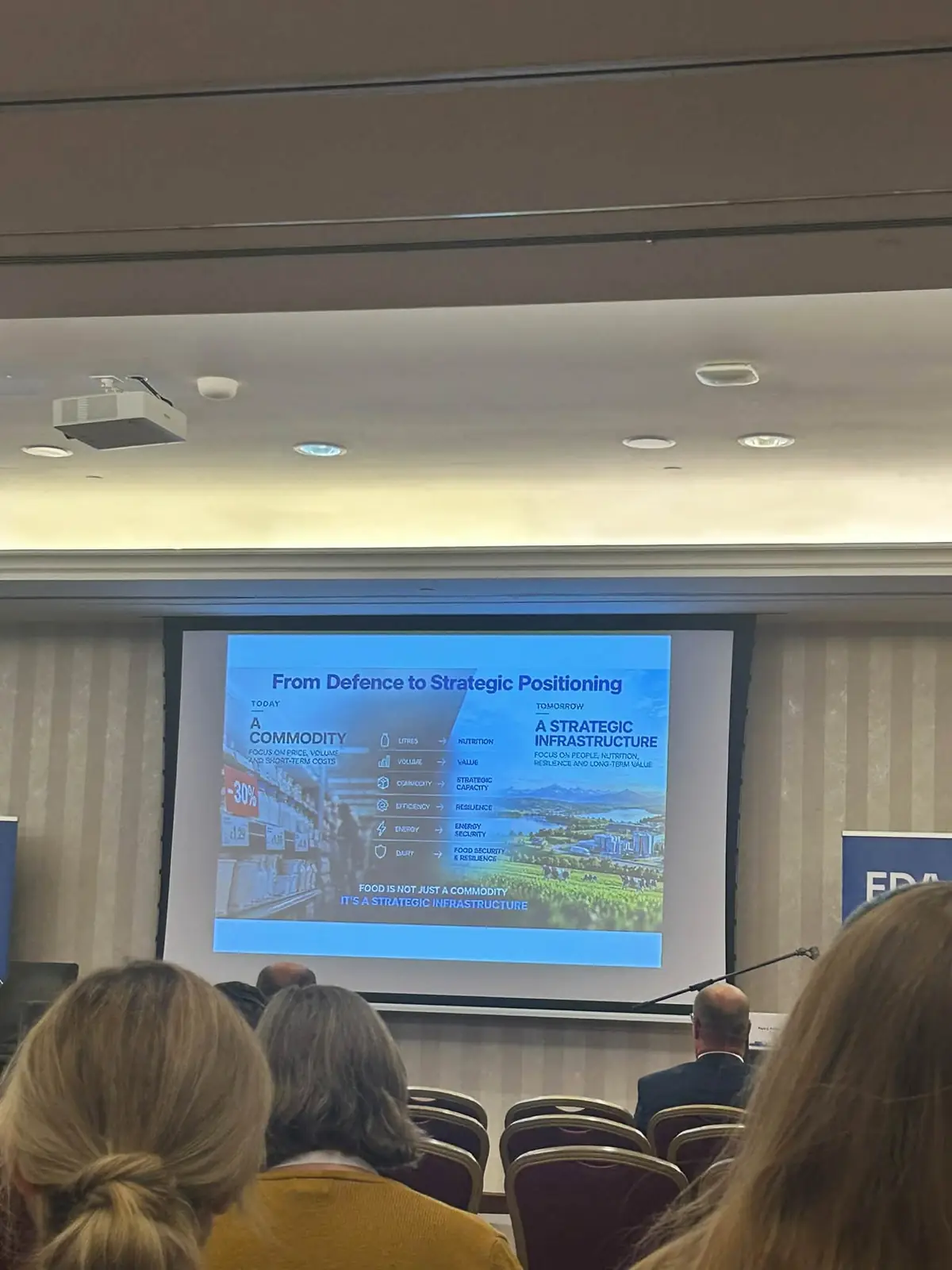
1. Dairy is a strategic EU asset, not just an economic one
Amid geopolitical instability and food security concerns, the ability to produce high-quality food is seen as a matter of the Union’s resilience.
2. Trade remains the main driver
In trade negotiations, the EU traditionally takes an offensive position on dairy. Among recent agreements and talks, Coturni listed Mercosur, Indonesia, Australia and the Philippines, as well as Thailand, Malaysia and the United Arab Emirates (UAE). He also highlighted the arrangements with the US that have ensured tariff stability.
3. Ukraine explicitly named as a very important partner
According to Coturni, the review of the Deep and Comprehensive Free Trade Area (DCFTA) and Ukraine’s gradual integration into the EU market framework open opportunities for deeper cooperation, including in dairy trade.
4. Signing an agreement is not enough
Non-tariff barriers can wipe out the value of tariff concessions — above all sanitary and phytosanitary requirements, certification and non-recognition of regionalisation. That is why the Commission is focusing on implementation and regulatory cooperation.
Coturni cited Vietnam as an example: after a long queue, 31 applications for market access for products of animal origin were approved there.
5. The challenges are named honestly
India remains closed. With China, the EU is challenging an anti-subsidy investigation into dairy products at the World Trade Organization (WTO).
Coturni also acknowledged that competitors such as New Zealand and Australia enjoy preferences and are strengthening their reputation, so Europe cannot rely on historical advantages alone.
What this means for Ukraine
In Svyatkivska’s view, there are two messages here for Ukrainian processors.
First, the EU sees Ukraine as part of its market rather than a threat — and that is a window of opportunity.
Second, in the EU everything comes down to practical implementation: rules, procedures and access mechanisms.
That is why, she stresses, it is so important to work not only on the terms of trade but also on how they work in practice — in particular on the administration of tariff-rate quotas, transparent contractual relations and compliance with EU standards.
Source: Elisabeth Svyatkivska’s Facebook