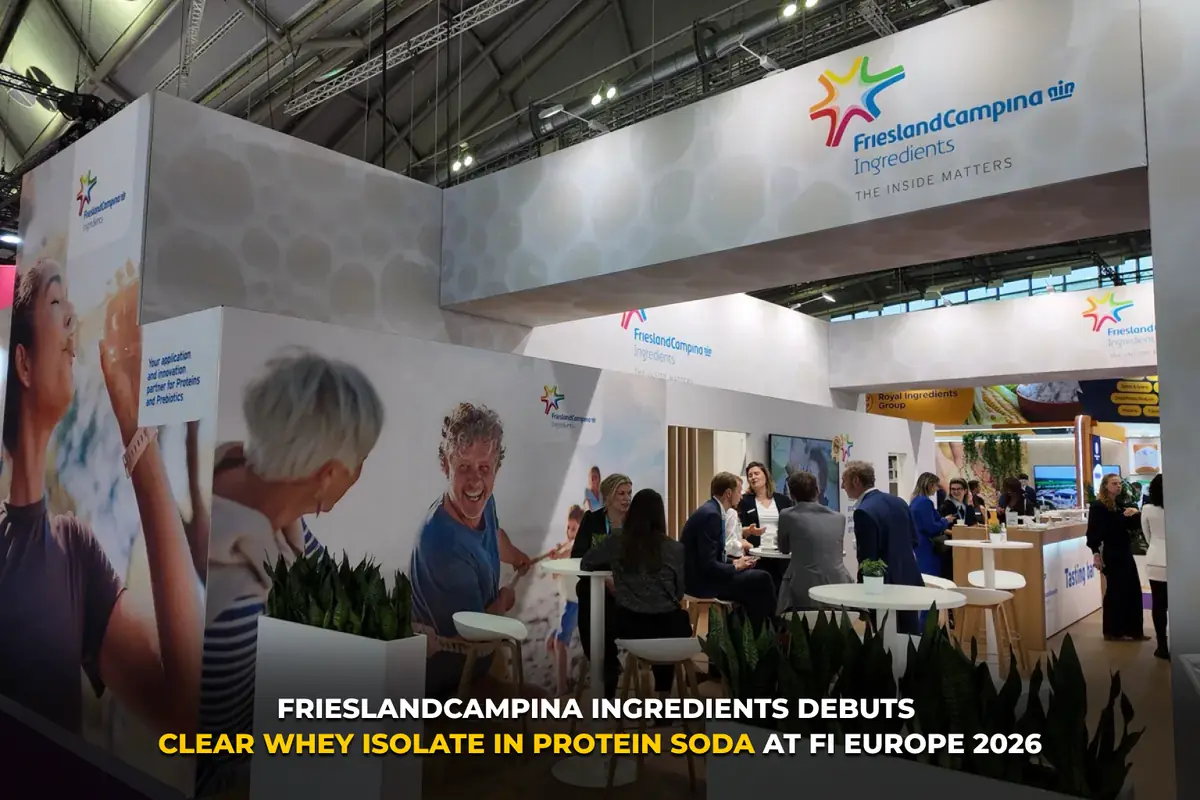
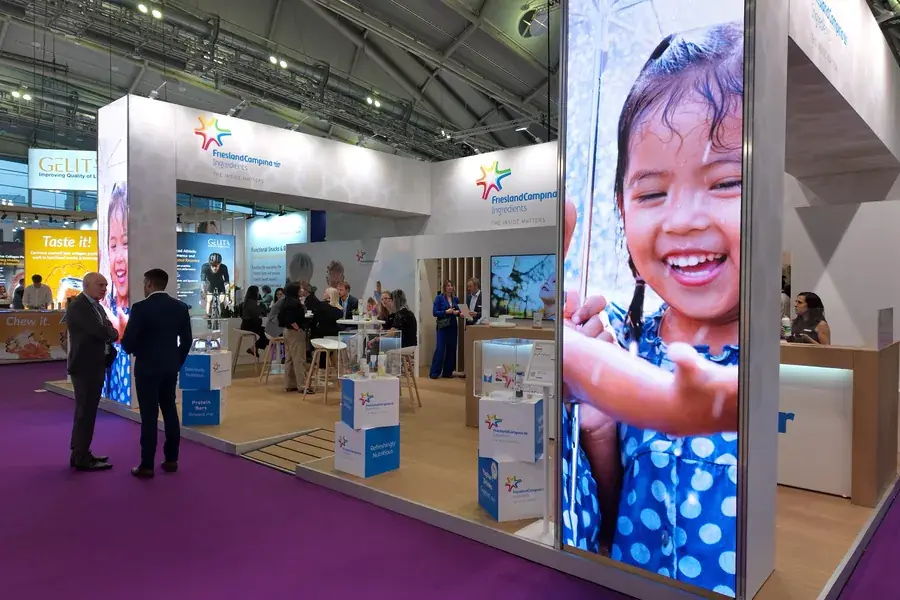
At Food Ingredients (Fi) Europe 2026 in Frankfurt, Germany (17–19 November), FrieslandCampina Ingredients is showcasing new ways to use protein across taste, texture and format, from refreshing drinks to bars and yoghurts, Nutrition Insight reports.
Key points:
- the company presented its new clear whey isolate Nutri Whey Isolate Clear PA in the Re-vibe protein soda concept;
- Re-vibe is shortlisted for Fi Europe’s Health Innovation Award;
- for consumers on glucagon-like peptide-1 (GLP-1) medications, the company showed a nutrient-dense shot and drinkable yoghurt;
- protein is becoming an expectation rather than a category, driving demand for «protein plus» products.
Clear protein for refreshing drinks
«From indulgent bars and yogurts to refreshing drinks, we’re showing how protein can be enjoyed in new ways, meet new needs, and fit into new occasions», says Floor van der Horst, global marketing director for Performance and Active Nutrition at FrieslandCampina Ingredients.
A key new development is Nutri Whey Isolate Clear PA, a pre-acidified whey protein isolate for refreshing protein beverages. Van der Horst says it offers a complete amino acid profile, clarity, a light body, neutral taste and heat stability, enabling a wide range of still and sparkling drinks.
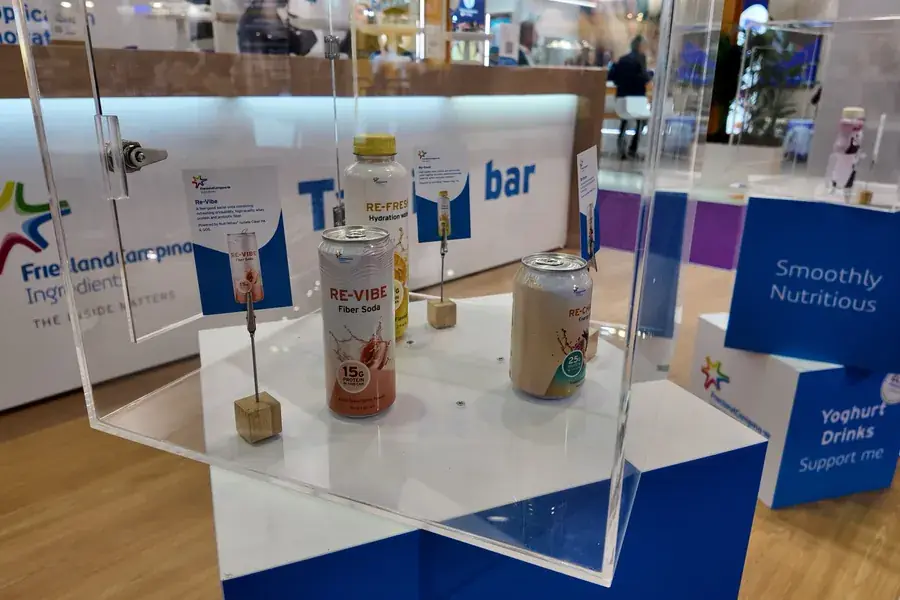
The ingredient features in Re-vibe, a low-sugar «protein plus» soda concept combining Nutri Whey Isolate Clear PA with galacto-oligosaccharide (GOS) prebiotic fibre for gut health. The drink is shortlisted for Fi Europe’s Health Innovation Award.
«These solutions tap into an emerging opportunity around functional hydration — particularly among health-conscious Gen Z consumers who want to support well-being without compromising on enjoyment», says van der Horst.
Concepts for the GLP-1 era
FrieslandCampina Ingredients is also exploring what growing GLP-1 use means for protein innovation and why nutrient density matters more as consumers seek more value from smaller portions.
The company is showing two new concepts: a Nutri Boost compact shot with 20 g of fast- and sustained-digesting dairy protein, and a Nutri Balance vanilla blueberry drinkable yoghurt with 6% protein.
«Both concepts are powered by Nutri Whey ProHeat, a microparticulated whey protein especially designed to overcome formulation challenges associated with heat treatment, so high-protein whey drinks stay smooth and satisfying», says van der Horst.
Protein as an expectation, not a category
Van der Horst says one of the biggest shifts this year is protein becoming less of a category and more of an expectation, with protein claims now appearing across the supermarket, even on coffee, soup and potato chips.
«For brands, the question used to be «how do we add more protein?» Now, it’s «how do we make protein relevant to different consumer needs and occasions?» For most consumers, taste, texture, and convenience still come first. Protein just provides another reason to choose a product».
«Of course, the continued impact of GLP-1 medications adds another dimension. Not only are reduced appetites putting greater focus on nutrient density, but our own consumer research also points to GLP-1s influencing how a much wider demographic thinks about portion size, appetite, and nutrition».
Protein dosing
Van der Horst highlights new research on protein dosing. Traditionally, muscle protein synthesis was thought to reach a ceiling after a certain amount of protein. However, recent research suggests the body’s response may be more prolonged, with larger servings continuing to stimulate muscle protein synthesis for longer.
«It’s no longer just a question of adding more protein. There’s an opportunity to be much more considered about the type, amount, and format, depending on who the product is for and when they’re likely to consume it».
Social occasions as an opportunity
Van der Horst sees some of the biggest opportunities for functional nutrition in everyday moments that don’t look «functional», such as socialising. Research shows diet quality is typically lower at weekends, with higher calorie and alcohol intake and a smaller share of energy from protein.
«Unlike traditional protein drinks, Re-vibe is designed to look, taste, and feel like a drink people would actually want to share and enjoy. With a lightly sparkling finish, it feels more at home on a table at a gathering rather than on the shelf of a supplement store».
«We expect significant growth in «protein plus», combining protein with complementary ingredients and benefits that respond to more specific consumer needs. High-protein claims should be the starting point rather than the differentiator».
Bars with protein and texture
Raising protein while keeping the taste and texture of a treat requires careful attention to how protein behaves in the finished product: in drinks, chalkiness and grittiness increase with protein levels, while bars tend to harden over time.
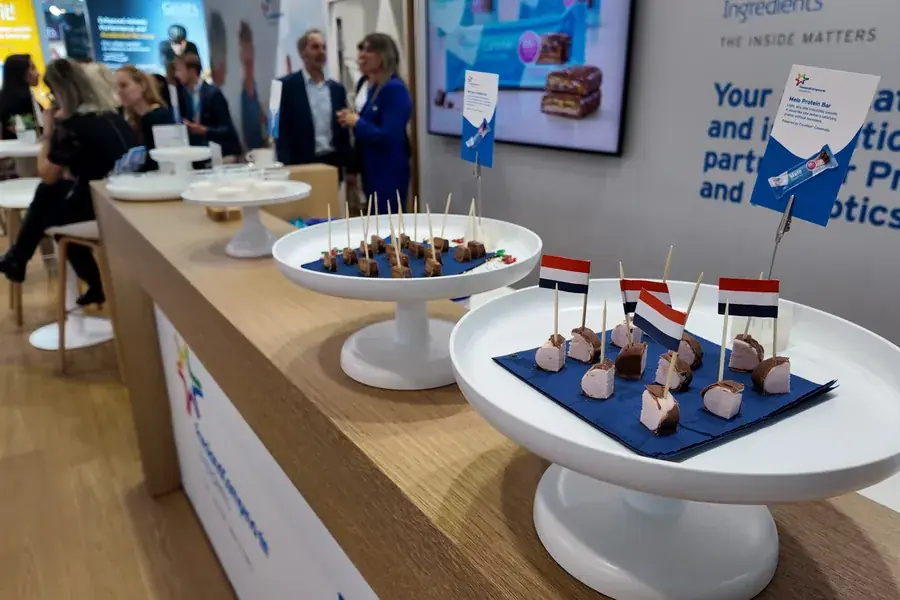
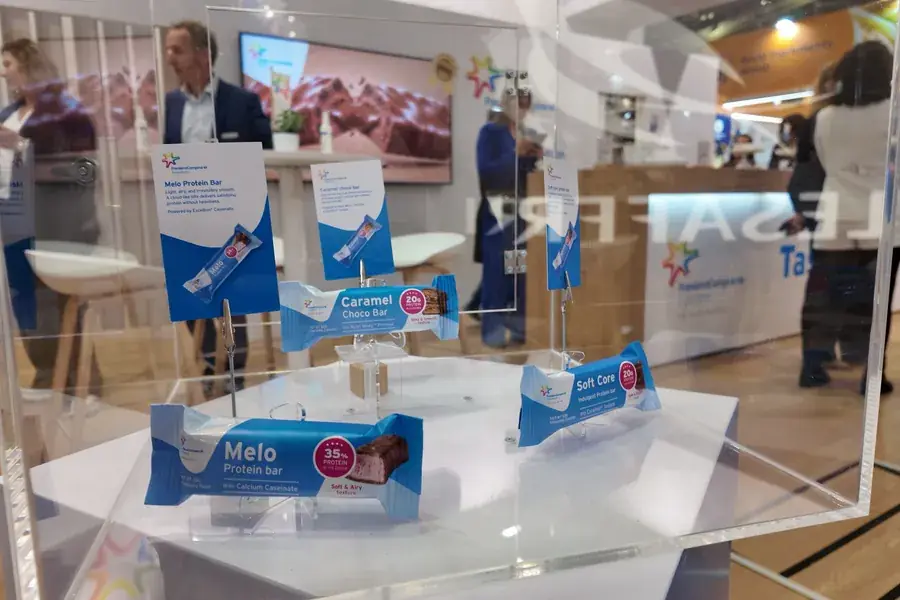
The company is showing the Melo Bar with a fluffy core containing 35% protein, where caseinates provide structure and whey proteins help stabilise air, and the Sticky Caramel Protein Bar, combining a caramel layer with 20% protein and a soft protein dough.
FrieslandCampina Ingredients has a global network of application centres, including new ones in New Jersey, US, and Singapore, to support tailored product development.
Source: Nutrition Insight