
Selling direct to the public helps squeezed farmers control prices and improves access to food in rural areas.
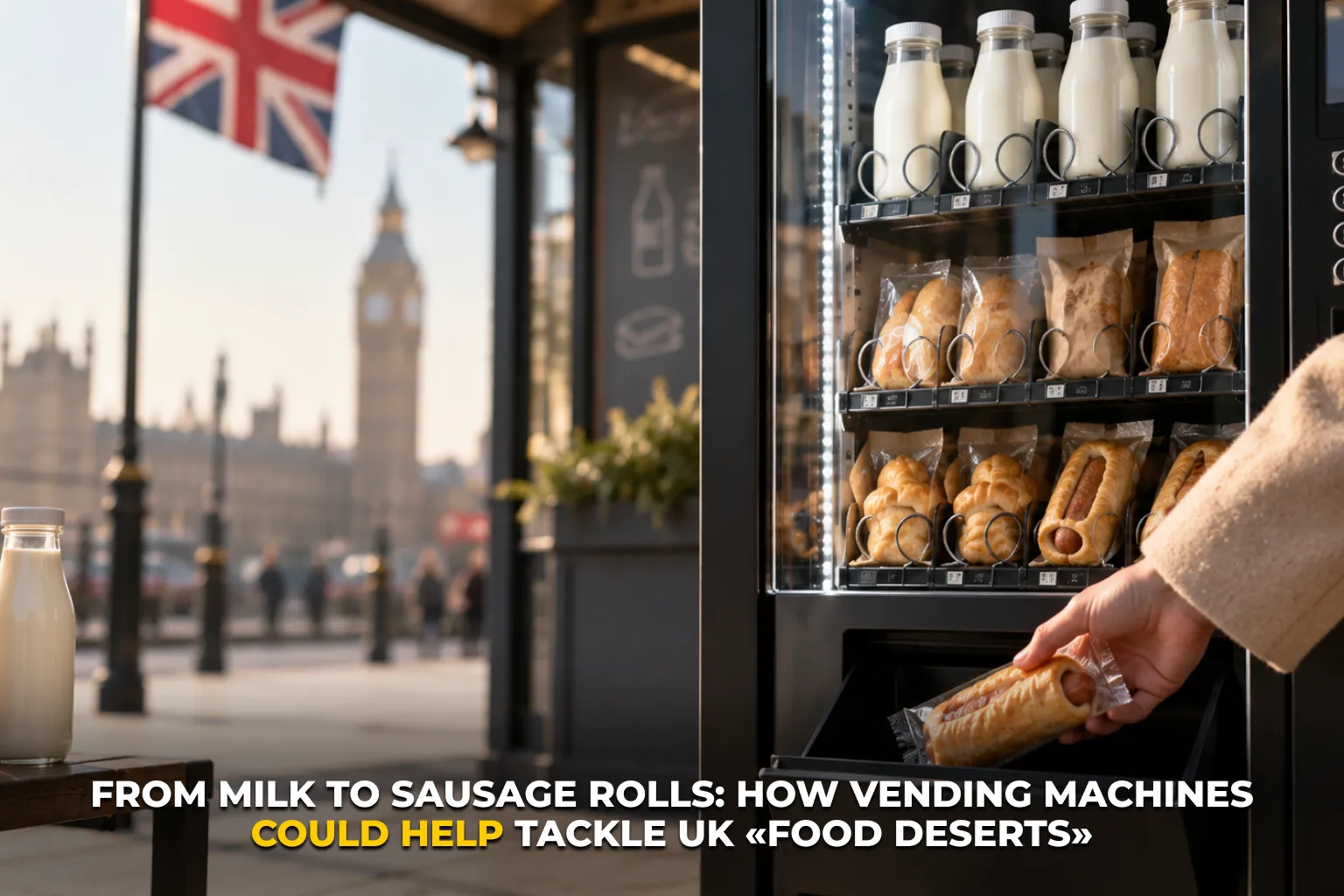
A UK farming family is putting fresh milk and local produce — from scotch eggs and sausage rolls to brownies — into vending machines in villages and rural areas, a notable example of direct selling that gives farmers control over price, The Guardian reports.
«Price makers, not price takers»
Mark James (70) and sons Sam (39) and Jacob (36) trialled vending machines to sell milk directly.
«For the first time ever, we’re price makers rather than price takers», Mark says. «If we weren’t doing this, we’d have to think about giving up milk».
Just under a third (30%) of the 4,500 litres produced daily by their 130-cow herd at Bodenham, Herefordshire, is sold via 17 Whole Moo World machines across Herefordshire, Gloucestershire, Worcestershire and Shropshire. The rest goes to a local processor.
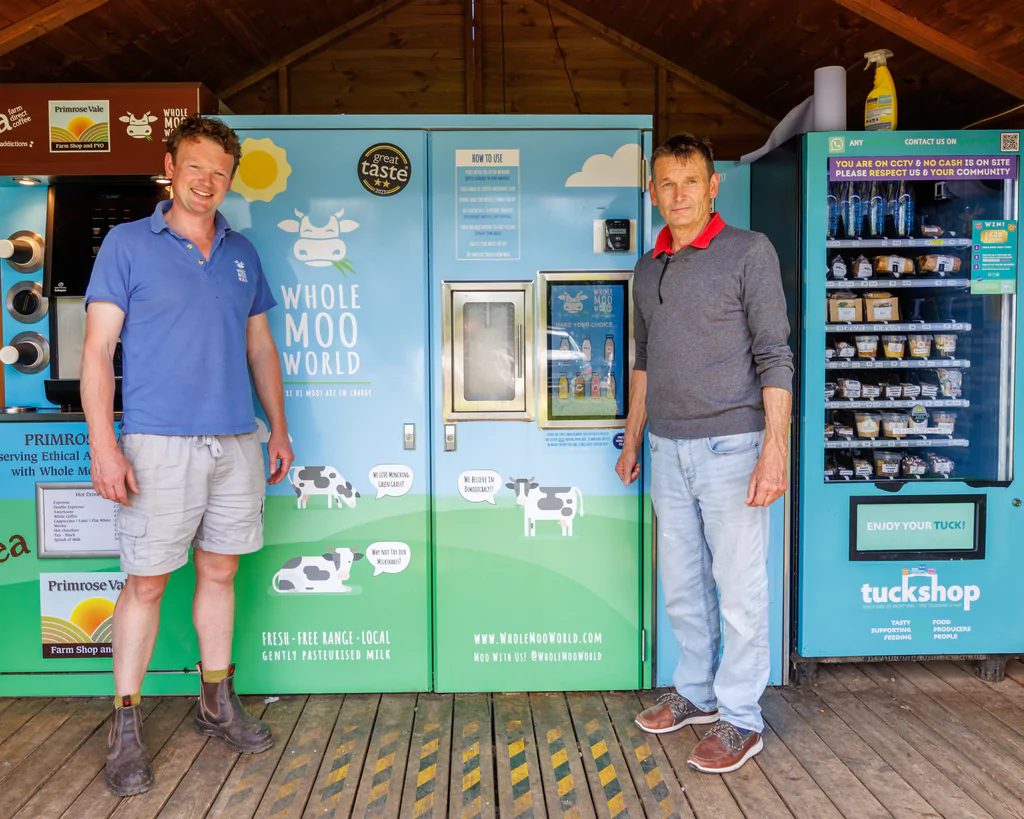
A sister business, Tuckshop, now runs 22 sites selling cakes, sandwiches and treats from small local producers, and Jacob believes vending could help villages at risk of becoming «food deserts».
Prices, glass bottles and robots
Dairy has suffered a «boom and bust» price cycle; farmgate prices fell again this year — «in August last year we were paid 44p a litre, and since February it’s been 30p», Mark says — often below the cost of production, with processing dominated by Arla, Müller and First Milk.
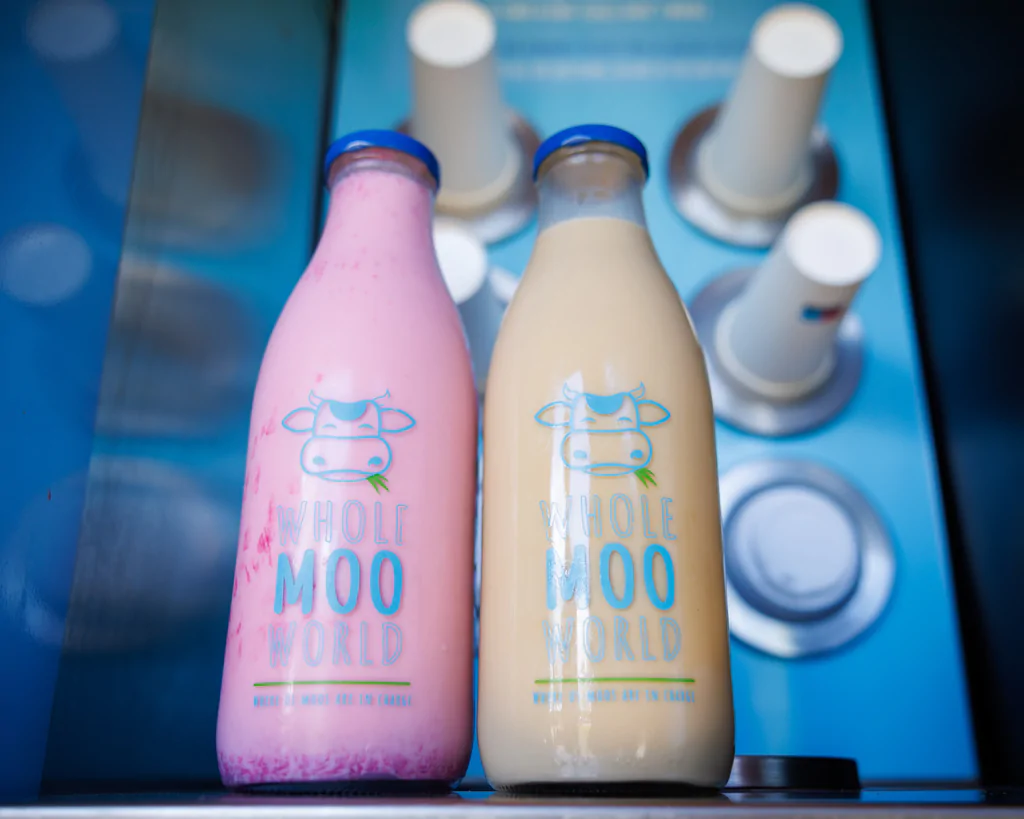
Supermarkets charge £1.20–£1.30 for a two-pint (~1.1-litre) bottle; Whole Moo World charges £1.50 a litre of unhomogenised milk in reusable glass bottles, and £2.90 a litre for milkshake.
This is the family’s second stint in dairy, having quit in the 2015 crisis; the younger generation returned only on new terms, with a mixed herd milked by robots.
The family refill machines within a 30-mile (~48 km) radius and plan to expand — «vending is much cheaper to install and run» than a farm shop, Jacob says.
Source: The Guardian