
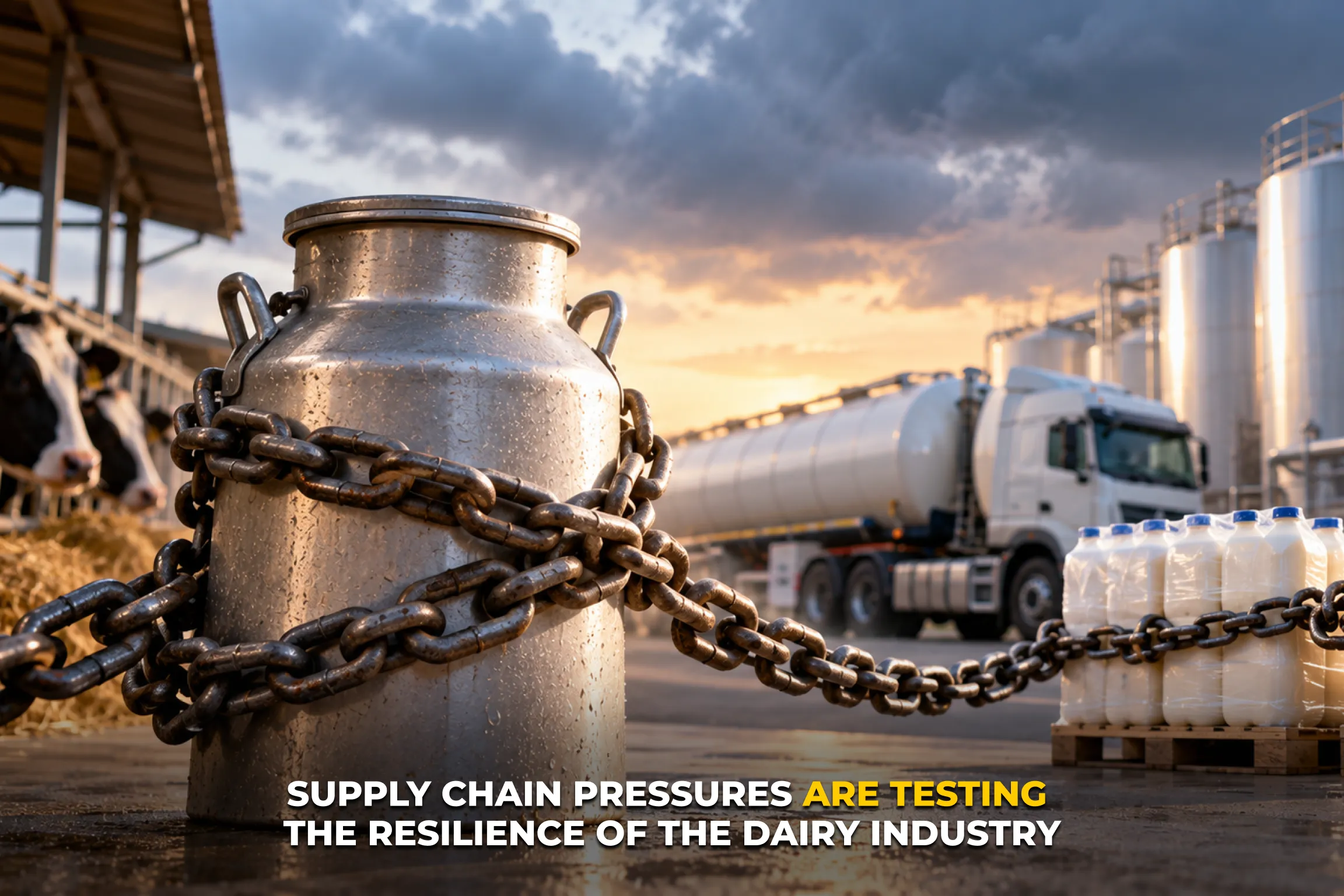
Dairy is one of agriculture’s most mean-reverting markets, but geopolitical and environmental pressures threaten its usual cyclicality.
Dairy producers face mounting pressure from tight feed supplies, fertiliser uncertainty and strong protein demand, raising concerns that milk prices could stay elevated for longer than traditional market cycles suggest, DairyReporter reports.
Key takeaways:
- Feed constraints may limit dairy herd growth despite high milk prices.
- Fertiliser uncertainty could pressure feed availability and crop yields.
- Strong demand for dairy protein is helping keep markets tight.
From beef to milk
First it was beef: global prices have reached elevated levels as supply constraints collided with strong consumer demand. Prices have climbed steadily since the pandemic, with high feed costs and recurring droughts forcing producers to shrink herds.
According to the OECD and the Food and Agriculture Organization (FAO), global beef reference prices reached a four-decade high in 2025, and limited animal inventories plus the slow process of herd rebuilding are expected to keep prices high in the near term.
Feed and fertiliser
Upstream, feed availability and cost have been key drivers. Feed markets have stayed exposed to successive supply shocks — from pandemic-era processing disruption and the war in Ukraine to the geopolitical tensions of 2026, which upended energy, fertiliser and trade flows.
Fertiliser uncertainty is now feeding into planning for the 2027 crop season, with the International Fertilizer Association warning that a prolonged disruption could mean rationing and lower crop output. For dairy, the consequences could be major.
Why the usual cycle may break
«Typically, dairy prices are considered the most mean-reverting of all prices», said Brian Quinn, chief product officer at Quoreka, a commodity trade and risk-management software provider.
When prices rise, producers are incentivised to grow herds and deliver more milk, while the stock position for powders and other finished products also eases to meet demand.
But today’s feed market may be disrupting that cyclicality: high prices and resilient demand support strong production, yet feed availability and affordability — themselves dependent on fertiliser flows and crop yields — may in effect cap cow numbers.
«If you can’t feed the cows, you can’t bring more cows online», said Quinn.
Crop prospects have already been hit in key markets including Europe and North America, though Brazil’s bumper year is offsetting some of the global pressure. Even so, feed-side pressure may keep dairy prices tight for longer.
«Demand is staying up, and supply is not coming up. The cost and availability of feed is making it difficult to produce more», said Quinn.
Protein and the by-product effect
Strong demand for dairy protein compounds this. In the US, the rise of GLP-1 (glucagon-like peptide-1) weight-loss medications and the broader shift to high-protein diets are supporting whey protein demand. That adds another complication: producing whey means producing other dairy commodities.
«If we are able to increase milk production, I think you’d see the rest of the dairy complex relax a little bit», he said.
He points to oil, where refineries cannot raise crude output just to meet diesel demand without also producing other by-products. Normally the extra supply would eventually ease prices.
The uncertainty now is whether upstream constraints disrupt that cycle — and cost producers more until prices reach equilibrium.
Source: DairyReporter