
The European dairy sector is undergoing a period of profound transformation against a backdrop of price pressures, rising costs and market concentration. According to the Frankfurter Allgemeine, despite the challenging situation, the long-term outlook remains positive.
Price pressures, increasing market concentration and rising costs are shaping a new reality for dairy farmers. Dairy products are increasingly becoming the subject of political debate, particularly butter, the price of which can fluctuate from promotional offers of 99 cents to nearly four euros per pack. At the same time, farmers are forced to cover their costs, invest in animal welfare, comply with climate regulations and modernise production.
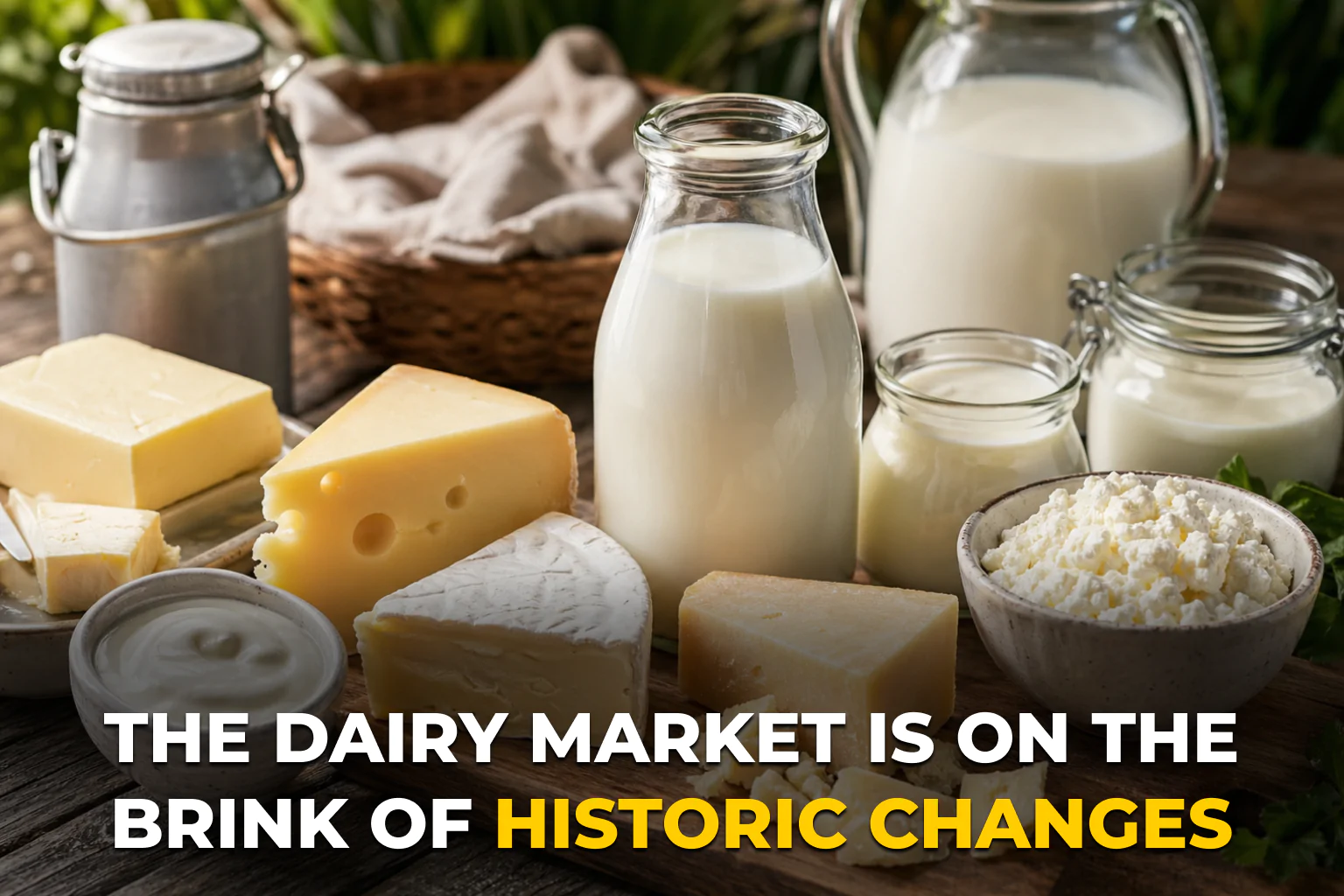
A new analysis by the consultancy firm Roland Berger suggests that the current situation is not a temporary but a structural problem, and that the dairy sector is facing ‘historic changes’.
Falling prices and pressure on producers
Data for the first quarter of 2026 show high market volatility. Since the autumn, producer prices have fallen significantly: on average, farmers received 49.1 cents per kilogramme of milk, compared with 61.5 cents a year earlier, according to Agrarmarkt Informations Gesellschaft (AMI).
Milk prices remain dependent on the global market and fluctuate significantly, partly because around half of the milk produced is exported. Geopolitical risks have a direct impact on the market, whilst a rise in production of approximately 6% from autumn 2025 has exacerbated the supply surplus. Higher feed and energy costs are creating additional pressure.
The competition authorities also highlight an imbalance in the distribution of income: whilst in 2014 a litre of milk in a supermarket cost 70 cents, of which 40 cents went to farmers, by 2023 the wholesale price had risen to €1.05, yet the farmers’ share remained at 40 cents.
The decline in the number of farms and market concentration
Price pressures are leading to a decline in the number of dairy farms. Between 2010 and 2024, their number fell from 94,000 to 50,000, a decline of more than 55%, according to the Thünen Institute. At the same time, total milk production has remained relatively stable, as large farms increase their herd sizes and productivity.
Similar trends are also evident in the processing sector. The number of dairy processing plants has almost halved since the early 2000s, and, according to Roland Berger’s estimates, could fall from 158 to 116 by 2035.
Profitability also varies significantly: standard businesses often operate with an EBITDA margin of less than 2%, whereas specialist firms can achieve margins of 5–10% or more.
A striking example of market concentration is the planned merger between Arla Foods and Deutsches Milchkontor. If the deal goes ahead, the new entity will become Europe’s largest dairy cooperative, bringing together 12,000 farmers and generating a turnover of €19 billion. At the same time, this raises concerns about increased market power.
Demand for dairy products remains stable
Despite structural changes, dairy products continue to hold a strong position in the market. The segment’s annual turnover stands at around €30 billion, with per capita consumption at 84 kg. The share of plant-based alternatives remains relatively low — at around 4%.
Consultants highlight the nutritional benefits of milk: around 3 g of protein per 100 ml, compared with approximately 1 g in oat-based drinks. Furthermore, nearly three-quarters of consumers prefer natural ingredients.
The latest figures also point to an improvement in demand. Retail sales are rising across many categories, particularly for high-protein products. Even the drinking milk segment has seen growth of 0.5%, mainly driven by organic milk (+5.1%).
In the second half of 2025, butter consumption rose by almost 9%, a trend attributed to lower prices for private-label products. Sales of quark rose by 7.4% and cheese by 2.5%, whilst yoghurt and drinking milk showed more modest growth.
The market for plant-based alternatives continues to grow (by 5–6%), but at a much slower pace than before, whilst cheese alternatives have actually declined by 6%, presumably due to taste considerations.
According to Roland Berger, the dairy sector’s future growth potential lies in segments outside the mass market, particularly specialised products such as protein drinks.
Source: Frankfurter Allgemeine