Processing alone is not a reliable indicator of a food’s nutritional quality or health impact, so consumer guidance and nutrition policy should be based on nutritional composition, health impact and overall dietary patterns, according to a new Q&A factsheet on ultra-processed foods (UPFs) from the European Dairy Association (EDA).
Key points:
- dairy products provide high-quality protein, vitamins and minerals and are recommended in healthy diets across Europe;
- under the NOVA classification, most plain dairy products are minimally processed, butter is a «culinary ingredient» and most cheeses are «processed» foods;
- NOVA ignores nutritional value, so nutritious products such as fruit yoghurt can be classified as ultra-processed;
- there is currently no scientific consensus that «ultra-processing» per se is an independent risk factor for health.
What is food processing and why do we do it?
Food processing is the transformation of raw materials from agriculture, fisheries or farming into food, or the conversion of one form of food into another. It takes place both at home (cooking, frying, slicing, freezing) and on an industrial scale (grinding, milling, heating, fermenting, canning, drying).
Food is processed to improve safety, extend shelf life, produce foods for specific dietary needs (such as lactose-free dairy) and reduce food waste.
Milk is a good example of why processing is necessary. It is highly nutritious but perishable and, if untreated, provides an ideal environment for microorganisms, including harmful bacteria. Basic steps such as separation, standardisation, pasteurisation and homogenisation turn raw milk into safe, stable, value-added dairy products.
Fermentation in cheese and yoghurt production creates new nutritional characteristics, including short-chain fatty acids. Processing also enables fortification, for example with vitamin D, and dairy is a particularly suitable vehicle thanks to its widespread consumption.
NOVA classification: what are «processed» and «ultra-processed» foods?
The term «ultra-processed food» comes from the NOVA classification, developed in 2009 by Brazilian researchers. It sorts foods into four groups according to the extent and purpose of processing and the type of ingredients and additives:
- unprocessed or minimally processed foods;
- processed culinary ingredients;
- processed foods;
- ultra-processed foods.
What distinguishes UPFs from processed foods is the presence of non-culinary ingredients (substances of exclusive or near-exclusive industrial use) and sensory-related additives such as colours, flavours, flavour enhancers, non-sugar sweeteners, modified starch, modified oils, isolated proteins and emulsifiers. Under NOVA, a single such marker ingredient is enough to classify a product as ultra-processed.
NOVA has been criticised because it is difficult to apply consistently, relies on subjective interpretation, and the evidence that processing per se, independent of composition, affects health remains limited.
By focusing only on processing, NOVA groups nutrient-rich and nutrient-poor foods together. When applied to the Mediterranean diet pyramid, half of the foods at its base were classified as UPFs. Conversely, some foods that guidelines recommend limiting can be classified as unprocessed (e.g. red meat) or culinary ingredients (e.g. butter).
Are food additives harmful to health?
In the EU, all food additives are thoroughly assessed by the European Food Safety Authority (EFSA) before approval. Only approved additives are included on the EU list, assigned an «E number» and regulated with strict conditions of use and maximum permitted levels.
Although certain additives serve as UPF markers under NOVA, there is currently no conclusive evidence that authorised additives consumed within safe limits harm health. Research into possible effects on the gut microbiota is ongoing but remains inconclusive.
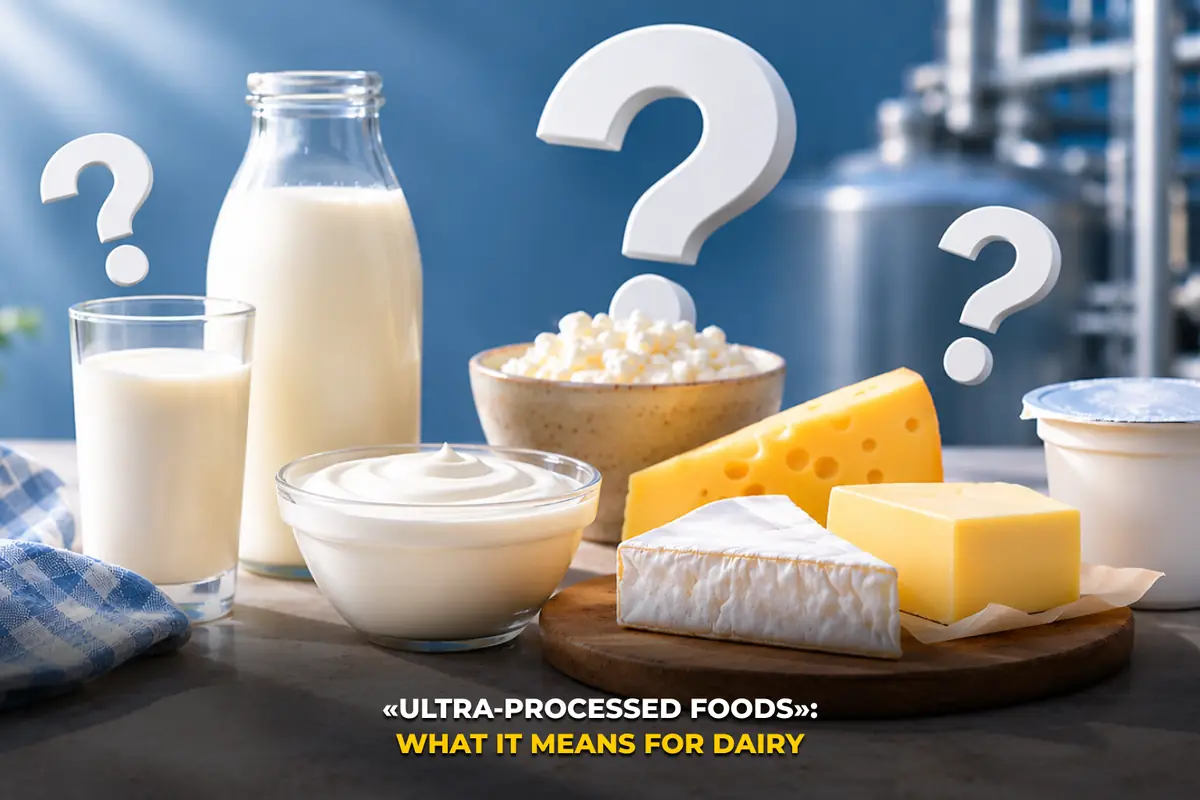
Are dairy products «ultra-processed»?
Under NOVA, most plain dairy products such as milk, fermented milks (including yoghurt), crème fraîche and cream are minimally processed. Butter is a «culinary ingredient» (NOVA 2), and most cheeses are «processed» foods (NOVA 3).
Some dairy products, such as flavoured milk, fruit yoghurt and processed cheese, and products containing dairy ingredients such as whey powders, are classified as UPFs under NOVA.
Since NOVA disregards nutritional value, dairy products in NOVA group 4 still provide important nutrients and are nutritionally very similar to their plain, minimally processed versions, offering many similar health benefits.
Are all NOVA 4 foods unhealthy?
Ultra-processed foods are not a nutritionally homogeneous group, so their health effects cannot be generalised. When all UPFs are grouped together, epidemiological studies generally report associations with negative health outcomes, but studies of subgroups show effects vary by food type.
For example, some NOVA 4 subgroups such as breads, breakfast cereals, sweetened yoghurt and dairy desserts may have neutral or even protective associations with cardiovascular risk. Similar findings have been reported for type 2 diabetes.
Most studies linking UPFs to health risks are observational: they identify associations but do not establish cause and effect. A recent review of randomised trials found that UPF-rich and non-UPF diets differed in energy density, texture, fibre, protein, sugar, saturated fat and sodium, making it difficult to tell whether effects were caused by processing itself.
Is the UPF concept useful for policy?
The relevance of the UPF concept as a basis for public health policy remains uncertain. Its definition is still debated, and the NOVA 4 category covers products with very different nutritional profiles.
Moreover, UPF evidence relates mainly to overall dietary patterns, while policy measures usually apply to individual products. This creates particular challenges for labelling, marketing restrictions and reformulation requirements.
Several national authorities in the EU, as well as the European Commission in a scoping paper published in August 2026, have raised concerns about using the concept for policymaking. The French agency ANSES states that «the concept of ultra-processing has yet to be scientifically substantiated». The Nordic Nutrition Recommendations 2023 also give no specific UPF guidance, and national authorities in the UK, Spain and Germany have reached similar conclusions.
There is also no clear evidence that front-of-pack labelling improves purchasing behaviour; multiple labels can contradict each other and create confusion.
Conclusion
Food processing is essential to make dairy safe, stable and accessible, and many dairy foods are nutrient-rich and recommended in food-based dietary guidelines.
While some dairy products may be classified as «ultra-processed» under NOVA, this classification does not consistently reflect their nutritional quality or health impact.
EDA therefore recommends that consumer guidance and nutrition policy prioritise overall dietary patterns, nutritional composition and the health impact of foods rather than processing-based classifications.
Source: European Dairy Association (EDA)