
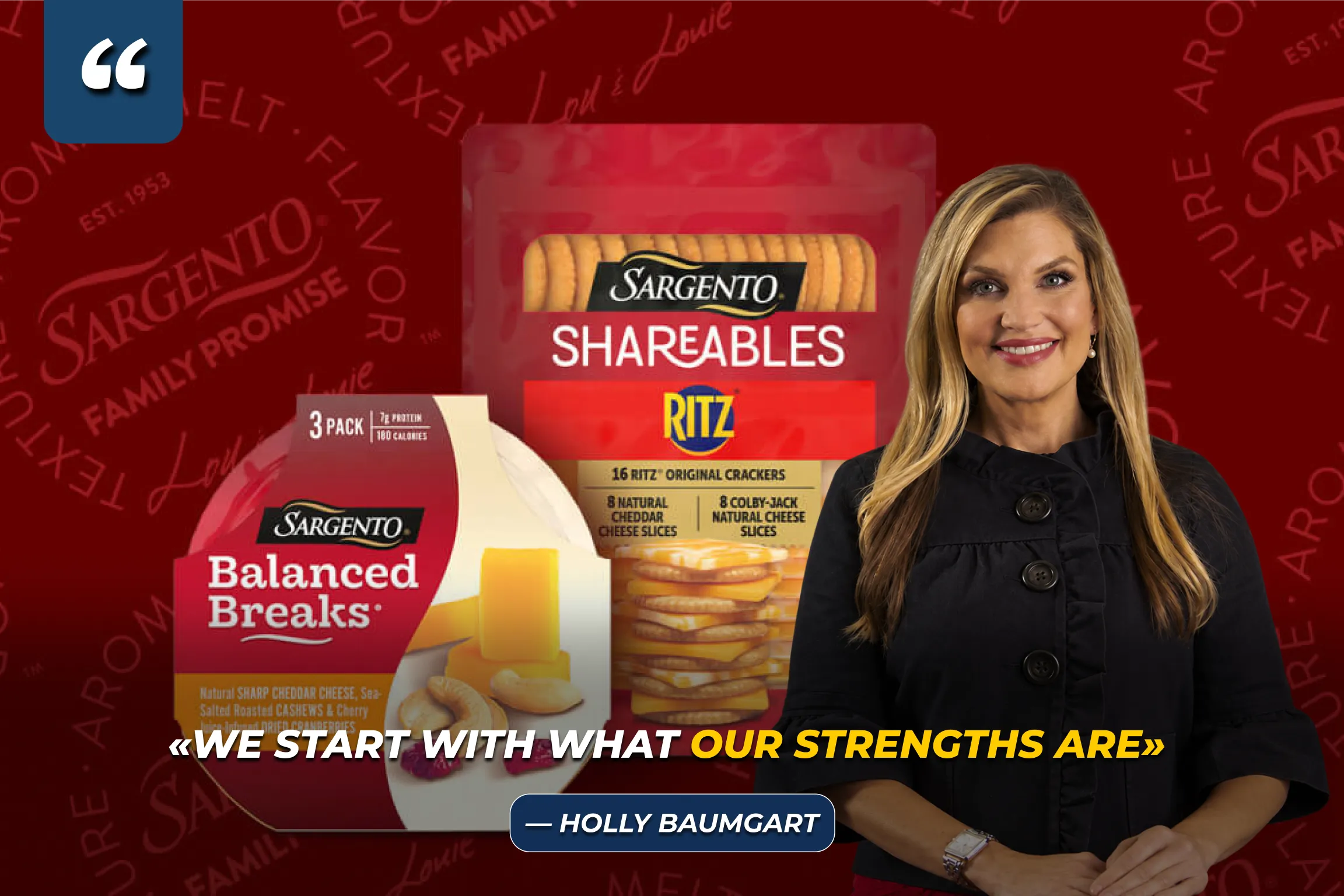
Holly Baumgart, Sargento Foods’ new SVP for innovation, on protein, GLP-1, convenience, AI in product development and staying agile in a competitive market.
Holly Baumgart, a decade into her time at Sargento Foods — one of the largest US dairy companies — has just become SVP for innovation. Speaking with Just Food, she discusses how the cheese maker is responding to trends such as protein, GLP-1 (glucagon-like peptide-1) use and convenience, how the family business uses artificial intelligence (AI) in new product development (NPD), and how it aims to be more agile, Just Food reports.
What should Sargento’s innovation priorities be in your new role, and which consumer trends are you targeting?
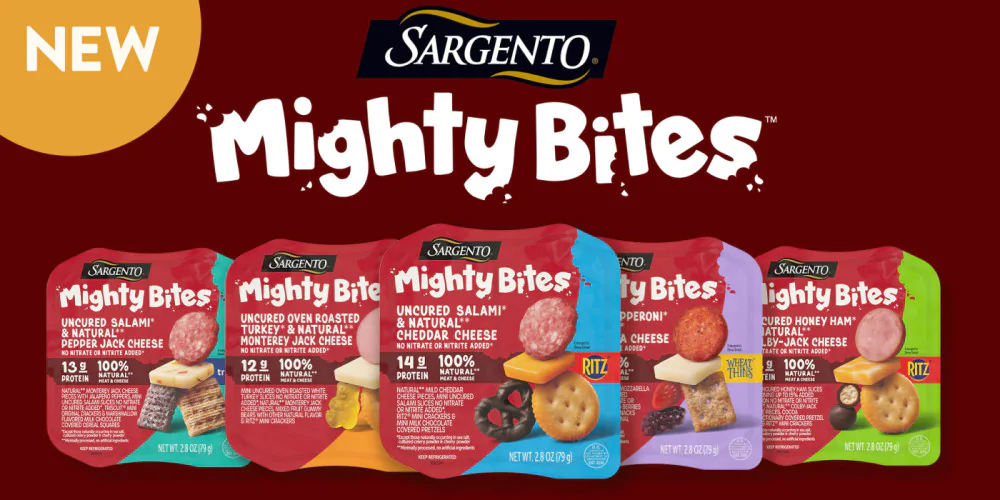
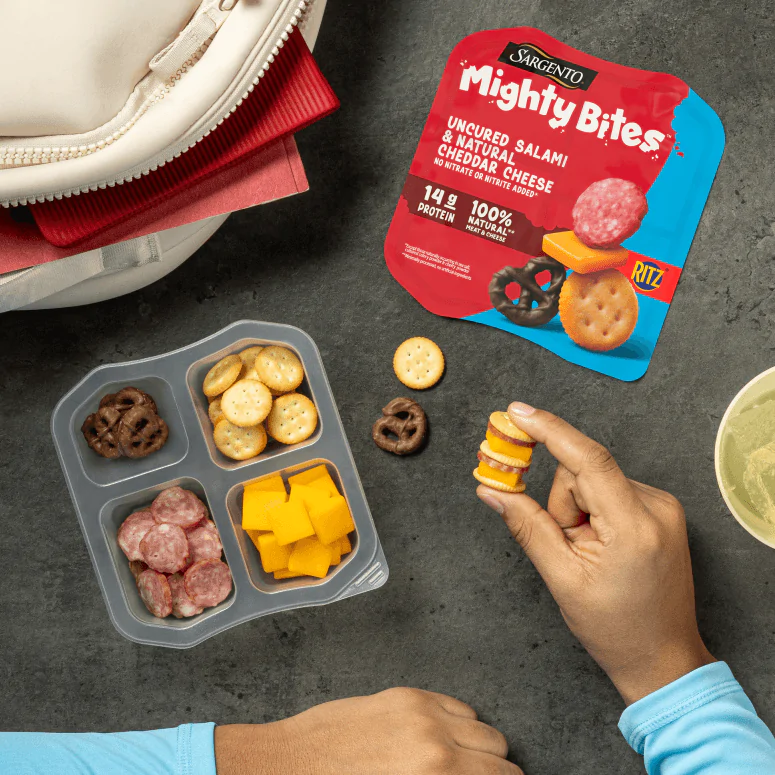
Baumgart says she is honoured to work at a company that wants to be the dairy industry’s innovation leader, and her department’s job is to keep planning breakthrough innovation for the longer term — while accelerating the pace. She points to the recent launch of Mighty Bites, Sargento’s first move into the grocery meat case, as a fresh space for her team to innovate.
How far has rising GLP-1 use climbed your NPD agenda?
The dairy case and Sargento’s core lines are already nutrient-dense — exactly what GLP-1 users want, she says. She sees a big opportunity to talk about existing products in that context, capitalising on a broader trend of consumers — GLP-1 or not — seeking a healthier lifestyle and more protein through food, and to build the pipeline around that expertise.
Yogurt has benefited from GLP-1s early on. Are users also increasing cheese consumption?
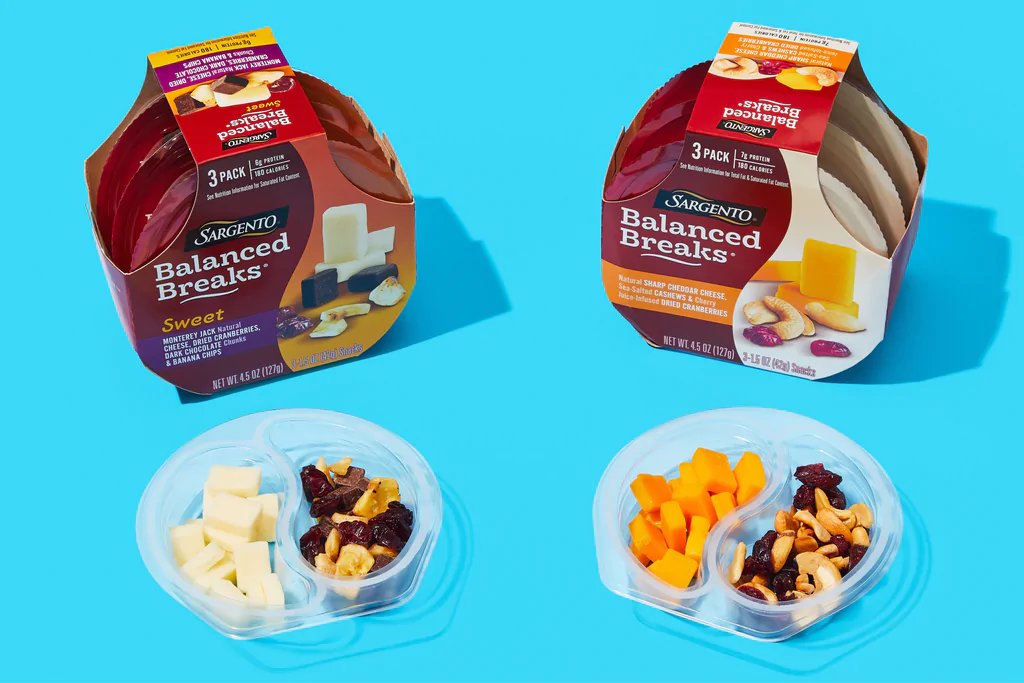
She thinks so, citing the snacking portfolio: string cheese is high-protein, low-sugar, nutrient-dense and convenient, and is performing strongly, while Balance Breaks — natural cheese with nuts and dried fruit — fits the same on-the-go profile. Shoppers, GLP-1 users or not, are gravitating to those snacking platforms.
So, alongside protein and GLP-1, is convenience another macro trend feeding your R&D?
Yes, she says: Sargento introduced its convenient dried-fruit-and-nuts-with-cheese snack pack in 2015 and has kept extending the platform as it accelerates, meeting those consumer needs.
How do you reconcile NPD with growing price consciousness at the store?
It is something the company watches closely, she says, and where its innovation pipeline differentiates it from commodity offerings.
«We can provide value through the offerings we bring, even in a price-conscious world».
Younger «Zillennials», she notes, will still pay for high-quality food, unique flavours and convenience — so the right, well-researched offering can add value even in a price-conscious market.
How do you balance moving fast — «test and learn» — with the realities and scale of the dairy sector?
A self-professed «process geek», Baumgart enjoys doing more, faster and better. AI is helping food innovators come to market faster, and Sargento is adopting new tools — but will never remove «the human in the loop» or stop talking to real consumers, she stresses, all while protecting speed to market and competitiveness.
Roughly how long from spotting a need to getting a product on shelf?
Anywhere from six months to ten years, she says: six months when the team spots a flavour trend, and the longer horizon for the food-science breakthroughs Sargento is known for. Trends — especially flavour — now turn faster than ever, driven by social media, which makes the short-term opportunities exciting too.
Do firms like Sargento need to be quicker and nimbler to stay competitive?
She thinks so — otherwise you risk missing an important chance to stay relevant to the consumers who love your brand and products.
How are you becoming more agile? Can you give examples of the technology?
When testing with consumers, the team uses AI to bring product images and ideas to life faster, iterating directly with focus groups.
«We can mine and learn about different trends faster and in a more distinct way by leveraging AI tools».
Iterating «on the fly» and getting real-time feedback — showing ideas come to life in front of consumers — has sharpened a process that used to take longer, she says.
How else are you using AI in product development?
To gather trend data, she says: AI makes it easier to analyse large data sets on what is happening in the industry (food is one of social media’s top topics). It augments Sargento’s other data sources, helping gauge how robust and how regionally deep trends are, and to design the pipeline for existing fans and new consumers.
What has the internal reaction been to staff using AI? Any job-loss concern?
Sargento has long said it does not want to replace its «human family members» with automation, which builds trust, she says. Most employees are excited about the efficiency AI brings — doing their jobs better and faster with more data access — and concern, while widespread in general, is not a daily battle at Sargento; the view is more opportunistic.
When weighing new categories, what attributes must they have for you to invest?
As a former VP of strategic planning, Baumgart says the philosophy is to start from capabilities — who Sargento is, its core strengths and where they can bring its «real-food» vision to life — rather than from a margin or volume opportunity. Mighty Bites, for example, was built off snacking capabilities learned since launching Balance Breaks in 2015, an evolution from natural cheese into snacking.
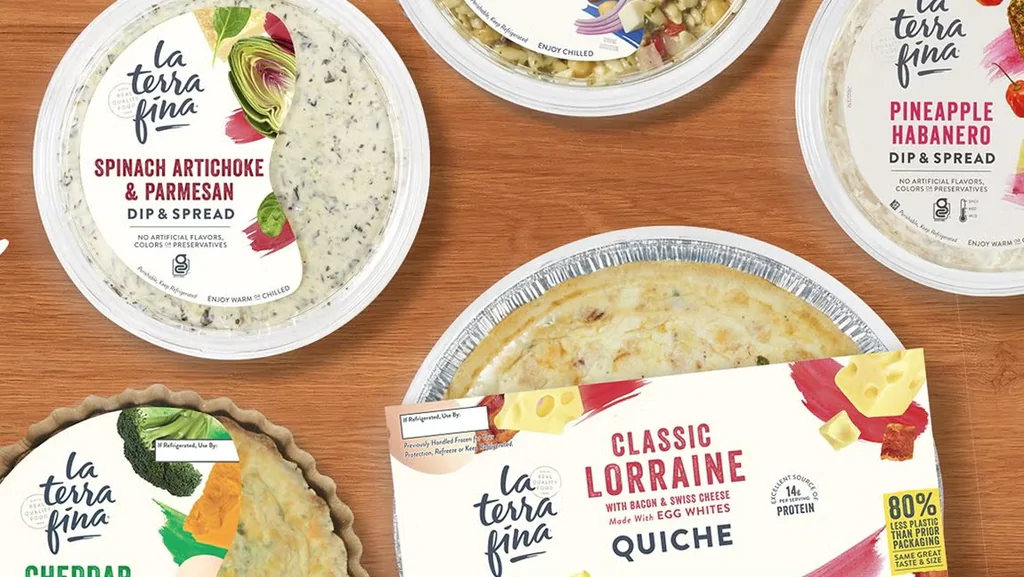
Sargento recently acquired La Terra Fina (dips and quiche). What makes you buy rather than innovate in-house?
The company always looks for the right value opportunity, she says: La Terra Fina had deep dips-and-quiche expertise built over years, so partnering with an industry leader beat building the capability from scratch, and the timing and fit were right. Sargento runs make-versus-buy analysis and has also built capabilities from the ground up many times.
Have you tried vegan cheese, given how hard taste and texture have been?
The space has struggled on taste and texture — which resonates with her as a vegetarian who could never go vegan, she says. Sargento has watched the technology closely for years and it may evolve, but for now the focus is its core real natural cheese.
Do you sell whey protein from cheesemaking to food manufacturers?
Yes — Sargento’s cheesemaking plants do offer whey products, she confirms.
Given protein’s growth, how much of a priority is investing more in that B2B (business-to-business) part of R&D and capex?
It has been interesting to watch whey-protein prices rise, she says, but the core focus right now is the end consumer and the real natural cheese business, growing it in line with customers’ needs.
Which KPIs (key performance indicators) tell you a new product is working?
It is consumer-driven, she says: post-launch consumer studies, repeat purchase, feedback and trial show whether a product is reaching the right consumer.
At corporate level, is there a share of annual sales you aim to generate from that year’s launches?
Sargento has such targets and considers itself best in class, she says, but the end goal is planning for long-term growth over a short-term sales win — a platform customers love will naturally grow the brand, the business and «the family» over time.
Source: Just Food