
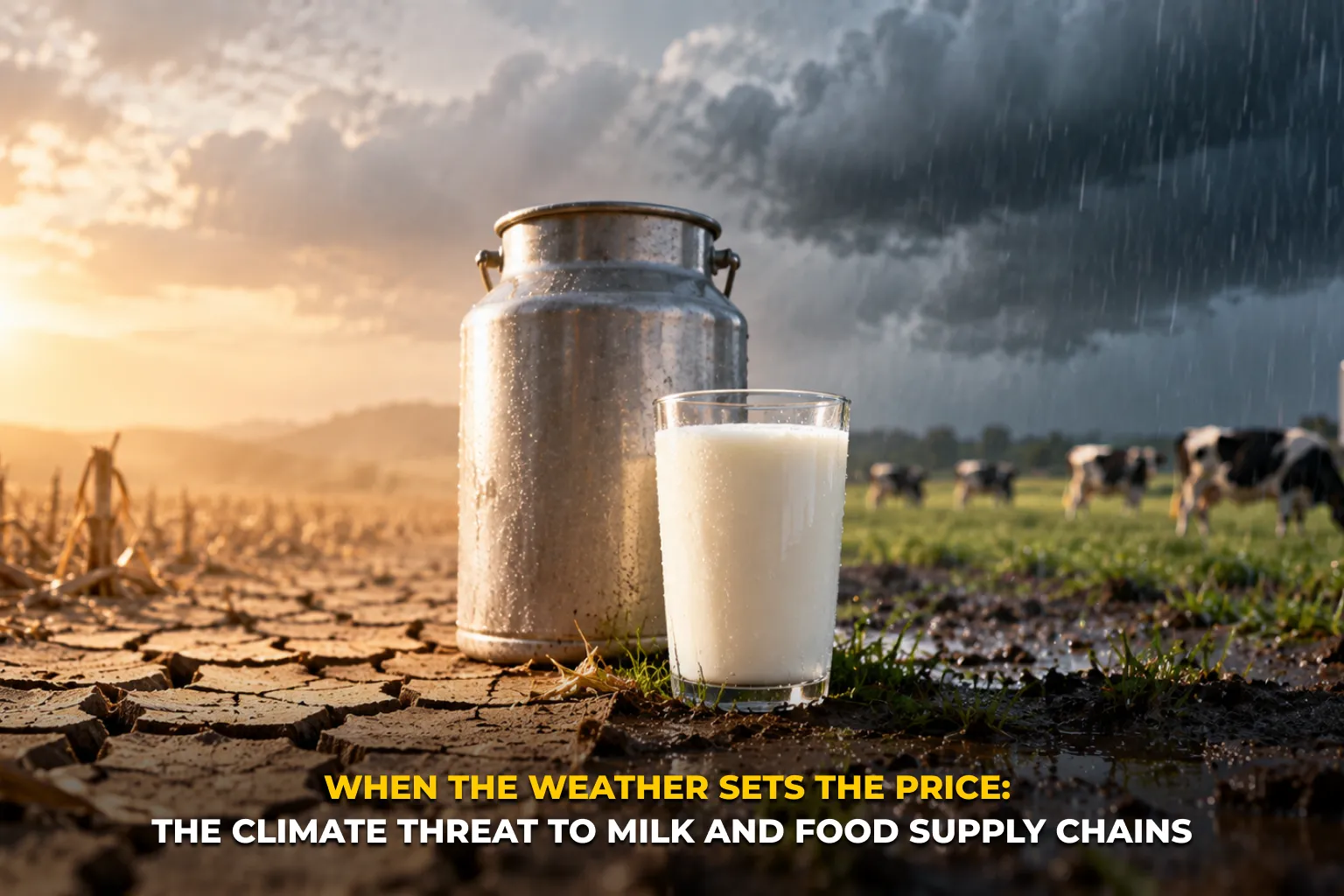
Heat, drought and erratic weather squeeze the food sector at every stage — from crop yields and milk output to storage, logistics and shelf prices.
Climate change threatens the food system all the way from farm to fork — from pressure on crop yields to storage costs, from transport disruptions to high retail prices that dent consumer confidence, DairyReporter reports.
Climate risk is not confined to the farm; it runs the length of the supply chain.
1. Farm: heat and drought push yields down
One of climate change’s most pervasive food effects is on crop yields. Drought and high temperatures have hit crops worldwide — cocoa in Ghana and Côte d’Ivoire, coffee in Brazil.
Europe’s recent heatwaves are a case in point, causing around €1.8bn of damage, per think tank the Energy and Climate Intelligence Unit.
Drought has struck crops right across Europe, with no major crop spared, says Andrew Kanyemba, senior grains analyst at Expana.
2. Farm: milk and egg quality hit
It is not only crops but livestock. Per a joint report by the UN’s Food and Agriculture Organisation (FAO) and the World Meteorological Organization (WMO), extreme heat stresses animals badly. It can cut cows’ milk yields and hens’ egg output; milk from heat-stressed animals can carry less fat and protein, and eggs thinner shells and altered yolks.
Animals may also struggle to regulate body temperature — risking organ failure, cardiovascular shock and death — and convert feed to energy less efficiently.
3. Farm: unpredictable weather patterns
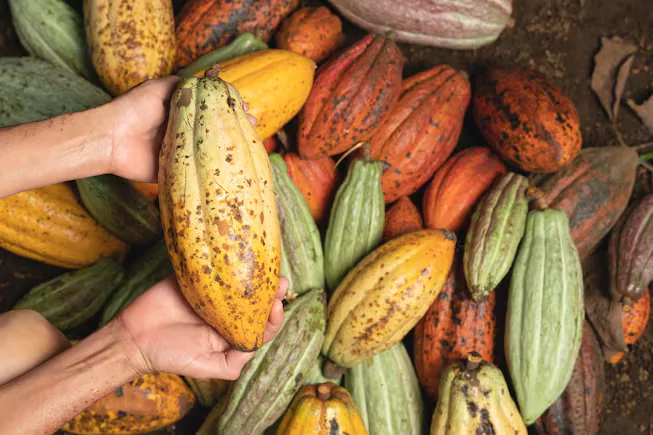
Erratic weather makes crop production far harder. Cocoa needs very specific conditions at set times. Côte d’Ivoire’s farmers report erratic weather has hurt many stages — rain during fermentation, for instance, lowers temperatures and efficiency.
Once-predictable wet and dry seasons are now harder to plan around. English farmers, too, have faced disruption — an autumn too wet, an April too dry — the ECIU notes.
4. Farm: crop pests
Pests thrive in heat, cutting yields further. Warming could widen some insect pests’ geographic range, boost overwinter survival and add generations, one study suggests — a threat to food security.
Swollen shoot virus, a scourge of cocoa farmers, is one example that climate change can help flourish.
5. Transportation: hot railway lines
In heat, steel rails expand and buckle, running up to 20°C hotter than the air, per the UK’s Network Rail; overhead lines can sag too.
That matters for food: about 9.9% of the world’s food moves by rail, measured in food miles (one tonne travelling one kilometre), per Our World in Data.
6. Transportation: shipping disruptions
Drought hits key sea routes. Low water in the Panama Canal — whose drought vulnerability rises with climate change, one study finds — slows ships. Just under three-quarters of Japanese maize passes through it, per Chatham House.
The Rhine hit historic lows earlier this year, hampering grain and other trade, Earth.Org reports. Water carries 58.97% of global food miles — by far the largest share, per Our World in Data.
7. Storage: high energy use
Much food needs cold-chain storage to avoid spoilage, and heat makes that harder: cold chains must work harder to hold temperature as more outside heat enters, says Richard Russell, MD of New Cold’s UK arm.
Heatwaves often coincide with peak power demand, straining the grid — and higher energy use means higher bills for manufacturers.
8. Retail: rising prices
These disruptions filter through to retail prices. Prices reflect many factors — including geopolitical instability from the wars in Iran and Ukraine — but severe weather has been a major driver.
Food prices remain high and could climb further. In Europe especially, recent drought effects have yet to fully feed through, says Mintel’s EMEA food-and-drink insights VP Chris Brockman, while this year’s El Niño — possibly the biggest since the 19th century — is still to play out.
Chocolate is one case: retail values have risen since the 2024 cocoa crisis, with firms such as Mondelēz International pricing to cover cocoa costs. High shelf prices can dent consumer confidence and, in turn, sales.
9. Retail: changing tastes
On-shelf is no guarantee of a sale. Some categories fare poorly in heat — bakery and hot meals strained during heatwaves as shoppers switched to ice cream and chilled desserts.
Climate change could reshape tastes, sapping some foods’ appeal.
10. Waste: faster spoilage
Heat speeds spoilage as bacteria spread faster, per the UN’s PreventionWeb. Warmer, wetter conditions can proliferate foodborne pathogens such as Escherichia coli (E. coli) and Campylobacter jejuni. Higher humidity can grow salmonella on lettuce.
Waste is costly — food waste already costs the global economy $1tn (€867bn) a year, per the UN Environment Programme (UNEP) — and could rise with more spoilage.
Source: DairyReporter