
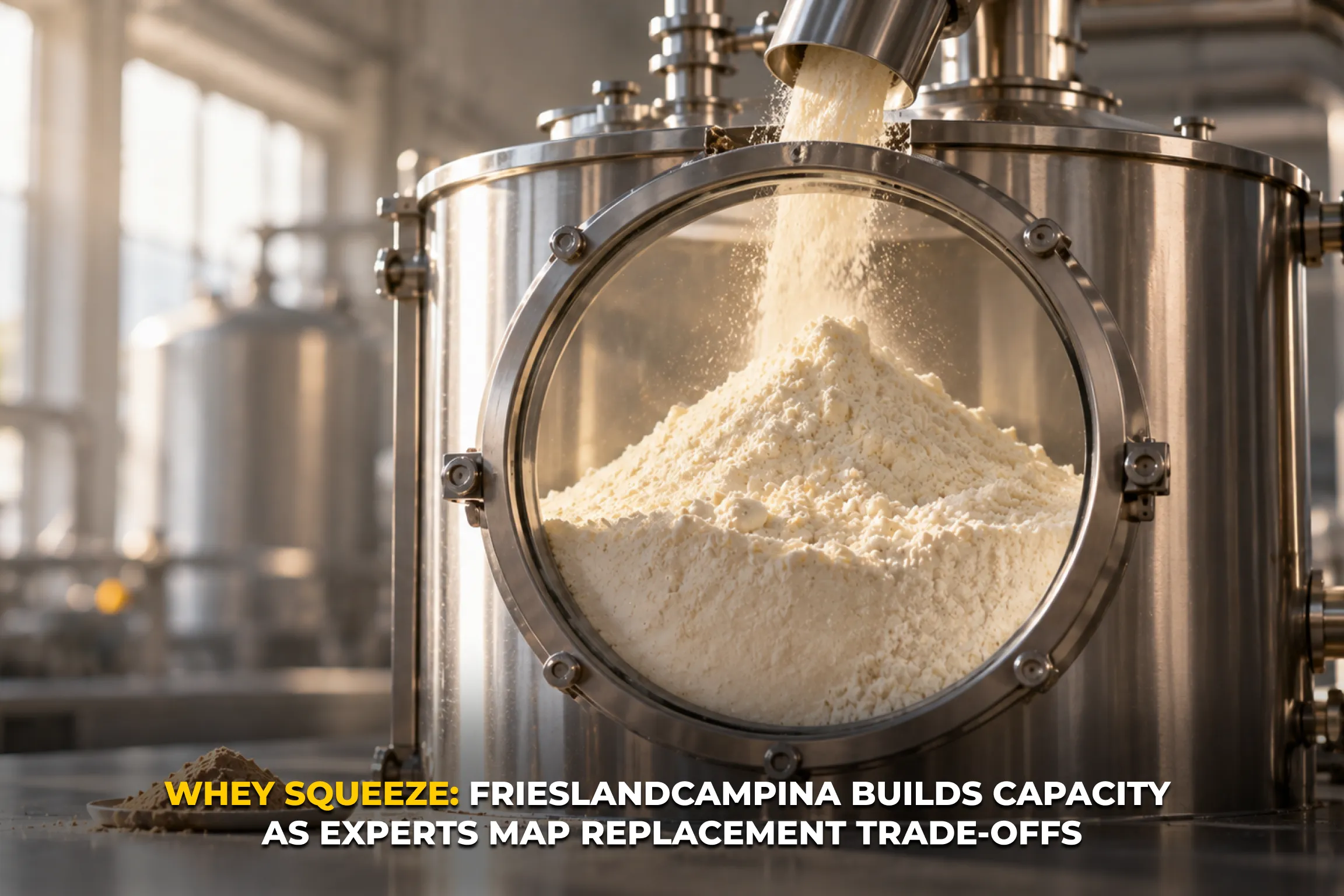
FrieslandCampina Ingredients doubles WPI capacity and commits €90m, while CDR’s Pratishtha Verma explains how replacing or blending whey reshapes formulations.
Whey protein demand is running ahead of supply, per the USDA, and ingredient suppliers are answering on two fronts — adding high-value capacity and helping formulators work around the proteins in shortest supply. FrieslandCampina Ingredients has doubled whey protein isolate (WPI) capacity at its Borculo plant in the Netherlands and committed €90 million (~US$104 million) to three more Dutch sites, Food Ingredients First reports.
Guus Aerts, the company’s global director of marketing and product strategy, says the build-out follows continuing structural demand, not the current whey squeeze.
Tight supply, he adds, is pushing companies to reformulate — and whether that works depends on the product, says Pratishtha Verma, dairy ingredients and applications specialist at the Center for Dairy Research (CDR) at the University of Wisconsin-Madison (UW-Madison).
Food Ingredients First spoke with Aerts about capacity planning and with Verma about what happens when whey is partly replaced or blended.
„Adding capacity in high-value whey proteins starts with understanding the opportunity across the wider production network, rather than a single site in isolation,“ says Aerts — an expansion in ingredients such as WPI or milk fat globule membrane (MFGM) means weighing where capacity is best located, how it fits existing operations and the infrastructure to support it.
Build versus buy
From decision to commissioning, the timeline turns on engineering, equipment lead times, permitting, and the work of expanding a running plant, Aerts says; new lines must be tested and qualified before supplying commercial volumes. Acquisition creates a different path.
„Our acquisition of Wisconsin Whey Protein provided established whey protein capacity in North America… without the lead time of a new build,“ Aerts says, adding the firm uses both approaches depending on the market opportunity, capacity needs, geography and capabilities sought.
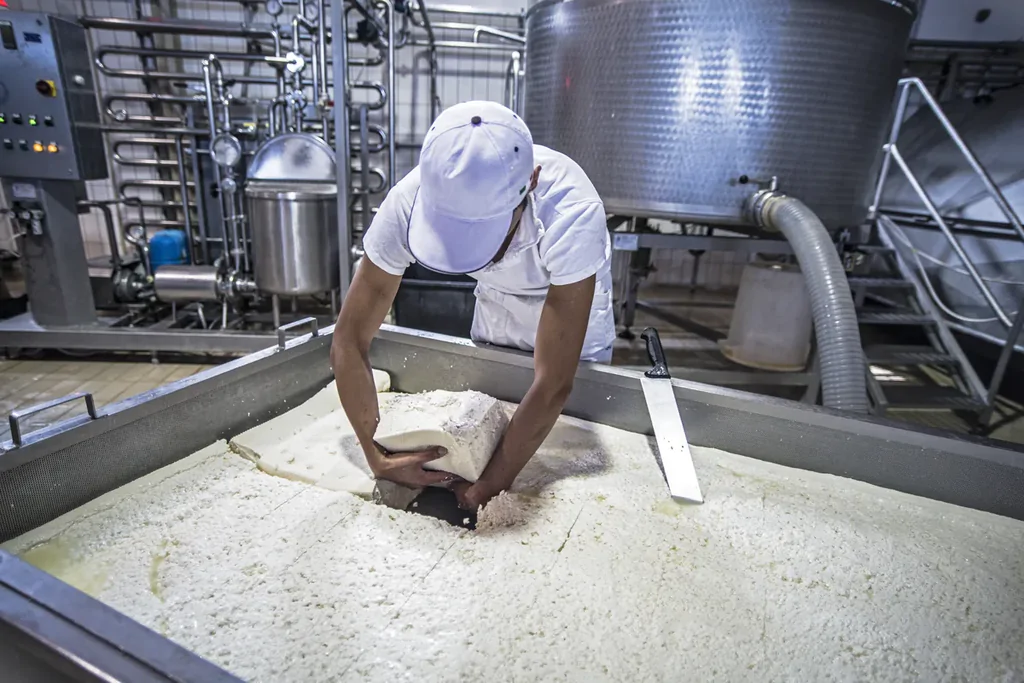
Borculo shows the build route: announced in October 2023, it began commercial operation in March 2026, doubling the company’s WPI and MFGM capacity. Expansions at Bedum and Workum, plus an optimisation at Veghel, are due to finish in 2028.
„The Bedum and Workum investments add scale and flexibility, while the upgrade at Veghel supports wider utilisation of the whey stream as we increase protein production,“ Aerts says.
Matching proteins with formulas
FrieslandCampina Ingredients plans around structural demand rather than current tightness, Aerts says, citing an aging population and GLP-1 (glucagon-like peptide-1) medications’ influence on appetite and eating patterns as longer-term shifts.
„Nearly 60% of global food and beverage consumers say they are deliberately increasing their protein intake, while the whey market is projected to grow at a CAGR of 6.6% through 2030,“ he says. Demand is moving toward more technically demanding applications — ready-to-drink (RTD) and clear beverages, medical nutrition and high-protein powders — where high-purity proteins such as WPI matter.
The way customers approach suppliers has shifted too, Aerts notes: conversations that once opened on price and specification now open on reliability and long-term supply, while application teams spend more time matching the right protein to a formula.
„That can sometimes open up alternatives to a constrained ingredient without compromising product performance,“ he says.
Replacing part of whey
Replacing part of the whey does not automatically lower nutritional quality, says Verma. Whey carries a full essential amino acid profile and a high DIAAS (digestible indispensable amino acid score).
„If whey is partially replaced with another high-quality dairy protein, such as casein, the overall nutritional quality may not change substantially, although the amino acid profile and digestibility characteristics can differ,“ Verma says — most individual plant proteins lack one or more essential amino acids in sufficient amounts and generally score lower on DIAAS than dairy proteins.
Function can matter far more, and it depends on the application, she says: whey delivers emulsification, foaming, gelation and water binding, but heating denatures it, which can weaken those functions or, in some products, strengthen them.
„As the pH approaches the isoelectric point, the net charge on the proteins decreases… making protein-protein interactions and aggregation more favorable when the whey proteins are denatured,“ Verma says — „particularly relevant in acidified dairy products such as yogurt.“ In a UHT (ultra-high temperature) beverage, swapping some whey for casein may affect heat stability, as casein is inherently more heat stable; in bakery or foams, cutting whey could alter emulsification and foaming.
There is no default answer, Verma stresses: „Whey replacement is not necessarily positive or negative; it can change both the nutritional profile and functional behavior of the protein system, and the impact needs to be evaluated based on the specific application.“
Balancing bar texture
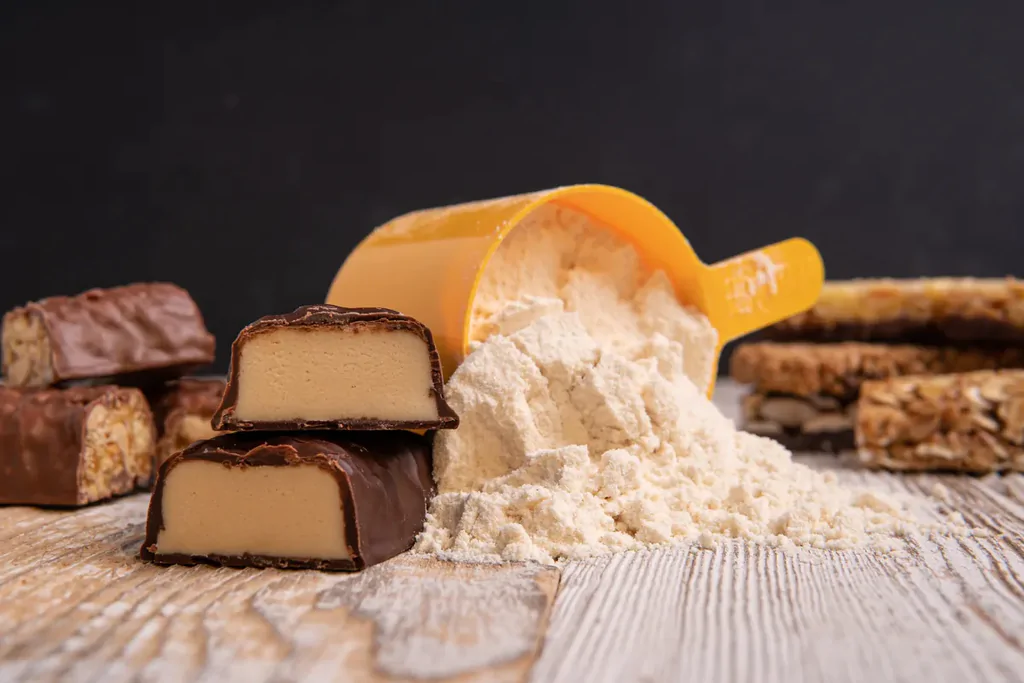
Blending is the other lever — a way to combine each protein’s strengths, Verma says. Whey digests fast and delivers leucine quickly; casein digests slowly and releases amino acids over a longer stretch, so combining them can give both a rapid and a more sustained amino-acid supply supporting muscle growth and recovery. High-protein bars show the trade-off well: blending whey and milk proteins balances cohesion and firmness over shelf life.
„Whey protein can contribute to a more cohesive and flexible structure… without becoming overly brittle,“ Verma says, „however, too much whey protein can also cause the bar to harden relatively quickly during storage,“ while more casein-rich milk proteins give a firmer, more brittle structure that may not harden as fast.
Mixing, shear, heat transfer, hydration, residence time and the order ingredients are added can all change as batch size grows, moving viscosity, emulsion stability and texture at once.
„One of the biggest challenges when moving from bench to scale is that processing conditions do not always translate directly,“ she concludes. „The key is to understand and control the critical process parameters during scale-up rather than simply increasing the batch size.“
Source: Food Ingredients First