
EU agri-food trade stays solid in 2026, with the surplus climbing to €30.1bn for January–July and exports to Ukraine up €239 million.
The EU agri-food sector expanded its positive trade balance in the first seven months of 2026, with a cumulative surplus of €30.1bn — €2.9bn higher than the same period in 2025.
Cumulative exports for January–July totalled €138.7bn, €1.6bn (1%) below the same period a year earlier, DG AGRI reports.
Exports
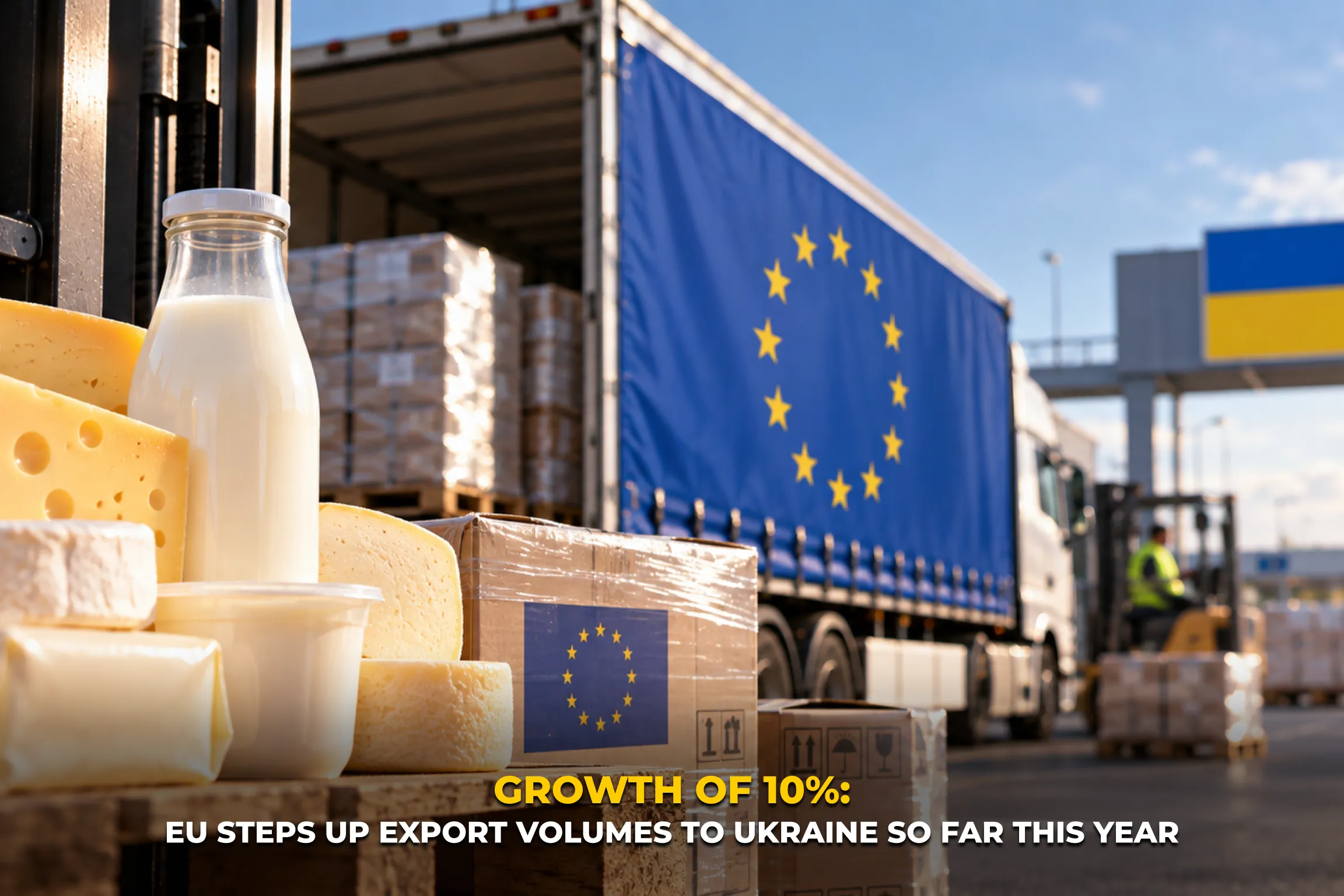
Exports to several countries grew notably in the period. Exports to Egypt rose €251m (+22%), driven mainly by wheat, while exports to Ukraine climbed €239m (+10%) and those to Türkiye rose €235m (+7%).
Among product categories, exports of coffee, tea, cocoa and spices fell €1.3bn (-16%), with pigmeat and olives and olive oil also down significantly.
By contrast, exports of other animal products rose €549m (+11%), and spirits and liqueurs rose €470m (+10%).
Imports
Cumulative imports reached €108.6bn, down €4.5bn (4%) year-on-year. Import values from major cocoa-producing countries declined as cocoa prices kept falling, now around half their spring-2025 peak. Imports from Côte d’Ivoire fell €1.2bn (-21%), while imports from Cameroon and Nigeria both dropped 46%. Imports from Brazil, conversely, rose €528m (+5%) on higher soybean volumes, and imports from Argentina rose €240m (+8%) on sunflower seeds.
By product category, imports of coffee, tea, cocoa and spices fell €4.8bn (-19%), cereal imports dropped €609m (-11%), and dairy imports fell €308m (-19%). Fruit and nut imports rose €587m (+3%), with imports of non-edible technical-use products and margarine and other oils and fats also increasing.
Further insights and detailed tables are available in the latest monthly EU agri-food trade report.
Source: DG AGRI