Terroir has become a powerful marker of quality, helping producers turn geography, tradition and craftsmanship into a valuable point of difference. Whole Foods Market has named 2027 «the year of terroir» in its top food trends, DairyReporter reports.
Key points:
- first associated with wine, terroir now extends to cheese, coffee, chocolate, tea and spirits;
- EU geographical indications are a success story worth over EUR 75 billion a year;
- more than 3,900 protected designations of origin are registered in Europe;
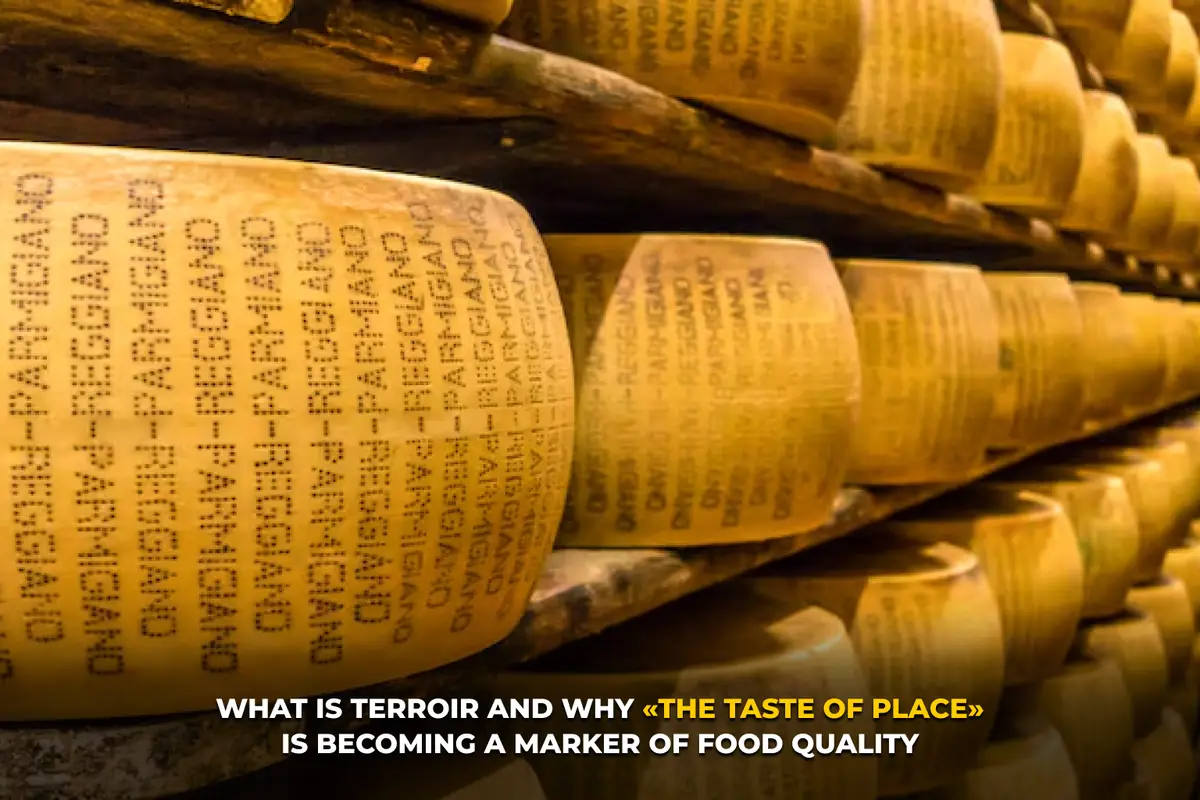
- Parmigiano Reggiano exports almost 55% of its output without losing its link to the region.
What is terroir
«I translate it into «the taste of place». It’s a way in which people working the land have understood that the products they produce have unique sensory qualities that are connected to aspects of the natural environment», says Amy Trubek, professor of Nutrition and Food Sciences at the University of Vermont and author of «The Taste of Place: A Cultural Journey into Terroir».
The concept originated in wine as a way of distinguishing wines from different regions and vineyards, but has since spread to cheese, chocolate, tea and coffee, as well as tequila and whisky.
What are its benefits
First, it is a mark of quality.
«Terroir is used as an understanding or explanation of quality as we have moved to an increasingly industrialised and globalised food system in the last 150 years. It’s a way of grounding and placing food and drink within certain contexts and explaining how those contexts are unusual or exceptional because of the environmental conditions», says Professor Trubek.
She says terroir also makes a case for preserving traditional practices amid mechanisation, and for consumers it is a way of supporting the specific qualities of foods from a certain place.
However, concerns have been raised that for some products, such as tequila, producers do not gain as much as they should, so protection systems need constant review. On 10 November 2026, EU Agriculture and Food Commissioner Christophe Hansen convened a meeting on the implementation of the EU’s geographical indication rules, updated two years ago.
«Geographical Indications are a European success story worth over €75bn a year. Now we must turn that recognition into real economic opportunities for more producers», he posted on X.
How terroir is protected
Terroir claims require certification and verification. The EU geographical indication system protects the names of products that originate from specific regions and have qualities or a reputation linked to the production territory. It can also protect non-EU products such as Colombian coffee.
- Protected designation of origin (PDO) — for products with the strongest link to place: every stage of production, processing and preparation must take place in the region. Example: Kalamata olive oil from Greece. More than 3,900 PDOs are registered in Europe.
- Protected geographical indication (PGI) — at least one stage of production must take place in the region. Example: Westfälischer Knochenschinken ham, made in Westphalia, though the meat need not come from the region.
- Geographical indication (GI) — for spirit drinks: at least one stage of distillation or preparation must take place in the region. Example: Irish Whiskey.
The US has no standalone system: GIs are managed by the US Patent and Trademark Office, and wine GIs are known as American Viticultural Areas, such as Napa Valley. Many Asian countries have their own systems; India’s best-known GI is Darjeeling Tea.
«Ultimately, you cannot simply manipulate this. It has to be grounded in some kind of practice and people that are knowledgeable. If you want it to be something more than just the latest new buzzword, it has to be about what happens on the land», says Trubek.
What food and drink can learn
Even if a product cannot make a terroir claim, manufacturers should note the reasons for its success: consumers increasingly care about where and how their food is made and are drawn to origin-specific storytelling.
Terroir in action: Parmigiano Reggiano
Nicola Bertinelli, president of the Parmigiano Reggiano Consortium, explains why the cheese is a strong example of terroir.
What specific aspects of the region contribute to the cheese’s unique characteristics?
— The secret lies in the relationship between the local environment and our raw materials. By law, Parmigiano Reggiano can only be produced in the provinces of Parma, Reggio Emilia, Modena, Mantua to the right of the Po river and Bologna to the left of the Reno river. The defining element is the local forage fed to the cows, which directly influences the microbiological flora of the raw milk. We use a natural whey starter rich in native lactic ferments from the previous day’s processing, the unique biological fingerprint of our region. The absolute ban on additives, preservatives and silage ensures the cheese is a pure expression of this land.
How much of its identity comes from geography, and how much from tradition?
— It is inseparable. Geography provides the raw materials, but human expertise transforms them. Our recipe has remained virtually unchanged for nearly a thousand years: milk, salt, rennet and the mastery of the cheesemaker. With no artificial additives, the cheesemaker relies on sensory experience, touch and intuition every single day.
Have you seen growing consumer interest in provenance?
— Over the past decade, consumers have shifted from simply wanting a premium product to demanding authenticity, transparency and a narrative they can trust. Our area already welcomes about four million visitors a year, and we aim to bring 300,000 visitors directly into our certified dairies by 2029.
Is terroir an antidote to a globalised, anonymous food system?
— Terroir is the ultimate antidote to food commoditisation. Over 22% of our production now comes from the Apennine mountains, preserving fragile ecosystems and supporting local communities. Today we export almost 55% of our production without compromising our artisanal soul or ties to the land.
Source: DairyReporter