
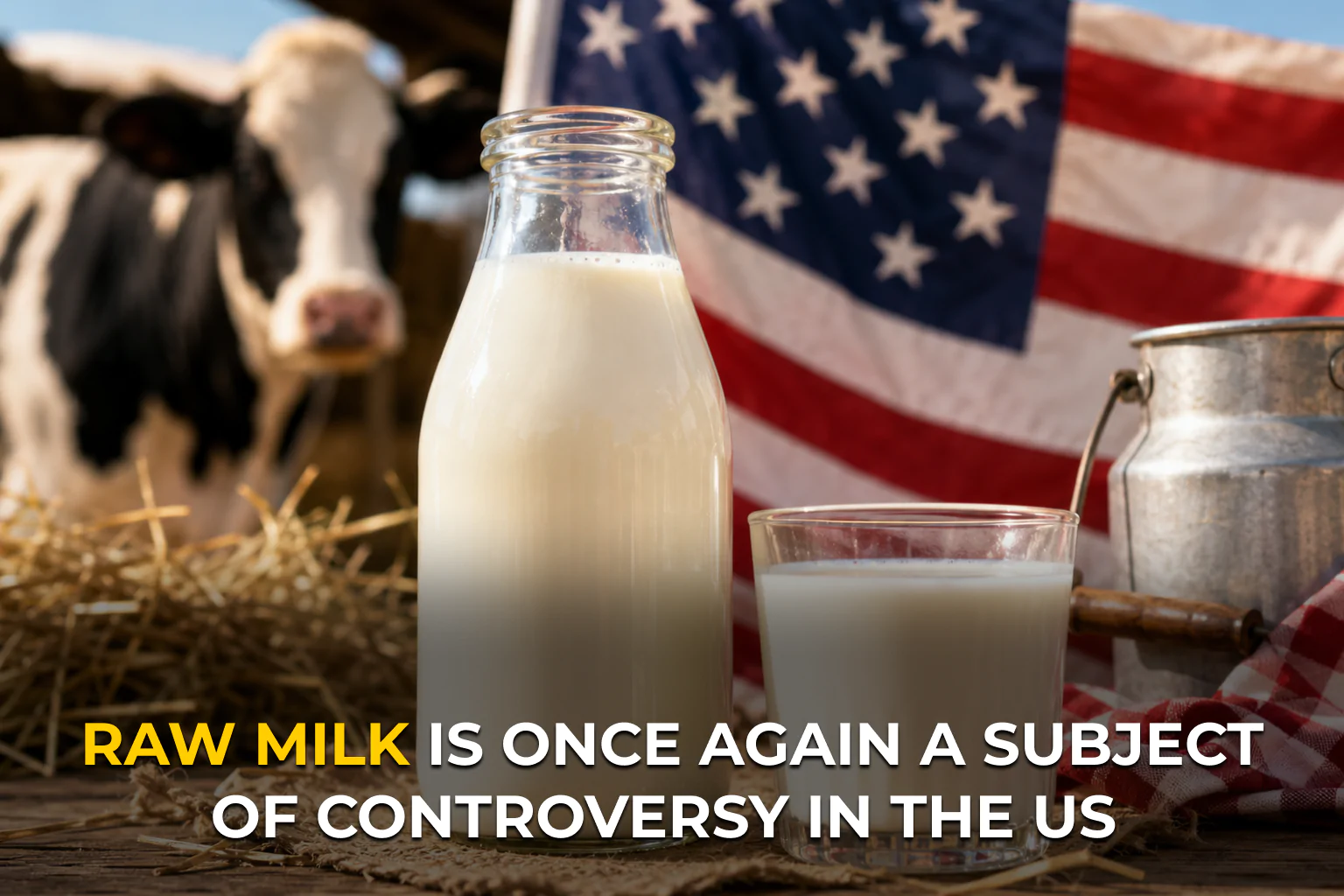
Interest in raw milk is growing rapidly in the US, and many states are pushing for legislation to make it easier to sell. According to SuperBelles, the debate surrounding raw milk is intensifying due to statements by politicians, its popularity on social media, and disputes over the product’s safety.
For years, pasteurised milk has been the norm for dairy drinks. However, the popularity of raw milk has surged in recent times. According to the Associated Press, more than 40 bills have already been introduced across the country aimed at expanding access to raw milk.
More and more states are legalising the sale, whilst social media is actively promoting claims about the alleged health benefits of this product.
Prior to his confirmation, the US Secretary of Health and Human Services, Robert F. Kennedy Jr., also openly supported raw milk, stating that the FDA’s ‘aggressive crackdown’ on the product needed to stop.
What is raw milk?
Most milk in the US undergoes pasteurisation — a process of heating it to a specific temperature to kill harmful bacteria and viruses.
Raw milk, on the other hand, is not heat-treated.
Experts emphasise that pasteurisation has been one of the key breakthroughs in public health, as it has significantly reduced the risk of food poisoning and infections.
Why do advocates of raw milk consider it to be better?
Supporters of raw milk argue that the absence of heat treatment preserves the product’s ‘naturalness’.
However, food safety experts point out that there is no scientific evidence to suggest that raw milk offers any additional health benefits.
According to the CDC, pasteurised milk has the same nutritional properties but without the risks associated with pathogens.
The popularity of raw milk is also attributed to:
- a lack of trust in government regulators;
- the trend towards ‘natural’ products;
- the popularity of local farming;
- the dissemination of information on social media.
The main risks associated with raw milk
Experts warn that raw milk may contain harmful bacteria:
- E. coli;
- Salmonella;
- Listeria;
- Campylobacter;
- other pathogens.
Infection can occur:
- directly from the animal;
- due to the equipment used during milking;
- through the environment.
Such infections can lead to:
- severe dehydration;
- kidney failure;
- pregnancy complications;
- neurological disorders;
- fatalities.
Raw milk poses a particular risk to:
- children;
- pregnant women;
- the elderly;
- people with weakened immune systems.
A recent outbreak of E. coli in the US has been linked to Raw Farm’s raw cheddar cheese and raw milk. Several people were hospitalised during the outbreak.
What does the new legislation change?
Raw milk is already permitted in some US states, but new legislative initiatives aim to significantly expand its availability.
This refers to:
- retail sales;
- farmers’ markets;
- simplifying cross-state access;
- a reduction in regulatory restrictions.
Experts point out that the main change lies not only in legalisation, but also in the expansion of the raw milk market.
In their view, as the number of consumers increases, the number of cases of the disease will automatically rise as well.
Why does the dispute extend beyond the dairy market?
According to experts, the debate surrounding raw milk has become part of a wider trend:
- growing scepticism towards state regulation;
- promoting a ‘natural’ lifestyle;
- debates on consumer choice.
Critics of deregulation believe that relaxing the rules could set a dangerous precedent for other high-risk food products as well.
Food safety experts emphasise that pasteurisation remains one of the most effective ways of protecting the public from foodborne infections.
Source: SuperBelles