
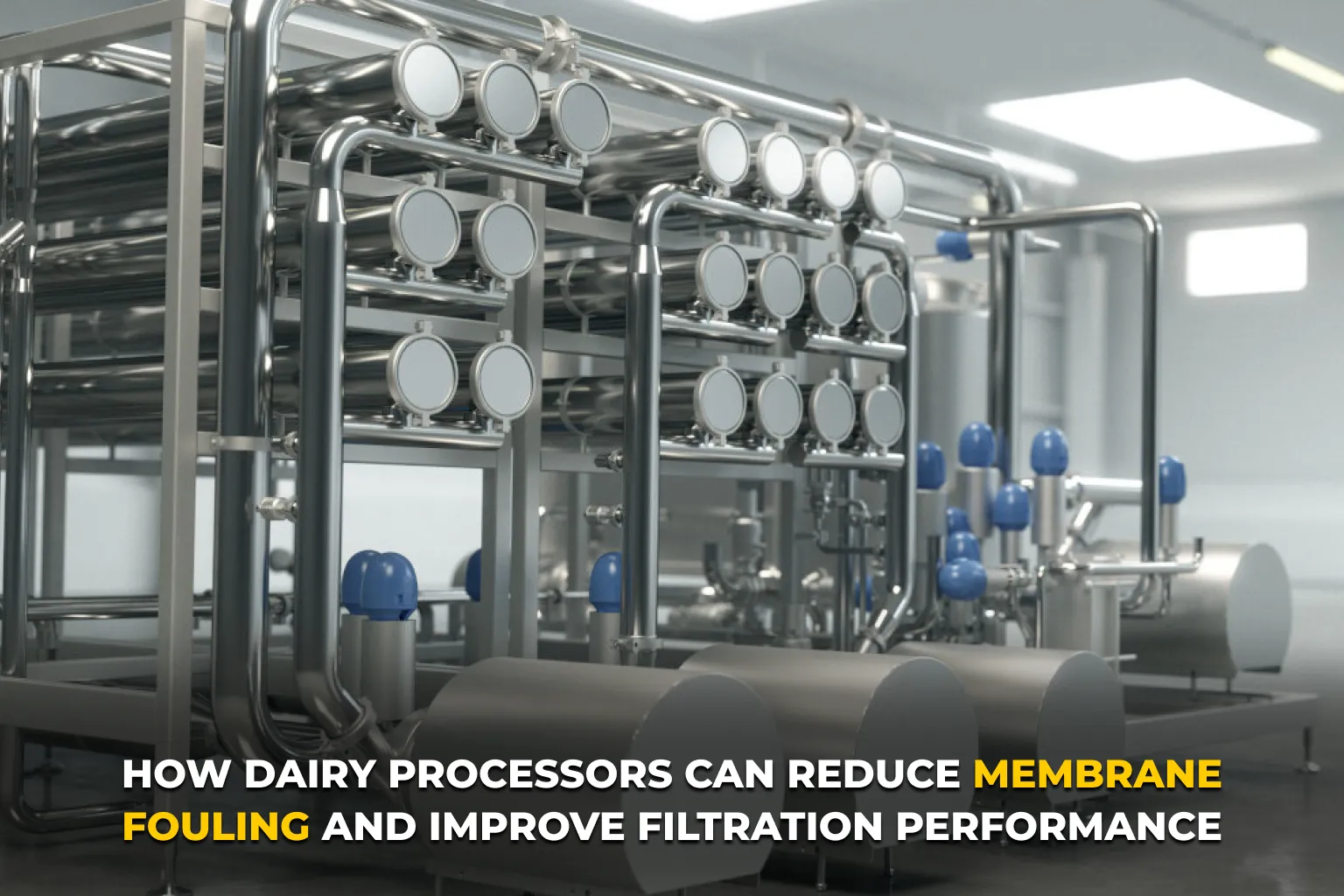
Fouling is a natural part of membrane filtration, but as dairy processors pursue higher solids, longer runs and greater throughput, it keeps challenging filtration performance and efficiency, writes Sammy Bredar for Dairy Foods.
Fouling affects flux, cleaning frequency, energy use and membrane life across applications from milk and whey to high-protein ingredients — and depends on feed composition, operating conditions, system design and cleaning, not membrane selection alone.
Understanding membrane fouling
Fouling occurs through several mechanisms.
ZwitterCo’s Jon Goodman calls it one of the most common operational challenges in dairy processing, with severe upsets — whey-protein gelling, cheese fines entering feed, or post-pasteurisation coagulation — sometimes hard to reverse even after cleaning, while higher solids raise viscosity and make filtration harder.
APV’s Pranav Shah adds that protein denaturation and aggregation are among the most common causes: high-protein beverages and milk- and whey-protein concentrates carry heavy protein loads, and excessive heat, fat carryover, mineral scaling and biofilm all cut performance.
Feed variability — protein, minerals, viscosity, solids and water quality — matters too.
Tetra Pak’s Todd Hutson stresses pretreatment: minimising solids and fines (such as cheese fines) before the membrane reduces fouling load.
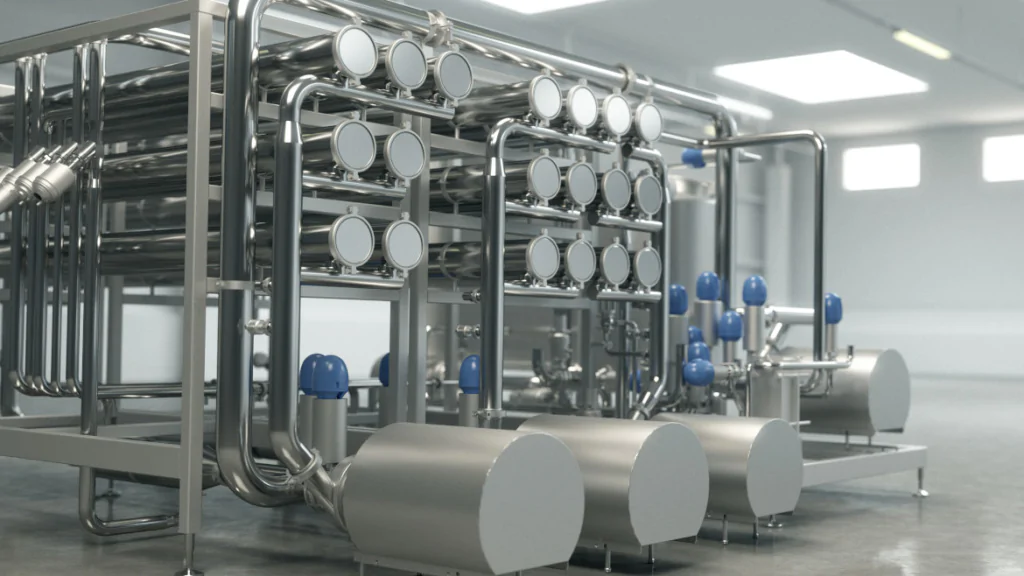
Operating conditions often set the pace: pushing flux beyond sustainable limits accelerates concentration polarisation and irreversible fouling.
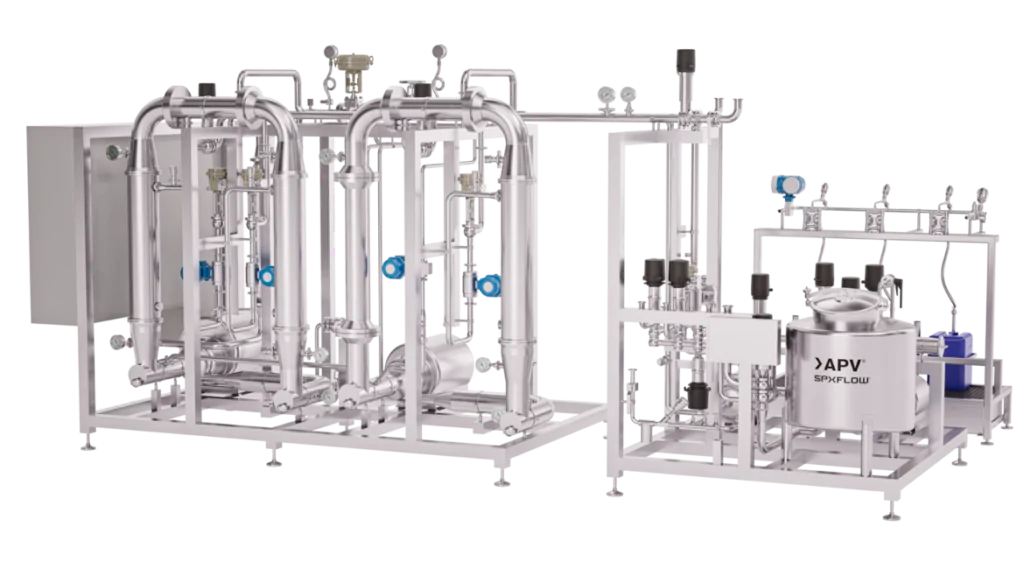
System design is critical — «good system design starts with having the right membrane area», Hutson says — as under-sized systems force higher pressures, while peak-capacity designs, circulation flow, pump selection and pressure profiles drive long-term fouling.
On the membrane itself, DuPont’s Victoria Oveson notes that hydrophilicity, surface smoothness and optimised element design reduce foulant attachment and improve cleanability, alongside chemical robustness for repeated cleaning.
Cleaning and performance recovery
Fouling is inevitable, so the goal is fullest possible recovery each cycle.
Oveson warns that incomplete cleaning leaves a conditioning layer of residual proteins, fats and minerals that speeds future fouling, making cleanability as important as fouling resistance and CIP recovery key.
Shah notes both under- and over-cleaning cause problems, so processors increasingly track permeability recovery, differential pressure and flux decline — and use real-time, data-driven monitoring for predictive maintenance — rather than fixed schedules.
Processors cannot eliminate fouling, but controlling it plantwide extends membrane life, improves uptime and supports more consistent production.
About the author
Sammy Bredar is Group Editor of The National Provisioner and Dairy Foods, covering meat and dairy processing and leading membrane-technology coverage across both titles. She serves on the board of the Women’s Meat Industry Network and holds a bachelor’s degree in English literature from Ball State University. Full bio on her Dairy Foods author page.
Source: Dairy Foods