
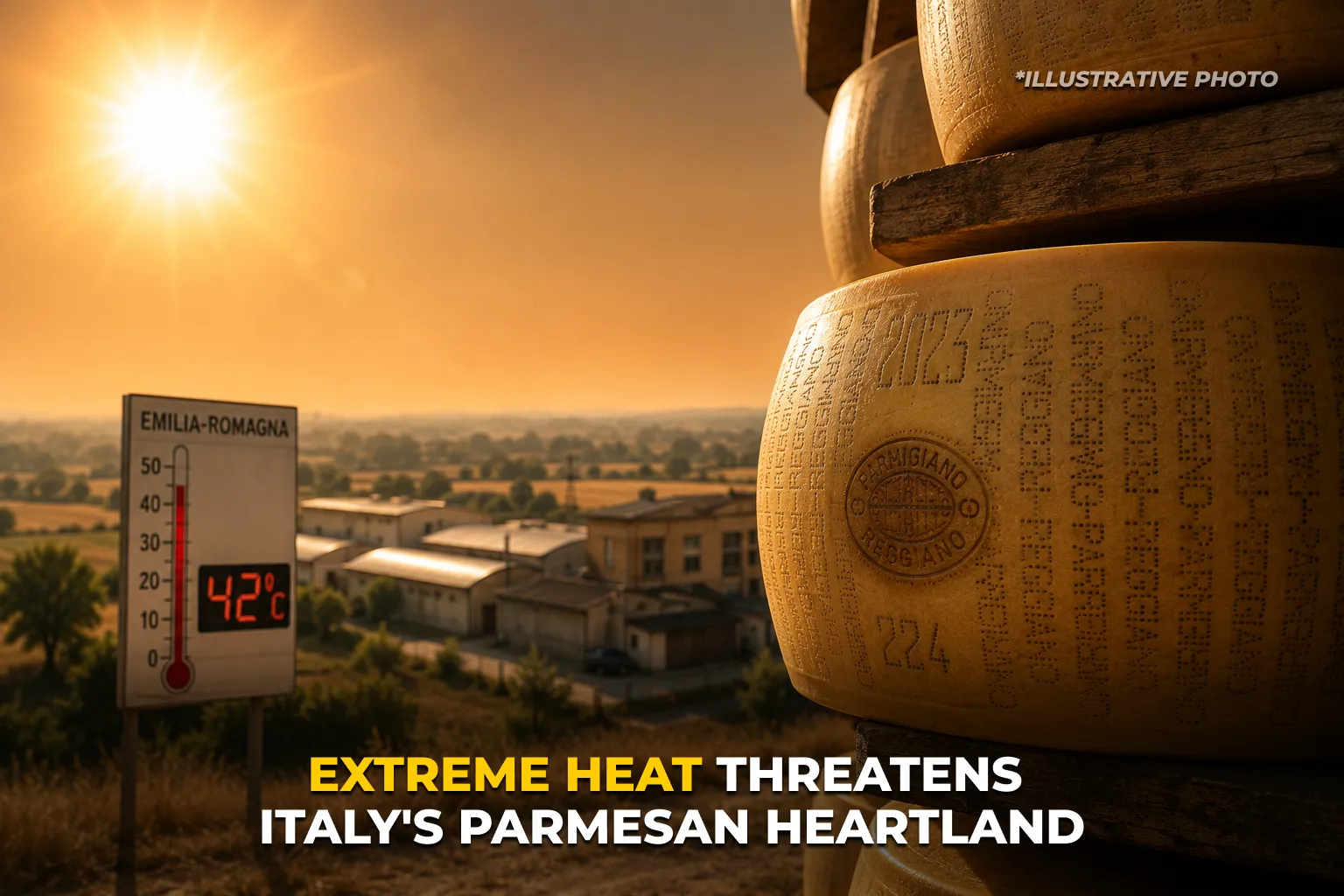
Fifty years ago, farmers in Italy’s Emilia-Romagna region opened their barn windows at night in summer to cool their cattle; today, with heatwaves pushing temperatures to record highs, those windows stay open around the clock to protect the cows — and ultimately their milk, the foundation of the area’s centuries-old Parmigiano Reggiano industry, Reuters reports.
«Extreme heat impacts milk’s quality and quantity», said Nicola Bertinelli, president of the Parmigiano Reggiano Consortium.
Costs mount as cheese ages
Above 40°C, cows lie down more, eat less, and produce up to 10% less milk — one of Parmigiano’s only three ingredients, with salt and rennet.
Authentic Parmigiano Reggiano may be made in just five provinces, mostly in Emilia-Romagna, with cows fed only local grass and hay:
«If it doesn’t rain, grass doesn’t grow, hay cannot be produced, and it’s impossible to obtain the milk», Bertinelli said.
Fans and water-mist systems have sent energy costs soaring, and rising bills also hit the warehouses where wheels age for at least 12 months — sometimes three years or more.
Over 500,000 wheels worth more than €300 million sit in two warehouses run by Credito Emiliano’s MGT unit in Reggio Emilia and Modena, where peak-heatwave daily energy use rose about 30%, director Giancarlo Ravanetti said.
«We don’t want to be the last generation to eat it»
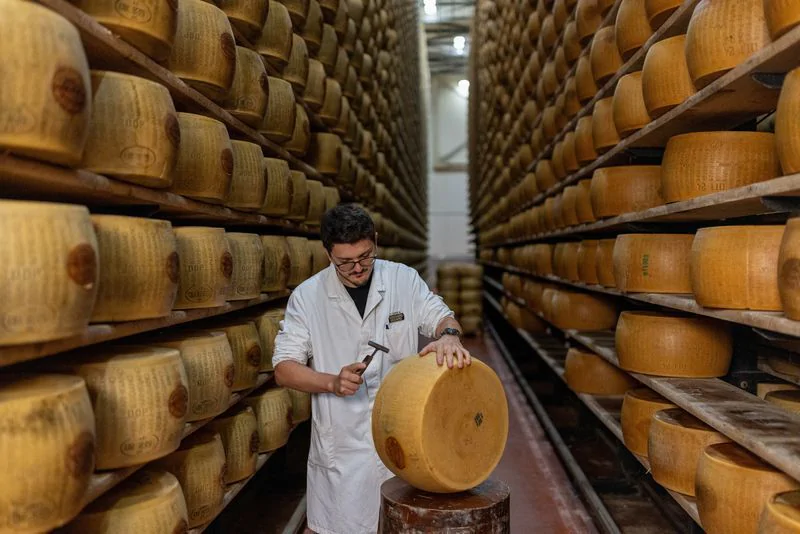
The region’s climate-controlled warehouses — known collectively as the «Bank of Parmigiano» — pair technology with tradition, with every wheel undergoing strict checks, including X-ray scans and weekly hammer-tapping by experts.
«The human factor remains key», Ravanetti said.
Paolo Ganzerli, international sales director at GranTerre (2025 consolidated revenue of €1.87 billion), warned that longer, more intense extremes would hit milk quantity and quality and, above all, raise costs.
The Parmigiano Reggiano industry generates an estimated €4.5 billion a year and employs thousands; in 2025, exports were over 50% of global sales, with the US the largest foreign market.
The cheese «has existed for more than 800 years», Ganzerli said.
Source: Reuters