
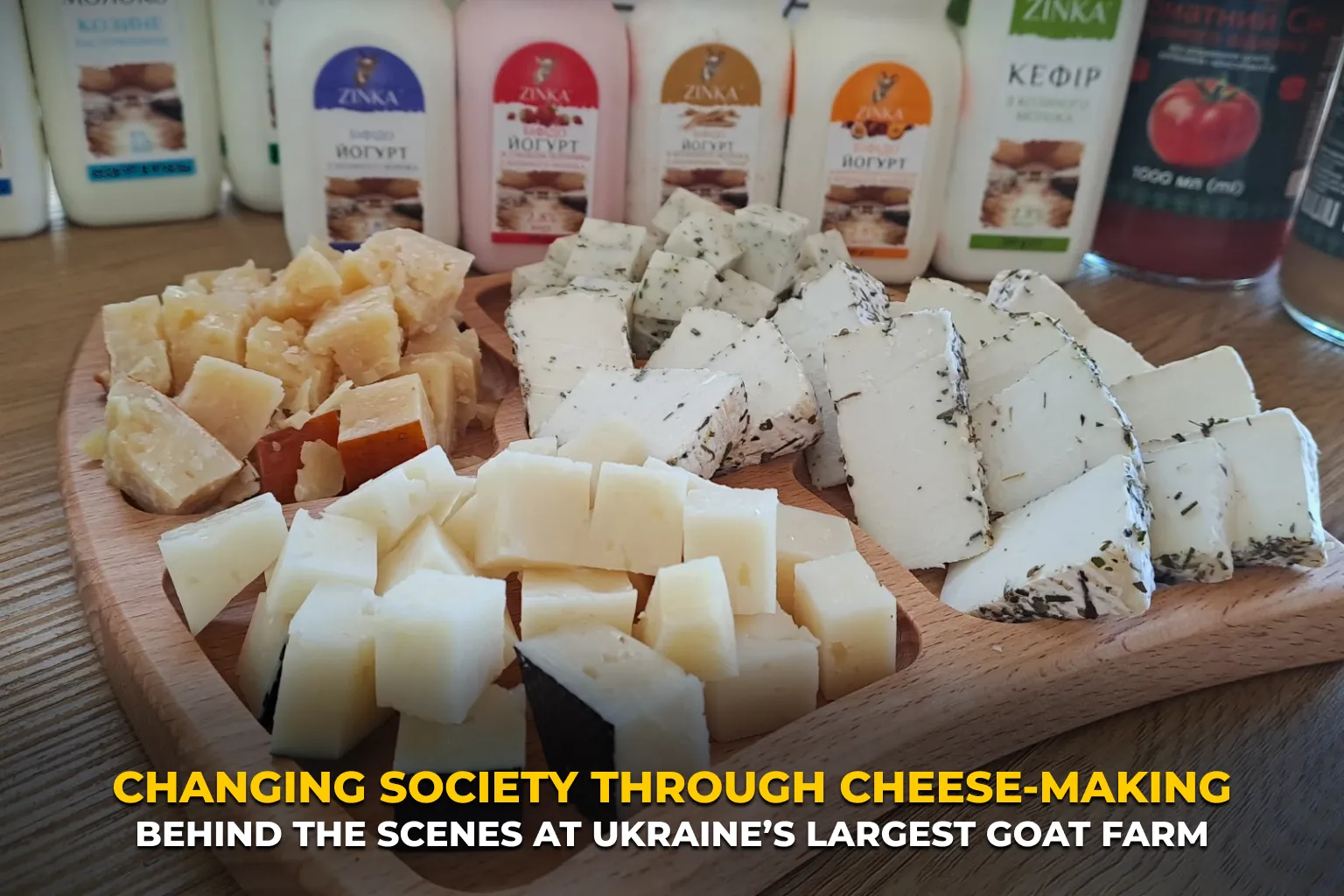
They bought goats when almost no one believed a large goat farm could work. Unable to find anyone to process their milk, they built their own plant and began bottling yogurt and kefir — even blowing their own bottles and growing their own berries.
When the full-scale war began and the front line came within a kilometer, they saved their milk by laying cheese into a “bank.” They learned the technique in France, yet plan to export not to the EU but to the Middle East — all while setting out to fight the prejudice against goat’s milk and prove it can be tasty and healthy, writes Ekonomichna Pravda about Ukraine’s largest goat farm.
Supermarkets took a chance on the idea
The Tetiana 2011 farm has operated in the Kyiv region since 2011. Named after founder Vasyl Tsvyk’s daughter, it started out in grains, oilseeds and sugar beet.

Deputy head Vita Tsvyk recalls that the family dreamed of a full-cycle operation to keep staff employed year-round. They weighed rabbits and quail but ruled out cattle and pigs to avoid competing with the region’s big producers. The idea for goats came from a trip to Israel, where local goat-milk products won them over. In 2015 they brought the first kids to Usivka, 100 km from Kyiv, and asked a plant in nearby Zgurivka to process the milk — but were refused because the volume was too small.
So they set up processing themselves, obtained a production permit in 2016 and made their first batch. The brand “Zinka” — a common village name for goats — soon reached supermarket shelves, first with the Novus and Auchan chains, at a time when Ukraine’s goat-products market was only emerging and prejudice against goat’s milk ran deep.
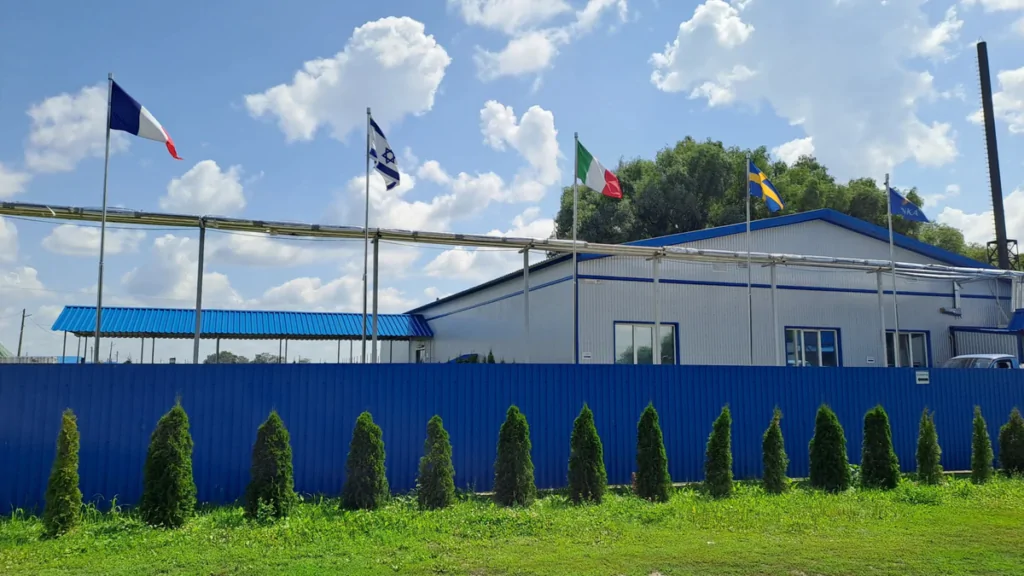
Vita’s mission, she says, is to popularize goat-milk products and erase the association with a “grandmother’s goat.” Their camembert, accented with Provençal herbs, is deliberately gentle — the opposite of a traditional raw-milk Normandy camembert with its strong peak-ripeness aroma.
War forced them into aged cheese
To pursue that mission, the farm decided to make every possible product from goat’s milk, setting up two lines — an Israeli one for yogurts and a French one for cheese, with recipes adapted to Ukrainian tastes — funded by crop earnings, grants and loans.
The cheese workshop shares a building with the offices, and the owners plan a restaurant where guests can watch cheesemaking through glass, much like France’s regional dairies on its “cheese and wine roads.”
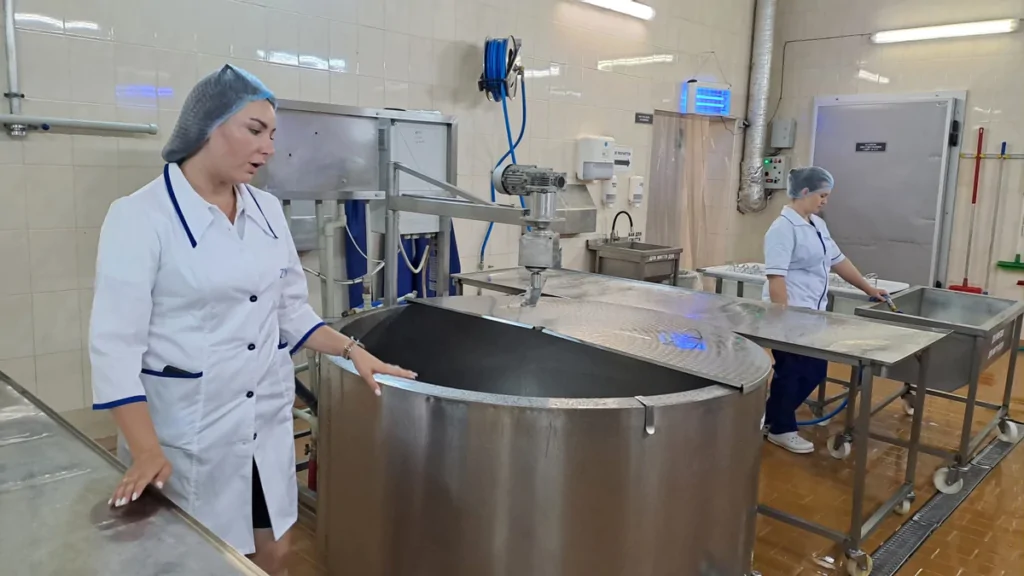
Milk moves from the milking parlor to a pasteurizing-cooling unit rated at 5 tonnes per hour, then via an insulated pipeline to two steel vats where it is curdled and cut.
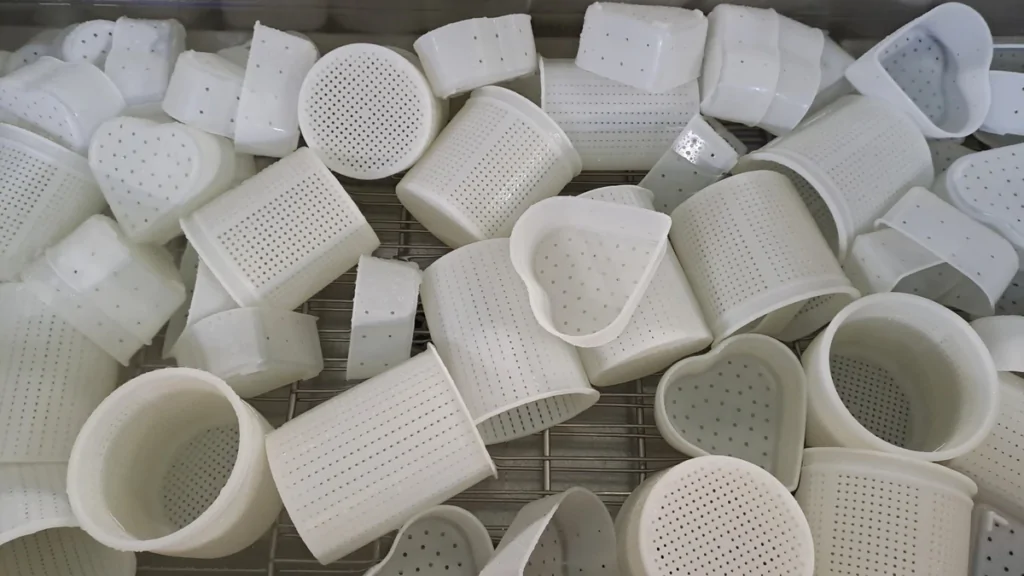
The curd is pressed into molds of various shapes, with all work — including washing — done by hand.
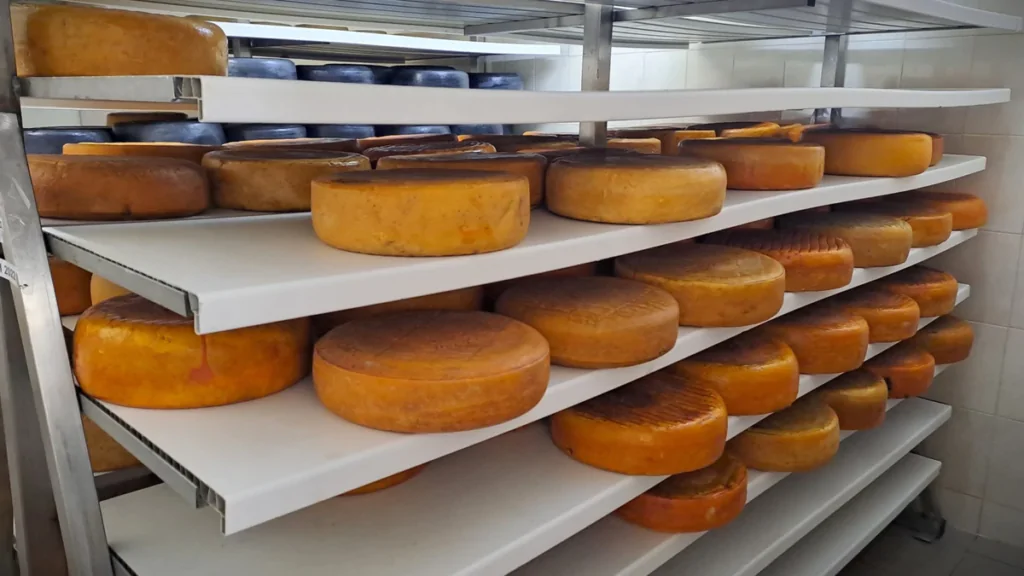
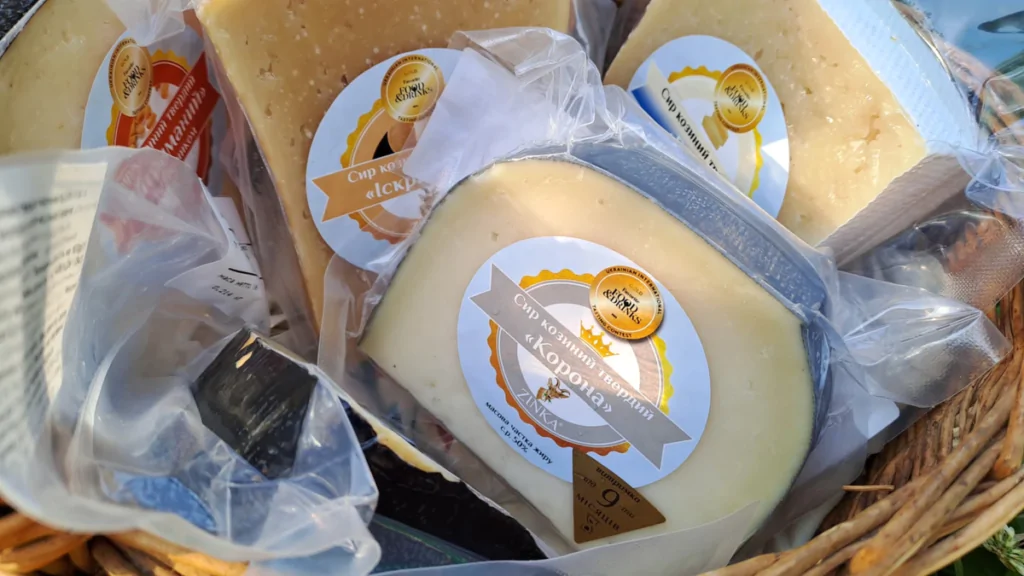
Cheeses are salted in brine for 12 to 24 hours and then aged: soft white-mold cheeses develop their bloom within ten days, while semi-hard and hard wheels are dried and either packed or sent to the “bank” for long storage.
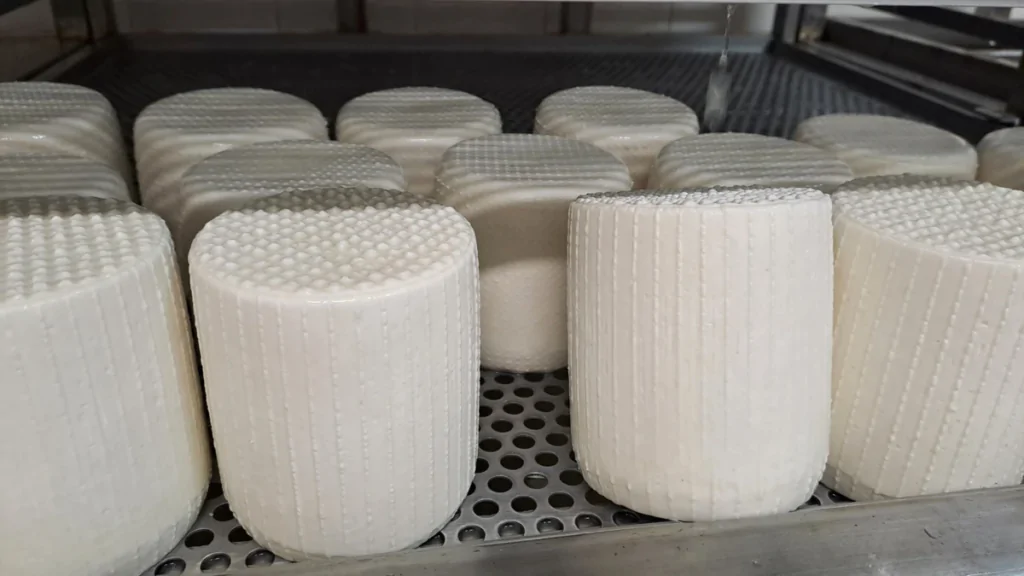
The oldest sample dates to 2022, when the war began.
As Vita explains, the cheese bank was a forced measure: in 2022 the farm sat on the edge of occupation, with Russian forces a kilometer away, roads to Kyiv cut and logistics halted. Unwilling to pour milk away, the only thing they could do was press large hard-cheese heads that keep indefinitely — even working under shelling.
Demand depends on the weather
The bank holds five chambers, each with eight racks of 18 shelves and its own aroma. The wheels are coated in colored food-grade coating that distinguishes varieties and guards against mold and drying.
Quality inspector Maryna Pankiv explains that cheeses are turned and rubbed daily for the first three months, then weekly up to a year — the older the cheese, the less it wants to be touched.
Up to 10 tonnes of different ages are stored at once, and the same variety opens up differently at three, six, nine and twelve months as the milk aroma intensifies and spicy notes emerge.
Goat’s milk has a more pronounced aroma than cow’s because of its fats and volatile compounds — fatty acids with a low odor threshold create its “animal” scent, light spice and even nutty or mushroomy hints.
Zinka experiments with herb and seed blends and works only with certified, mostly Ukrainian ingredients.
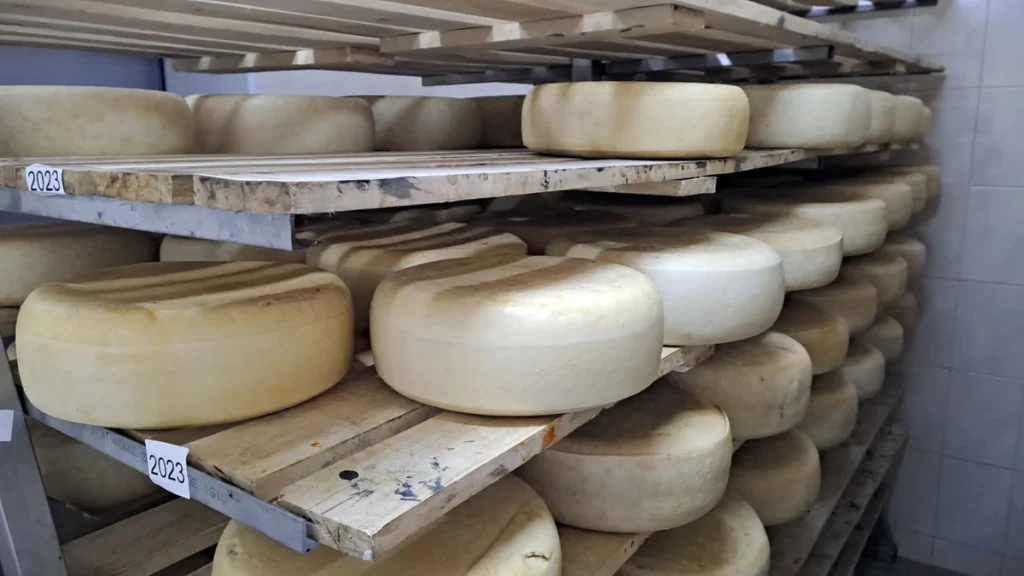
Predicting the best-seller is nearly impossible, Vita laughs — one market wants the heart-shaped cheese, the next camembert, then hard cheeses; it seems to depend even on the weather.
One trend has emerged, though: before the war roughly 80% of sales were dairy and 20% cheese, but now it is almost even as cheese lovers multiply.
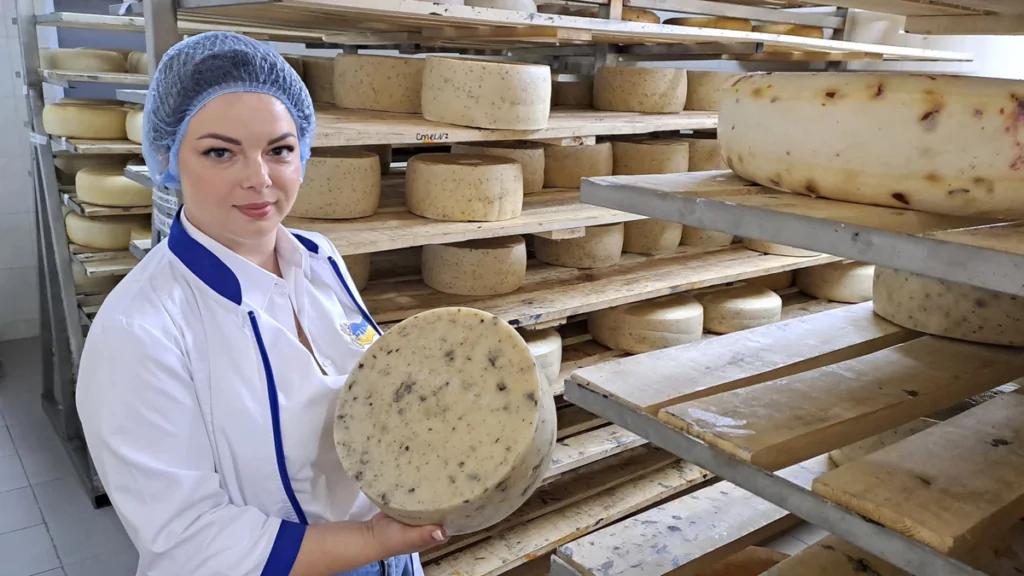
The constant favorites are camembert and “polino,” a cheese gourmets prize for the liquid layer that forms under its rind. In the newest chamber, wheels from 2025 and early 2026 mature — among them a truffle gouda that won a medal at the international World Cheese Awards, where Zinka competed with Switzerland’s support.
There is work — they need people
The winning recipe came almost by chance: buyers at fairs kept asking for truffle cheese, so the team simply made it, though no goat-milk truffle gouda existed in Ukraine. Ten years on, Vita notes, a farm few believed in is now known internationally. Tetiana 2011 is HACCP-certified (Hazard Analysis and Critical Control Points) and awaits an EU “euro-number” that will open exports, first to the Middle East.
It partners with colleges, takes on students, trains staff abroad and houses displaced people willing to relocate.
Average pay is 35,000–40,000 UAH, yet vacancies remain — many young men have gone to fight and the labor shortage is severe.
To reduce external shocks the farm installed solar panels, since milking, ventilation, climate control and processing all depend on stable power.
Another problem, Vita says, is imperfect legislation: goats are not exempt from VAT even though all imported breeding animals are, and the farm imports everything officially — a nonsense it is lobbying to fix. It also receives no goat subsidies, which in Ukraine apply only to herds of 5 to 500 animals.
An alternative to France: test-tube kids
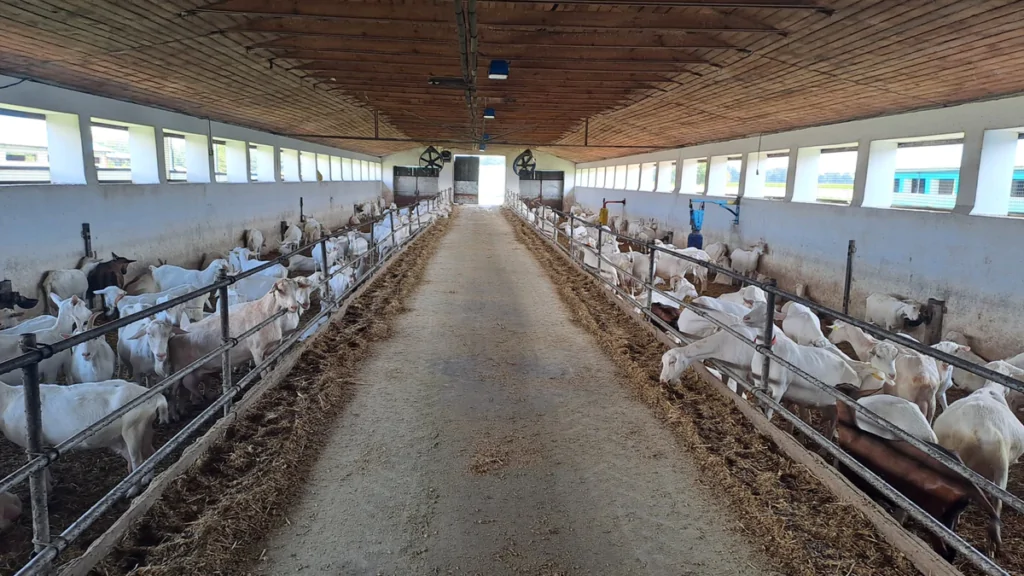
The herd has grown from over 300 pedigree Alpine and Saanen goats in 2015 to 3,500 today. The last animals were imported during the Covid pandemic, when a French goat cost €860, today, with pricier diesel, one runs about €1,000.
To reproduce the herd more cheaply, the farm launched an artificial-insemination project: they buy an ordinary healthy Ukrainian goat, take an egg from a pedigree doe, fertilize it, grow embryos in nitrogen and implant them, so a surrogate carries two genetically pure French Alpine or Saanen kids.
The farm even built its own Institute of Modern Veterinary Technologies on site, with a lab ready and a training classroom being finished — in the EU, Vita notes, gynecologists train on goats and sheep because their reproductive organs resemble women’s. Unlike natural pregnancy, where 60% of kids are male, insemination yields females 90% of the time and can be timed to spring for a steady year-round milk supply.
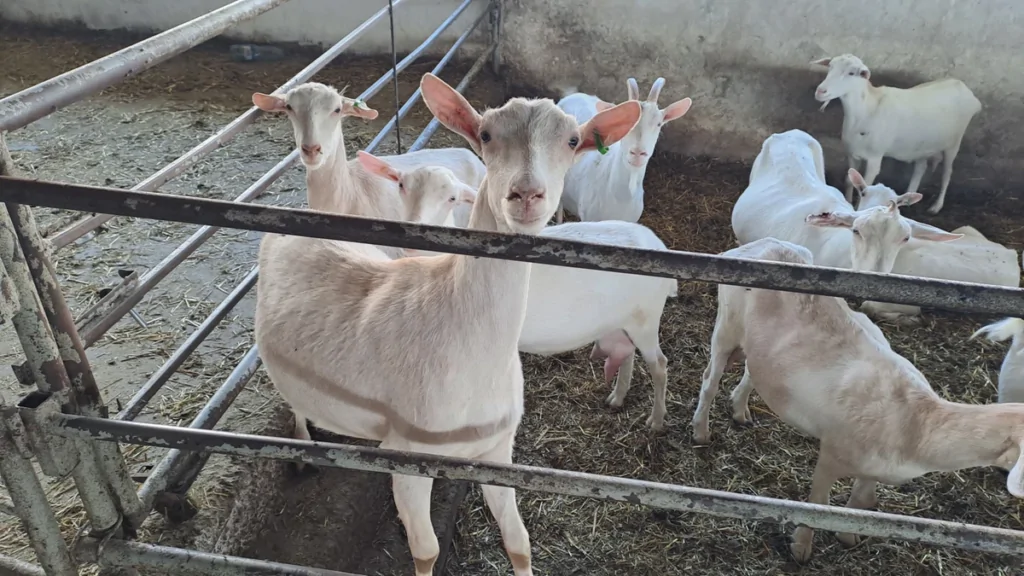
Goats are not free-grazed — a stray plant like wormwood could taint the milk — and are fed home-grown grain plus minerals, salt and chalk.
Most animals carry only numbered French and Ukrainian tags rather than names, though retail managers auditing the farm sometimes adopt and name a favorite.
Circumstances force a balancing act
The kids live in a “kindergarten », being naturally horned, they are disbudded and vaccinated, and have toys and constant access to milk replacer.
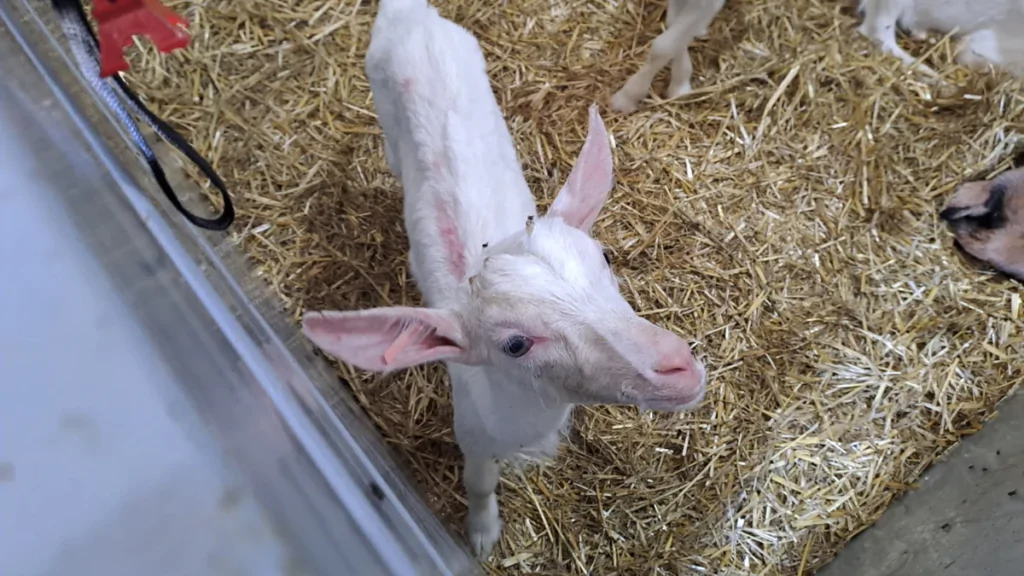
Vita’s two-year-old son loves playing with them. Contact with goats, she says, is a kind of therapy — goat cafés already exist in Kyiv, Odesa region and Moldova, and before the war the farm ran tours it hopes to revive, turning the farm into a place to taste village life.
Plans include a petting zoo, guest cottages and a restaurant of goat specialties where visitors can feed and milk the goats and try still-warm milk.
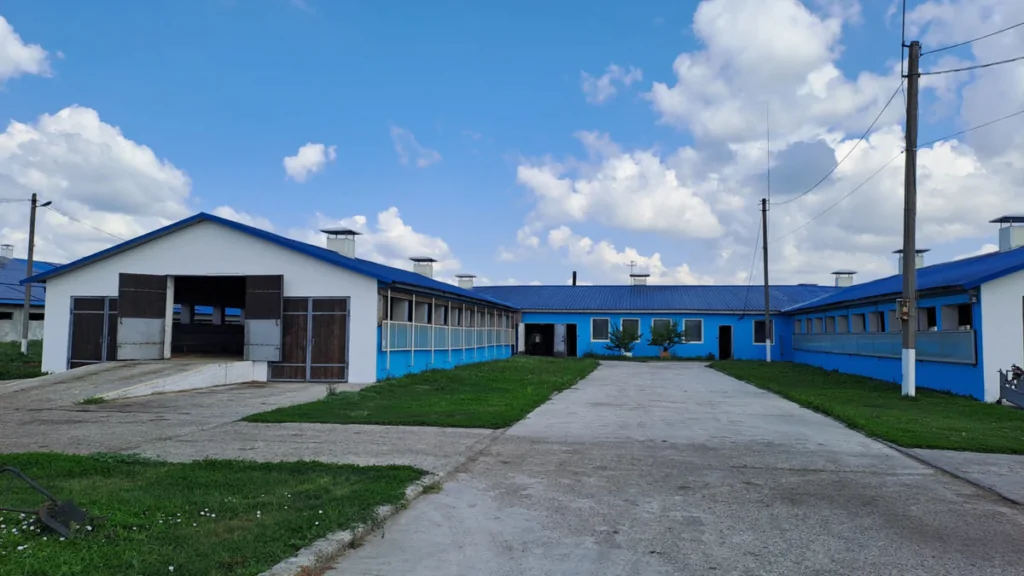
For now, circumstances force trade-offs — energy independence or the restaurant — but building continues: the 12-hectare site has five farm buildings with two more to come.
The farm has secured a grant for a new milking hall, aiming to process 40 tonnes of milk a day and make hard cheeses aged 3–12 months, up from five tonnes at the start, as demand grows.
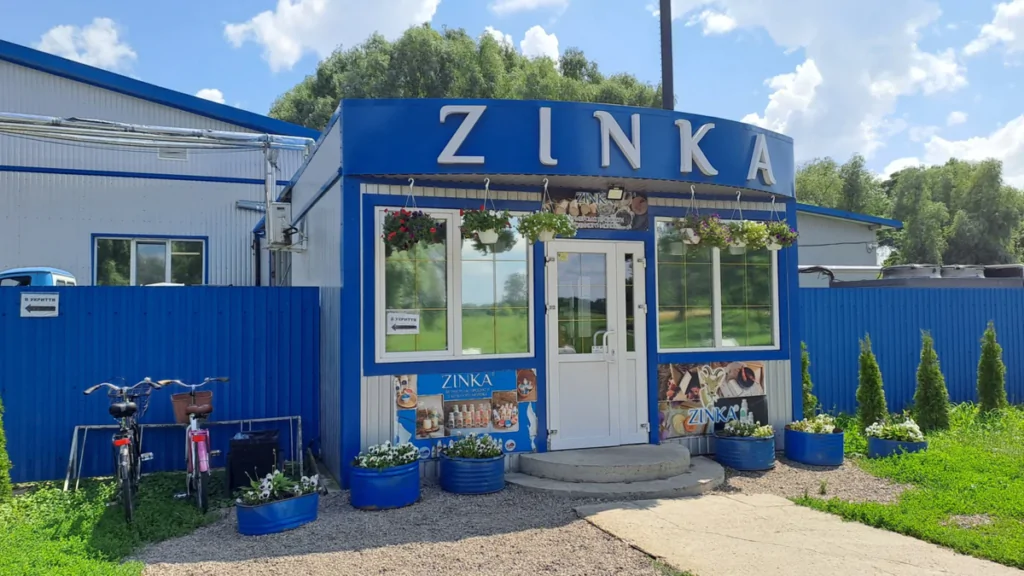
It has also launched a TSVVIT Family juice line — an acronym from family members’ initials — made from its own sugar-free fruit, berries and vegetables. Zinka, now marking its tenth anniversary, offers around 30 cheese varieties.
Source: Ekonomichna Pravda