
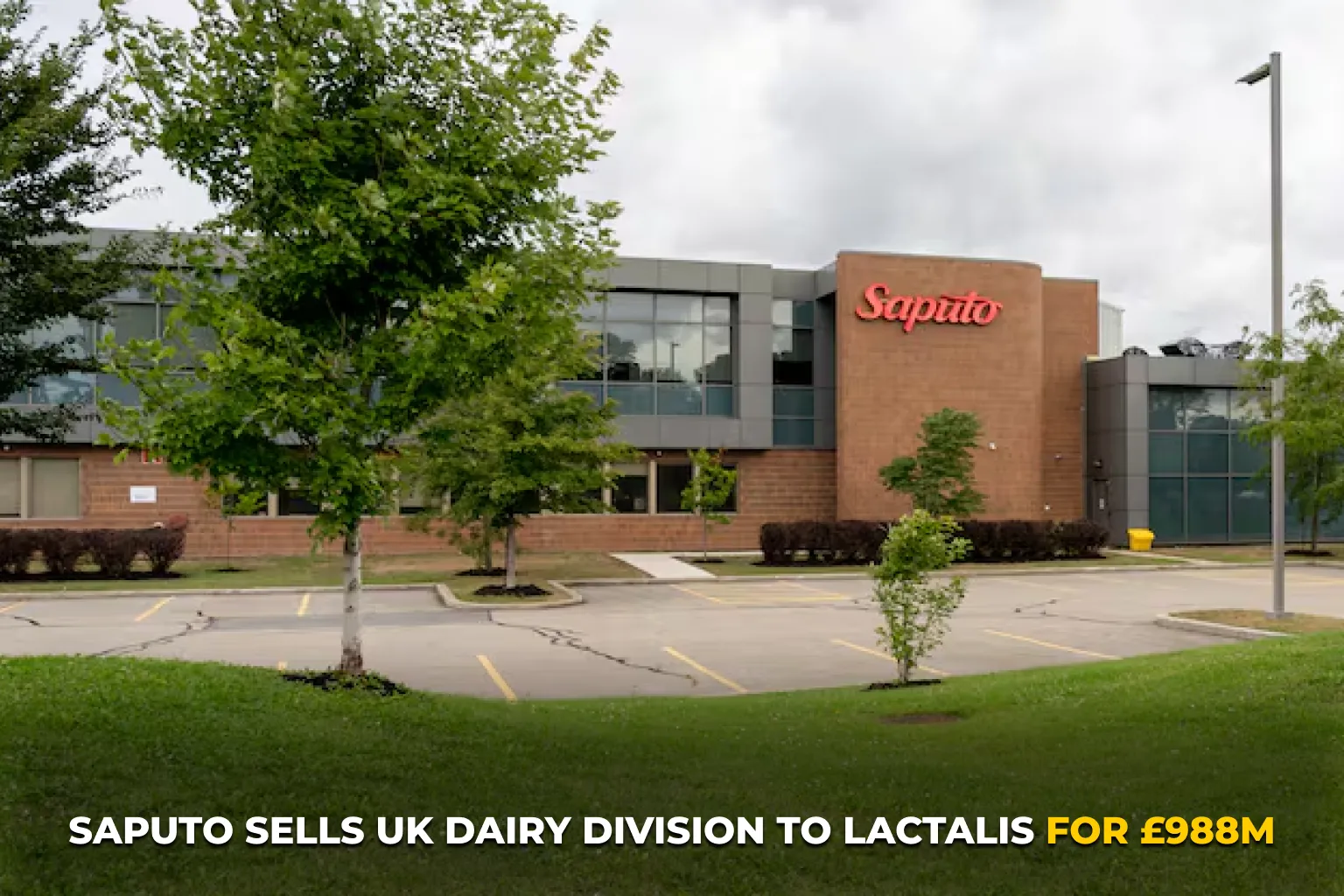
Canadian dairy giant Saputo has agreed to sell its UK dairy operations to French rival Lactalis for approximately £988 million in a landmark deal, Dairy Reporter reports.
The transaction covers five manufacturing sites and major brands including Cathedral City, Wensleydale, Davidstow, Clover and Country Life. Saputo’s UK dairy arm generated approximately US$1.2 billion in revenue over the past four quarters — around 7% of its consolidated revenue.
The deal is expected to close by the first quarter of 2027, subject to standard closing conditions and regulatory approvals. Saputo said proceeds from the sale would enhance its financial flexibility and growth capacity, and that it would evaluate opportunities to deploy capital across organic investments, capital projects and strategic acquisitions (M&A), while maintaining focus on returns and long-term value creation.
“Today’s announcement reflects a disciplined step to refine our global footprint and sharpen our focus on platforms where Saputo competes from a position of strength. The value to be realized recognizes the expertise of the UK team, the quality of the operations, and the market position of these leading brands. This transaction reinforces our strategic focus and enhances our financial flexibility as we continue to create long-term shareholder value through disciplined capital allocation,” said Carl Colizza, president and chief executive of Saputo.
“We are profoundly grateful to our colleagues in the United Kingdom for their dedication and contributions to Saputo. We look forward to seeing these strong assets and brands continue to build on their market positions under new ownership,” he added.
Saputo ranks among the world’s top 10 dairy processors, producing cheese, fluid milk, extended-shelf-life milk and cream, cultured products and dairy ingredients. Before the sale it was the UK’s leading manufacturer of branded cheese and dairy spreads. The decision to exit the British market follows a difficult period marked by high global inflation, rising operational costs and reduced consumer spending; last year the firm already scaled back its UK footprint by pulling out of the domestic infant formula market entirely.
Source: Dairy Reporter