
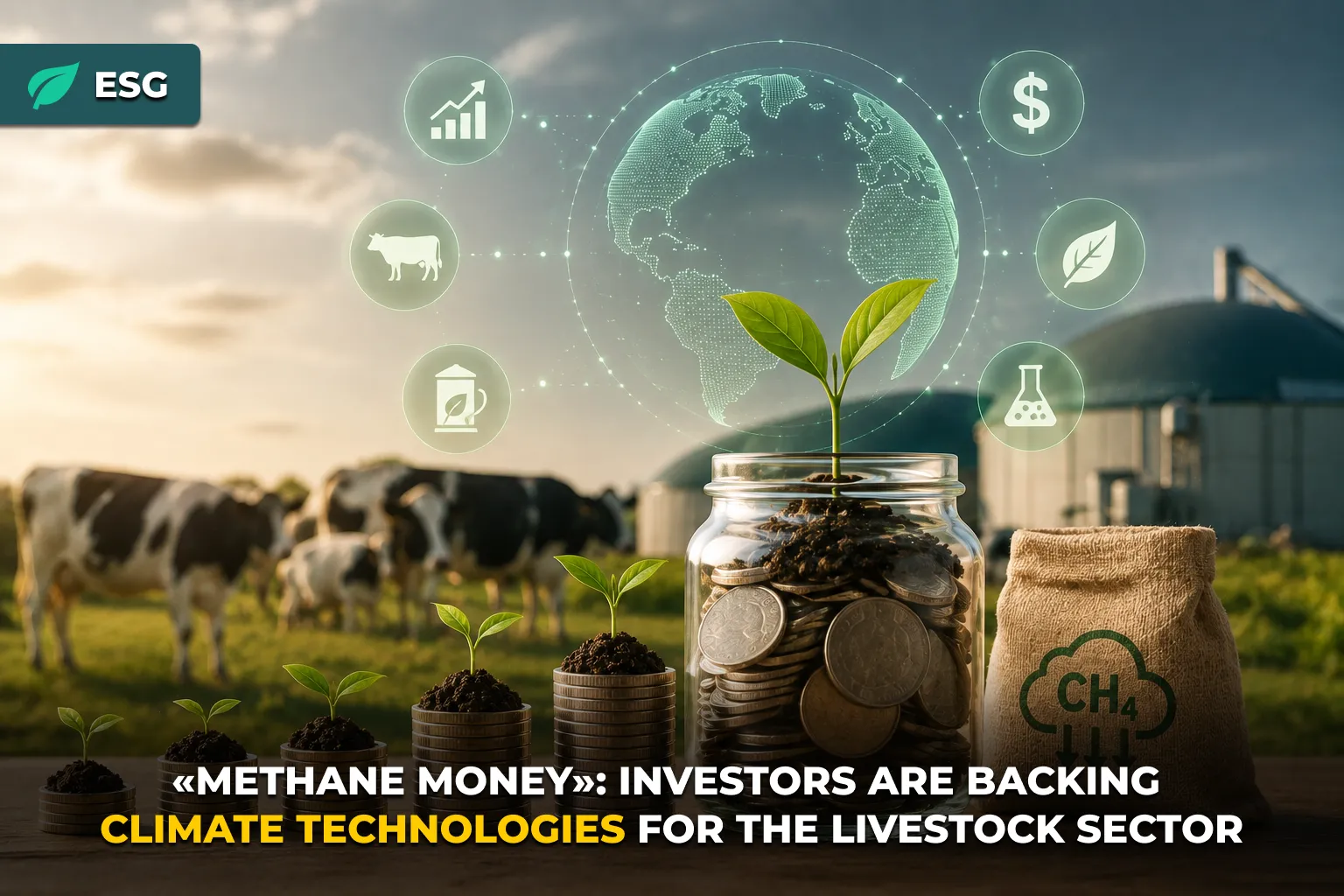
Cutting livestock emissions is becoming an attractive opportunity in European agtech — including technologies for dairy farms.
Cutting livestock emissions is becoming an attractive opportunity in European agtech, as investors back technologies that deliver measurable environmental impact while improving farm economics — including solutions for dairy farms, from waste-to-energy to automated cow-health monitoring, AgNavigator reports.
Turning farm waste into renewable energy
UK start-up EcoNomad Solutions secured £230,000 from the British Design Fund within a wider £400,000 round (with Innovate UK’s Investor Partnership and existing investor Beeches Group) to expand its BioNomad® decentralised anaerobic digestion system for small and medium livestock farms.
Producers face a «triple challenge» of rising fertiliser and energy costs, tighter slurry rules and pressure to cut methane. BioNomad® captures methane, converting farm waste into biogas for heat, power and cooking while producing biofertiliser; the firm estimates a typical 50-cow operation could save thousands of pounds a year.
«Small farms are under increasing pressure, yet they’re often excluded from the renewable energy solutions available to larger operators», said founder and CEO Dr Ilan Adler. Systems already run on more than 10 UK farms, plus installations in Africa.
Feed additives and animal monitoring
Swiss start-up Sixteen44 is moving its methane-removal tech into farm trials, while Sweden’s Volta Greentech raised 18 million SEK (around €1.7 million), led by Axel Johnson, bringing total funding above 100 million SEK to commercialise its next-generation methane-reducing feed additive, Lome®, which targets methane-producing microbes in the rumen.
In monitoring, Lancashire-based Hoofcount and partner IMI mark 12 years developing an automated dairy footbath now used on hundreds of farms — lameness remains one of dairy’s costliest problems, affecting welfare, fertility, milk production and herd longevity. The firms are now exploring AI-powered systems to identify individual animals via electronic ear tags and detect early lameness.
Microbiome science and a new investment category
Further momentum comes from Rumen-Innovate, a €4.8 million EU-funded initiative on methane reduction through microbiome science, starting March 2027 with 11 institutions and 19 partners, focused on the microbial ecosystems inside cattle and sheep.
«Rumen-Innovate represents an exciting opportunity to directly translate research into action», said coordinator Professor Chris Creevey of Queen’s University Belfast.
Taken together, the developments signal a distinct livestock-technology investment category centred on emissions reduction, animal health and farm resource efficiency — with dairy among the biggest opportunities for decarbonisation and productivity gains.
Source: AgNavigator