
Protein demand is rising in the Middle East as everywhere, but firms must respect local nuances to succeed, says one of the region’s largest conglomerates.
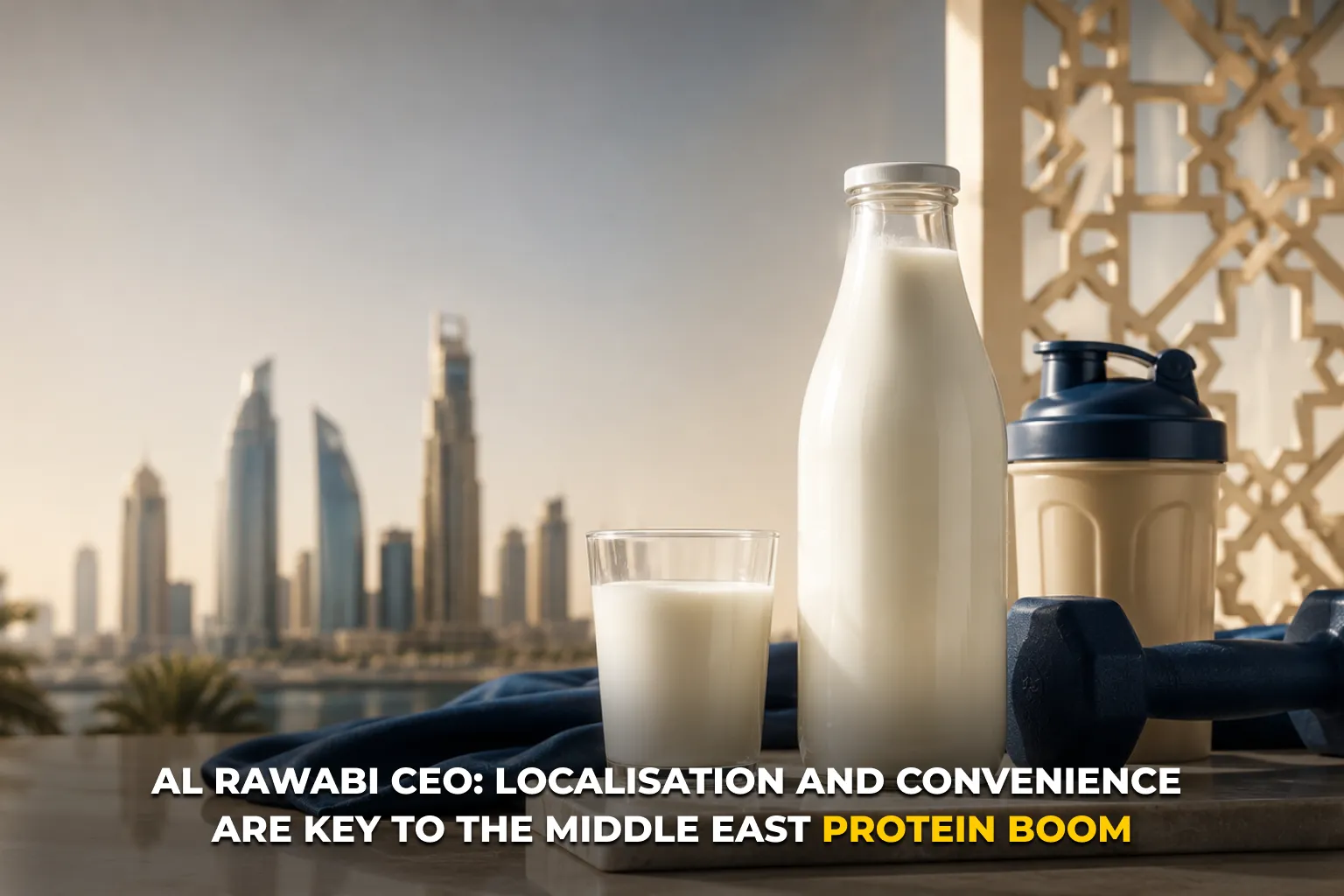
Al Rawabi Dairy is betting on high-protein products localised to regional tastes and on convenience — and expects dairy to deliver the biggest growth, Emirates Rawabi Group CEO Mazen Al Refae said in an interview, DairyReporter reports.
Al Rawabi Dairy is the dairy arm of Emirates Rawabi Group, a state-linked corporation backed by the Dubai government, the Arab Authority for Agricultural Investment and Development (AAAID), the Gulf Investment Corporation and other private shareholders. Founded in 1989, it has become one of the region’s largest dairy and juice brands, alongside sister brand Al Rawdah, a leader in poultry.
Dates, milk and localised protein
Group CEO Mazen Al Refae believes high-protein products will take off in the Middle East, but firms must cater to local needs to stand out.
«Al Rawabi wants to develop and grow with a ‘from UAE to UAE’ mindset, so we are creating many new product ranges catering for our local taste buds», he said, adding that the key to balancing local and international demand is to make localised products so good they can be exported easily.
A case in point is Al Rawabi Date Milk, made with real dates and no added sugar — dates being a regional staple, high in fibre and naturally in protein. He named Indonesia, Malaysia, Egypt and China as potential export markets.
Other protein-and-local plays include a lactose-reduced, high-protein Greek yogurt (13g protein per serve) and a lactose-free kefir drink.
Convenience in poultry, growth in dairy
Drawing on the Al Rawdah brand, Al Refae highlighted convenience as the most crucial factor in poultry innovation — ready-to-eat (RTE), ready-to-cook (RTC) and pre-marinated formats — as home deliveries and catering grow and home cooking declines.
Most new chicken lines are RTE/RTC, such as pre-marinated whole chickens. Even so, he sees dairy as the main growth driver ahead:
«Dairy is seeing an average of 4.5% CAGR year-on-year growth, estimated at some US$1bn annually», he said.
The firm is expanding production and farms, opening a new farm away from current sites for biosecurity, starting with 4,000 hand-selected milking cows to fully secure its own milk supply.
It also plans to diversify into cheese, researching enzymes and high-protein products:
«high-protein is seeing high growth and demand in the market, so this is something we do have our eye on», he added.
Source: DairyReporter