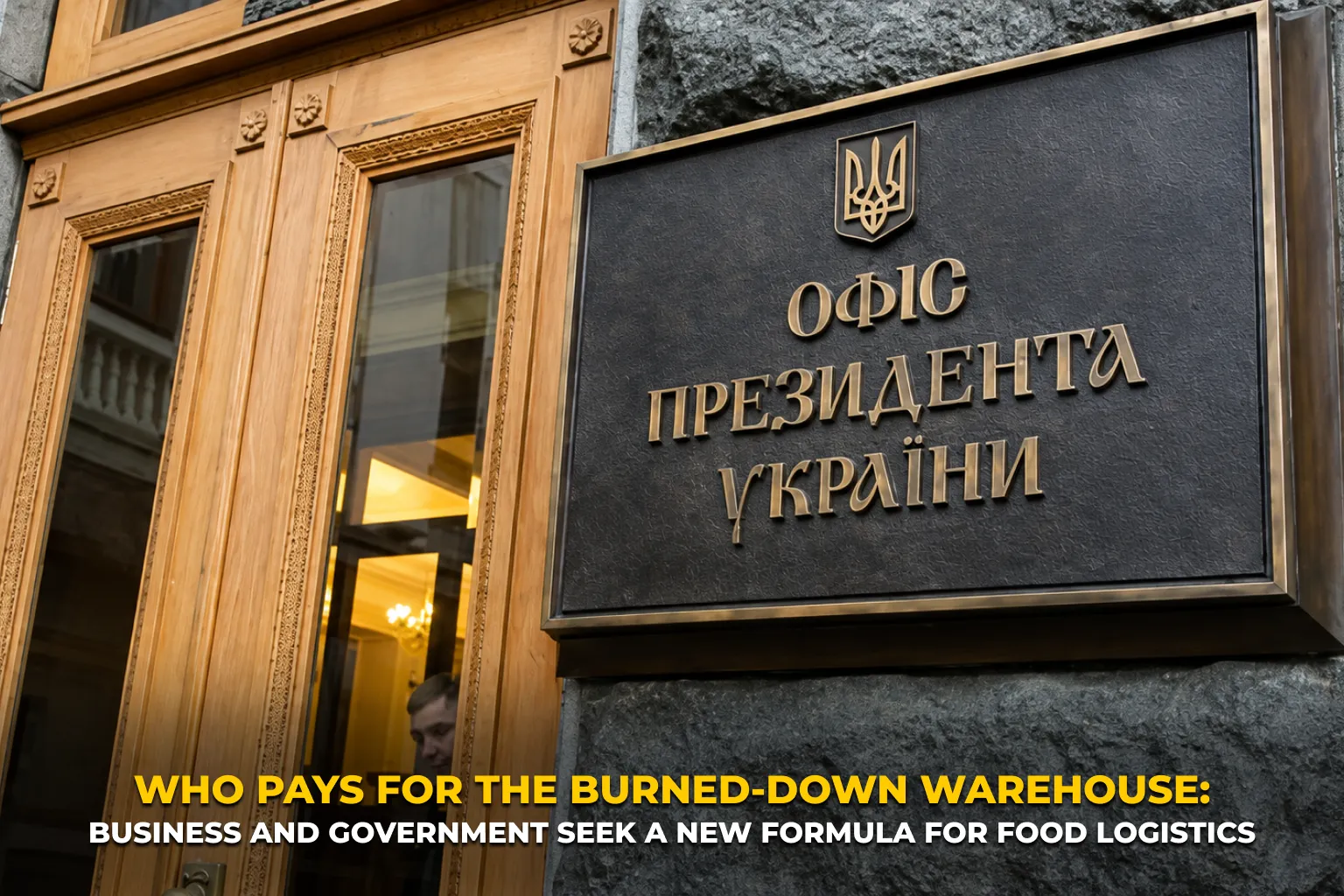

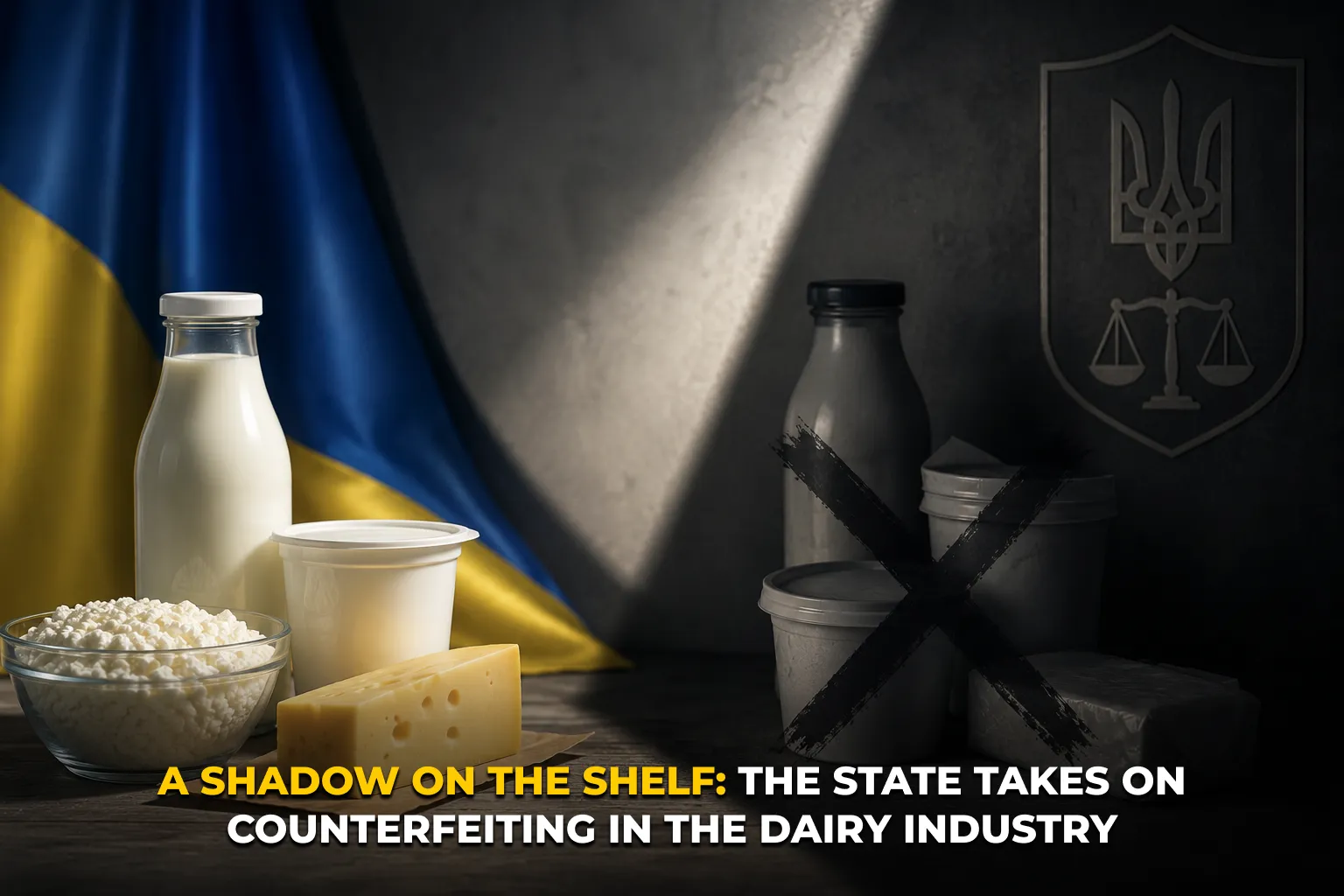
The Verkhovna Rada’s Committee on Economic Development is seeking tools against food fraud and smuggling. Business insists that in wartime the shadow market is no longer a question of competition but of defence.
For a legal dairy processor, a competitor that pays no taxes, skips certification and sells vegetable fat disguised as butter is not an abstract enforcement problem. It is a cost difference that efficiency cannot offset. While one company invests in a lab, HACCP and excise accounting, another saves on everything at once — and wins the shelf on price.
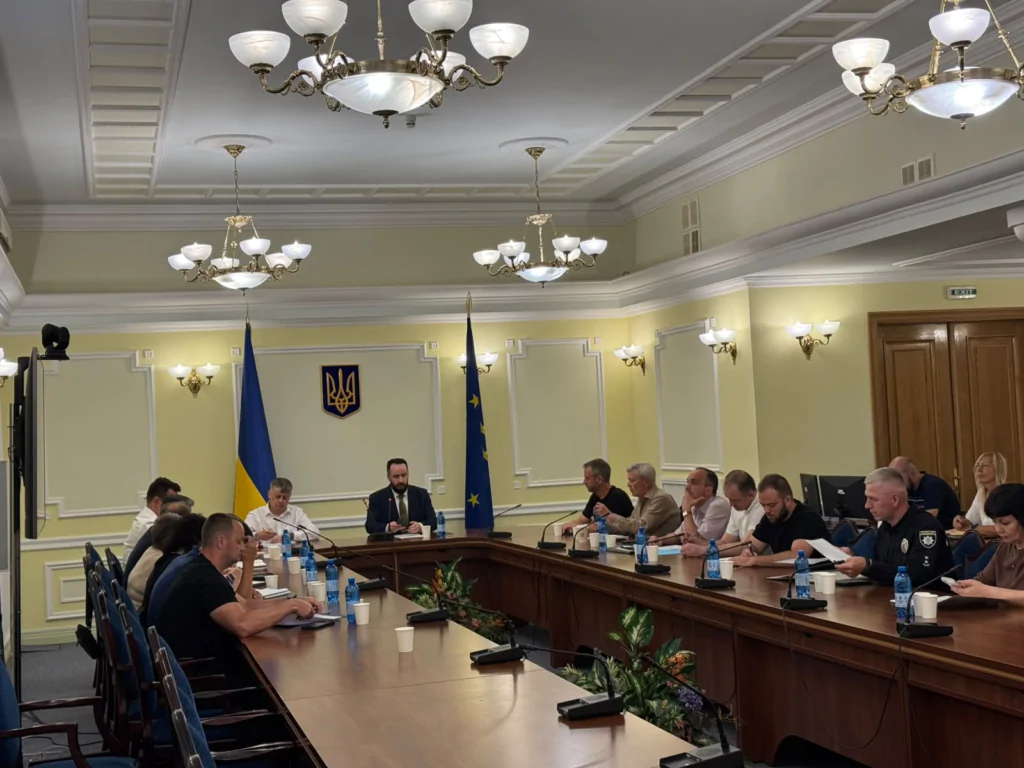
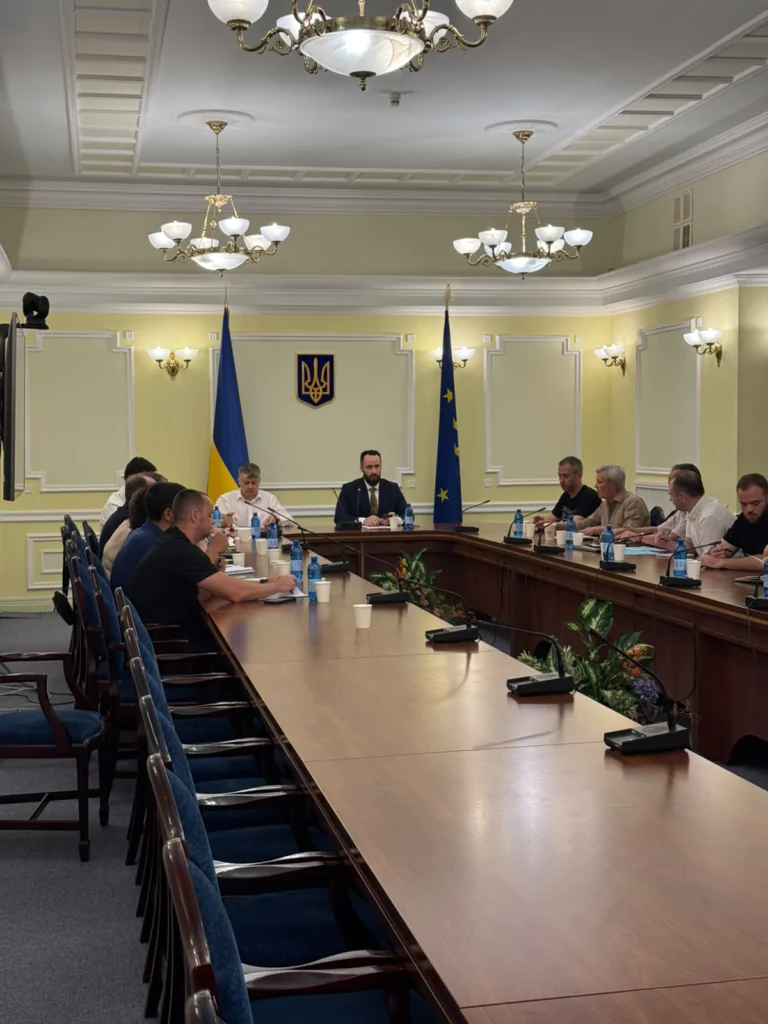
This gap was the theme of a working meeting of the Verkhovna Rada of Ukraine’s Committee on Economic Development, held on 21 August 2026. On the agenda: the state of the dairy market, counterfeiting and smuggling, fair competition and consumer protection.
Who was at the table
The line-up itself is telling: the issue has moved beyond the agrarian ministry into the sphere of economic security.
Participants included Oleh Osiian, acting head of the State Service for Food Safety and Consumer Protection; Vadym Chaharovskyi, head of the Union of Dairy Enterprises of Ukraine (UDEU); Arsen Didur, executive director of the UDEU; Vladyslav Panchuk, deputy head of the Information Analysis Department of the Bureau of Economic Security (BES); Yurii Dolinovskyi, deputy head of the unit for countering abuses in the agrarian sector of the National Police; Liudmyla Kravchenko, deputy Minister of Justice; MP Bohdan Kytsak; and Andrii Kravchenko of the Ministry of Economy and Environment.
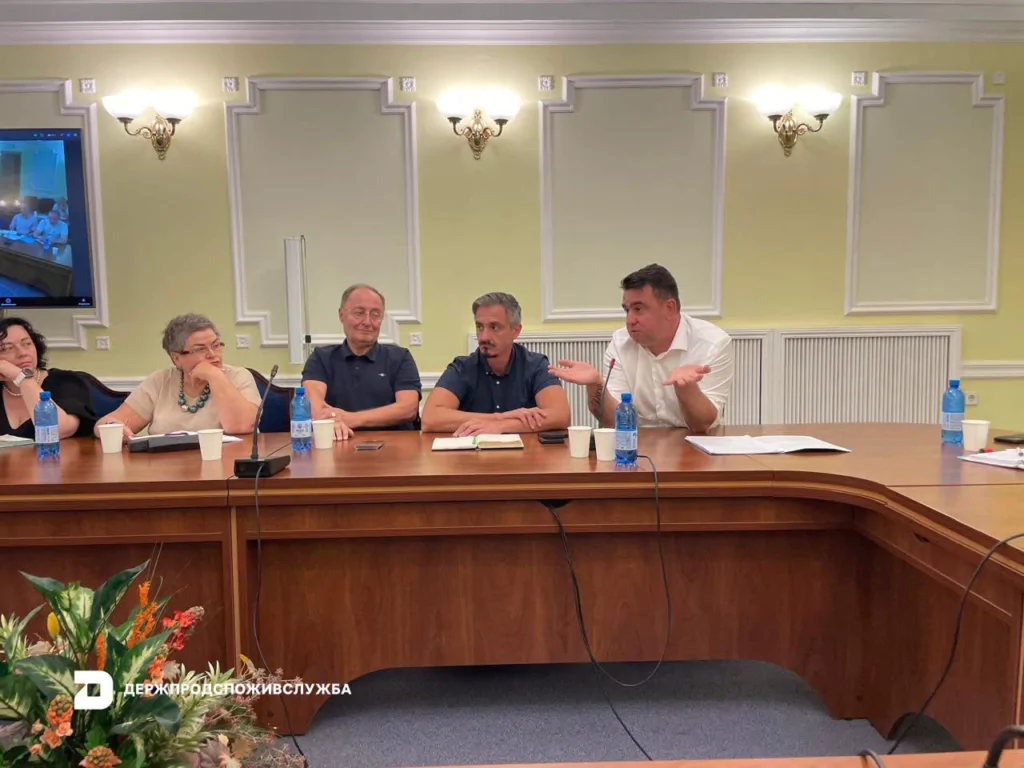
The presence of the BES, National Police and Ministry of Justice alongside an industry association signals that the state views falsification not as a consumer inconvenience but as an economic crime.
A crime with no name
The key legal gap is the absence of the concept of «food fraud» in legislation. In the EU it is a distinct category: deliberately misleading consumers about a product’s composition, origin or quality for economic gain. In Ukraine such acts are still classified via a set of adjacent articles, complicating both investigation and proof.
Participants agreed to define the concept in law and simultaneously strengthen the powers of the BES and National Police against counterfeiting and smuggling.
The humanitarian channel under review
A separate block of decisions concerns import flows: a review of Resolution No. 434 and amendments to Resolutions No. 953 and No. 220 regarding the import of food as humanitarian aid.
The business logic is straightforward — a channel created for aid should not become a preferential route for commercial imports that then end up on ordinary shelves and compete with Ukrainian producers on price without bearing their tax burden.
In parallel, participants raised limiting food imports by individuals — a norm long regulated in the EU as a tool of both sanitary and economic control.
The industry’s position
The executive director of the Union of Dairy Enterprises of Ukraine, Arsen Didur, framed the problem in terms beyond market discussion.
«Every pack of falsified butter and every tonne of illegally imported raw material is taxes that did not reach the budget. And the budget today is drones, shells and soldiers’ pay. A shadow market under martial law is a stab in the back of the Armed Forces of Ukraine, and it should be called exactly that — without euphemisms about a ‘grey zone’ or ‘market specifics’», he said.
«A legal producer pays taxes, keeps jobs, reserves critical personnel, works under shelling and also donates to the army. The shadow operator does none of that — yet has a price advantage on the shelf. This is not competition; it is parasitism on a country at war. We support strengthening the powers of the BES and National Police and introducing liability for food fraud — but the key will be enforcement, not the rules themselves», Didur added.
What next
Participants summed up the meeting as a shared understanding: the market must be transparent, the rules the same for all, and the conscientious Ukrainian producer protected from unfair competition.
The next stage is turning these agreements into draft laws and by-laws — the very stretch where it usually becomes clear how shared the understanding really was.