
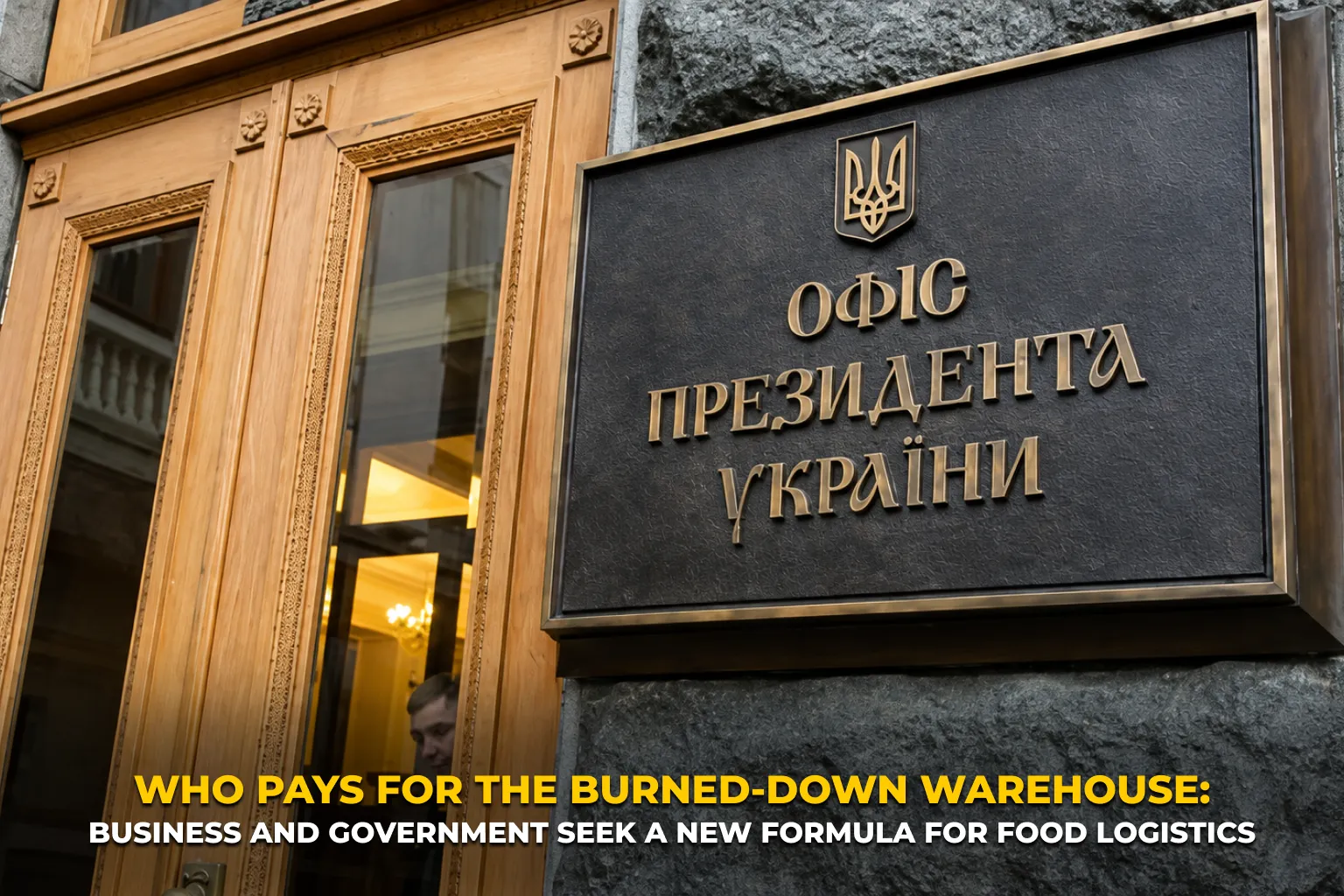
At the Office of the President, officials and business discussed how to keep food production and supply running under missile strikes. The key question — how to share losses between producer and retailer — was left unresolved.
The food logistics that Ukrainian companies built over decades has stopped working under the old rules. The centralised model — where a producer ships a batch to a retail chain’s distribution centre (DC), from which goods spread to stores — has proved too vulnerable: a single accurate strike on a DC removes dozens of suppliers’ products from circulation at once. Business is switching to direct deliveries to stores — costlier, slower, and demanding a far larger vehicle fleet and more drivers, who are not available on the market.
This restructuring was the central theme of a working meeting of members of the Council for Entrepreneurship Support, held on 21 August at the Office of the President of Ukraine. Around the table were Deputy Head of the President’s Office Oleksii Soboliev, Minister of Agrarian Policy and Food Taras Vysotskyi, Minister of Economy and Environment Oleksandr Kravchenko, and representatives of relevant agencies and business associations. The Union of Dairy Enterprises of Ukraine was represented by its executive director, Arsen Didur.
Damage with no addressee
The meeting’s sharpest issue has nothing to do with technology or capacity — it is purely contractual: who bears the financial loss when products are destroyed by a missile strike.
Today the answer depends on the specific contract, and in most cases not in the producer’s favour. Goods physically located at a chain’s DC often still legally belong to the supplier. A dairy processor or bakery loses both the product and the working capital, with neither insurance cover nor a compensation mechanism. For low-margin, short-shelf-life sectors — and dairy and baking are exactly that — every such episode hits the very ability to keep producing.
Participants proposed regulating this in law: changing the rules between producers and retail, strengthening protection of Ukrainian producers and explicitly providing compensation for products destroyed at distribution centres.
Drivers as a scarce resource
The second structural problem is people and equipment. Switching to direct deliveries means more trips, more vehicles and more drivers — yet specialised transport, above all refrigerated, is scarce, and drivers have been widely mobilised or have left.
Business proposes forming a reserve of drivers for processing-industry enterprises and logistics companies, and raising the quota for their reservation (deferment). Without this, the new logistics system simply has no one to run it.
A package of solutions
Six directions were formulated:
- An operational headquarters chaired by the Minister of Agrarian Policy and Food, for rapid response on production and supply, involving the Ministry for Restoration, the State Property Fund and heads of military administrations, with the decision to create it taken at NSDC level.
- Legislative regulation of producer–retail relations, including compensation for products destroyed at DCs.
- Guarantees of food availability — economic and physical — for all population groups, stronger security of food infrastructure and the creation of state food reserves.
- State funding for domestic production of robotic firefighting equipment.
- A driver reserve and expanded reservation (deferment) for processing and logistics.
- Protection of the domestic market — preventing the replacement of Ukrainian products with imports.
The industry’s position
The executive director of the Union of Dairy Enterprises of Ukraine, Arsen Didur, stressed that the food sector today performs a function beyond ordinary economic activity.
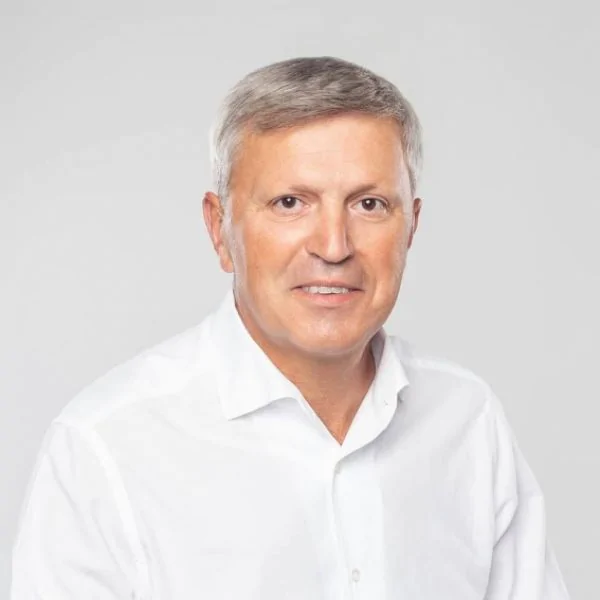
«The dairy industry runs non-stop — you cannot put a cow on pause, and milk cannot be postponed to better times. Our enterprises keep producing and supplying under shelling, often rebuilding logistics from scratch after each strike. But a business’s limit of endurance is not infinite», he said.
«We expect that, under martial law, the government will support Ukraine’s food sector — not with declarations but with concrete tools: protecting producers in their dealings with chains, reserving critical personnel and compensation mechanisms for destroyed products. Food security is as much a component of national security as any other, and it should be treated accordingly», Didur added.
What next
The proposals will be worked through together with the Government. The speed of that work will determine whether the industry manages to adapt its logistics to the new conditions before the next strike rewrites its supply scheme again.