
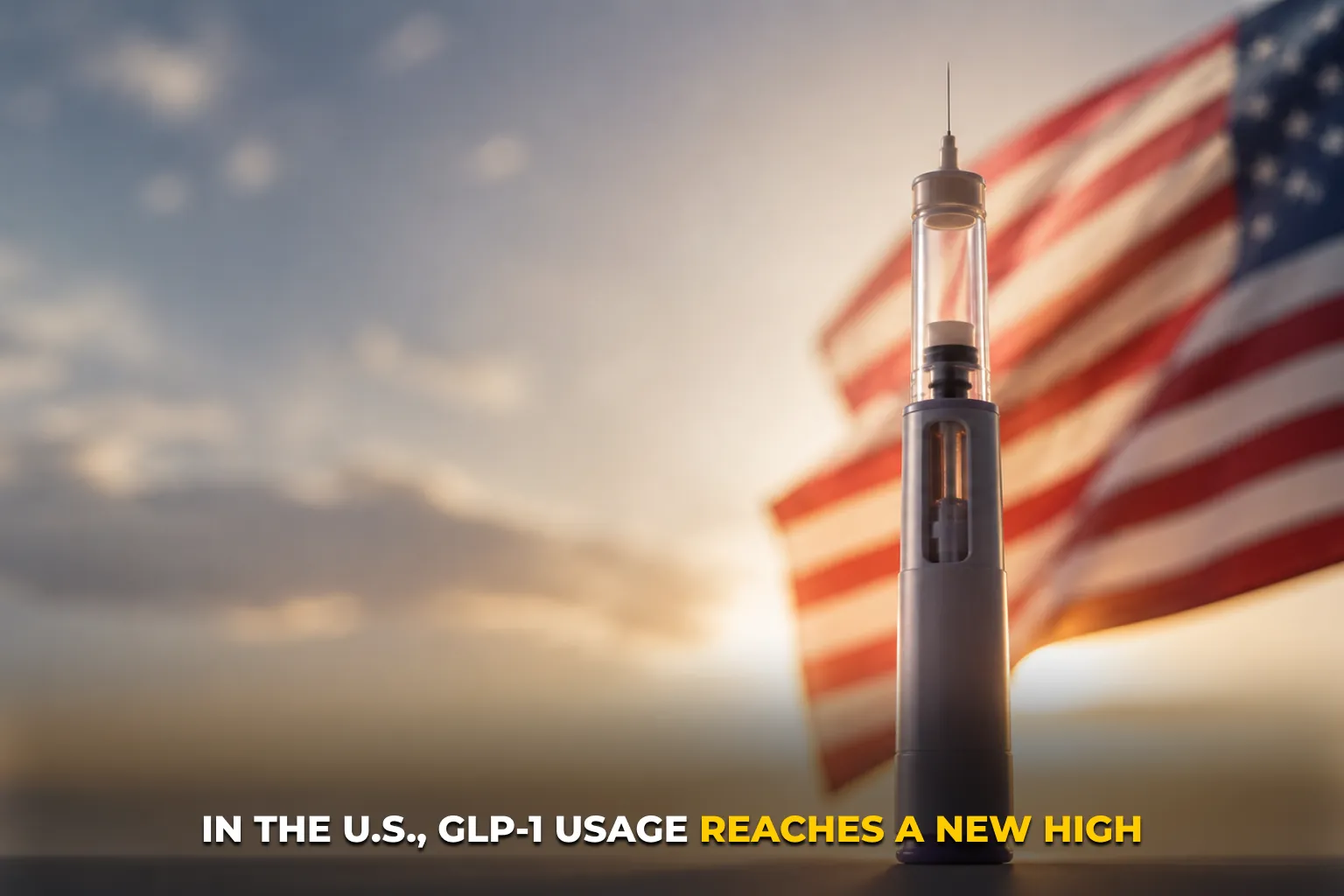
Americans’ use of GLP-1 injectables for weight loss has nearly quadrupled since 2024 — reshaping eating habits and demand toward high-protein foods, including dairy.
The share of U.S. adults currently taking GLP-1 medications for weight loss has risen to 11% in 2026, up sharply from 3% in 2024, and 15% report having used them at some point — up nine points. For dairy, this matters, as GLP-1 use shifts demand toward nutrient-dense, high-protein foods, of which dairy protein is a key source, Gallup reports.
Awareness, obesity and diabetes
Awareness of GLP-1 weight-loss drugs has reached 91% (from 80% in 2024). The analysis is part of the Gallup National Health and Well-Being Index, based on a web survey of 5,065 U.S. adults conducted 28 May–5 June 2026.
The FDA approved Novo Nordisk’s Wegovy (semaglutide) for weight loss in 2021, with Eli Lilly’s Zepbound (tirzepatide) approved in November 2023.
After peaking at a record 39.9% in 2022, the U.S. adult obesity rate has gradually fallen to 36.4% in 2026 — a statistically meaningful decline that inversely tracks rising GLP-1 use — while the diabetes rate has held steady since 2023 after 15 years of slow increases.
Brand-name vs compounded
Brand-name GLP-1s such as Ozempic or Wegovy make up 68% of current use, versus 19% using a compounded or custom-mixed version (12% are unsure).
Brand-name users report slightly lower effectiveness than compounded users, but both consider the drugs effective: 39% of compounded users call them «extremely effective» versus 32% of brand-name users, and roughly three-quarters of each group (77% and 74%) say «effective» or «extremely effective».
Compounded users are far more likely to have switched from a brand name than the reverse (35% vs 10%), with cost or insurance the main reason. The lower cost of compounded versions is likely making GLP-1s available to broader sectors of the population, helping drive overall usage higher.
Source: Gallup