

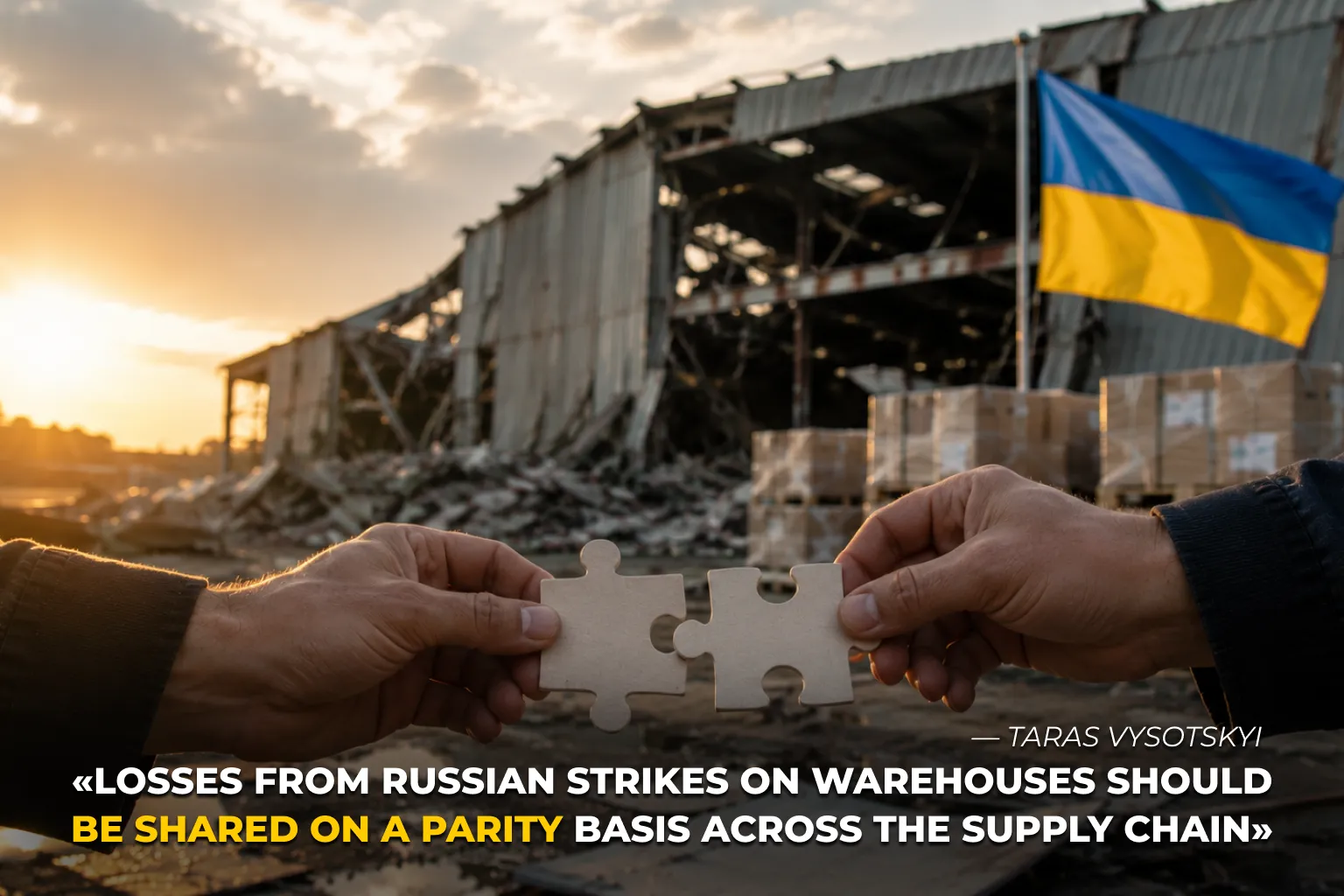
russia is deliberately hitting food logistics — in some cases up to 90% of modern storage capacity has been destroyed. Yet there is no systemic food shortage: the market is adapting. The question of who pays for destroyed goods also concerns the dairy industry.
Ukraine’s Minister of Agrarian Policy and Food, Taras Vysotskyi, has commented on the consequences of russian strikes on warehouses and food logistics and on how losses for destroyed goods should be shared — an issue that directly concerns dairy producers, he wrote in a post on Facebook.
According to the minister, russia is deliberately striking warehouses and food logistics, and a significant share of modern storage capacity has already been destroyed — in some cases up to 90%. But this does not mean Ukrainians will be left without food. Retail and suppliers are rebuilding logistics, relocating stock and changing routes and storage formats — harder, slower and more expensive, but the system is adapting. There is no threat of a systemic physical shortage of basic products today; there may be changes in range or availability of particular goods in specific stores, but the country’s food supply is maintained.
Who should bear the losses
A separate question the minister raised is who should bear the losses for products destroyed by russian attacks. Supply and sale of products, he notes, are commercial and contractual relations between producers, distributors and retail chains.
«In my opinion, a fair approach here is a parity distribution of risks between all parties. It is not necessarily 50/50. Different goods have different margins, different terms of cooperation and different economic results. So the mechanism should be defined separately for each product category and take into account how profit is distributed between the parties», Vysotskyi wrote.
The additional costs of the new logistics — currently being rebuilt in real time — should be shared in the same way, he said.
The state is preparing war-risk insurance
The minister added that the state is working in parallel on systemic mechanisms for war-risk insurance. But until such a system can fully operate, it is important for business to find a fair model of sharing losses and additional costs among all participants in the chain.
Source: Taras Vysotskyi on Facebook