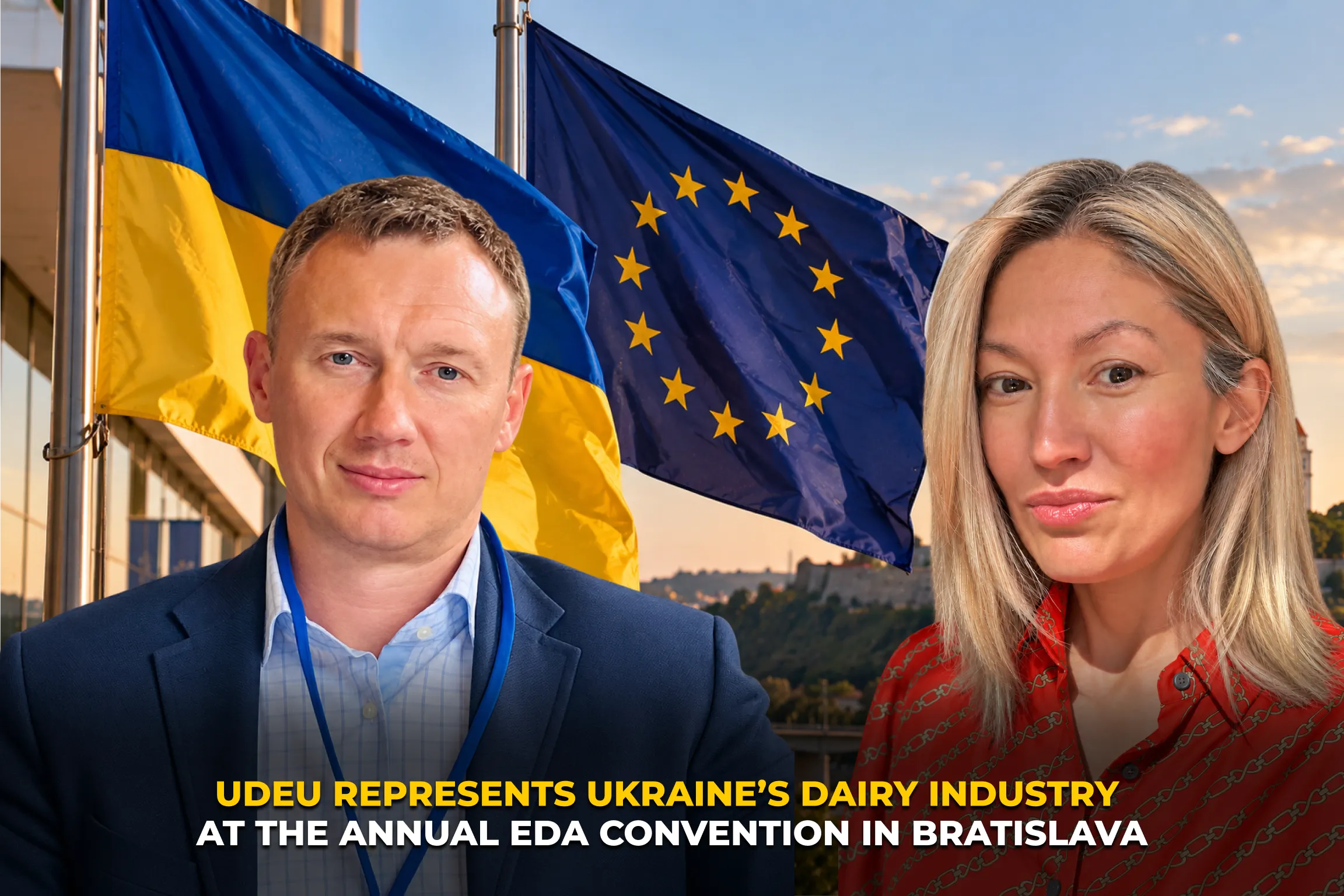
The annual convention of the European Dairy Association (EDA), «European Dairy: Local Roots and Global Competitiveness», is taking place in Bratislava on 14–16 October, with Ukraine’s dairy industry represented by a delegation from the Union of Dairy Enterprises of Ukraine (UDEU).
Ahead of his speech, Andrii Tabalov, CEO of Molochna Kompaniia «Voloshkove Pole» LLC and Chair of UDEU’s European Integration Committee for 2024–2026, answered five questions.
— Mr Tabalov, why is the Ukrainian delegation attending the EDA convention, and what do you want to tell your European colleagues?
— The EDA convention is where national dairy associations, the European Commission and business meet every year. It is important for us to be part of that circle and to speak on behalf of Ukrainian dairy business. On 16 October I will present a report on the current state of our dairy industry, its challenges and prospects. Our main message is that Ukraine’s dairy industry is working, has preserved its production capacity and is ready to be a full part of the European dairy market.
— What conditions are Ukrainian dairy companies working in today?
— Extremely difficult ones. Regular russian shelling damages production and storage facilities. Attacks on energy infrastructure cause power outages. On top of that come disrupted logistics and labour shortages. Despite this, companies keep working, supplying consumers and even introducing technological and product innovations. It is important for our European partners to see that we produce healthy, high-quality and safe products.
— Which barriers in trade with the European Union (EU) concern Ukrainian dairy exporters most?
— First of all, the import licensing system under tariff-rate quotas. In addition, mandatory deposits create an extra financial burden and tie up companies’ working capital. For a business operating in wartime, that is very noticeable. That is why UDEU is seeking EDA support for changing this system. We need solutions that make trade procedures predictable, reduce administrative and financial barriers and create better conditions for Ukrainian exporters.
— Experts from Ukraine and the EU were closely involved in drafting the Roadmap for the European integration of Ukraine’s dairy industry. What comes next?
— The document is ready; the key now is putting it into practice. The roadmap also needs updating in line with the sector’s current needs and the pace at which Ukrainian legislation and practices are converging with EU requirements. For us it is essential to keep the expert support of our European partners and deepen cooperation. That is how we will ensure steady progress towards integrating Ukraine’s dairy sector into the EU single market.
— In your view, what does Europe gain from integrating Ukraine’s dairy industry?
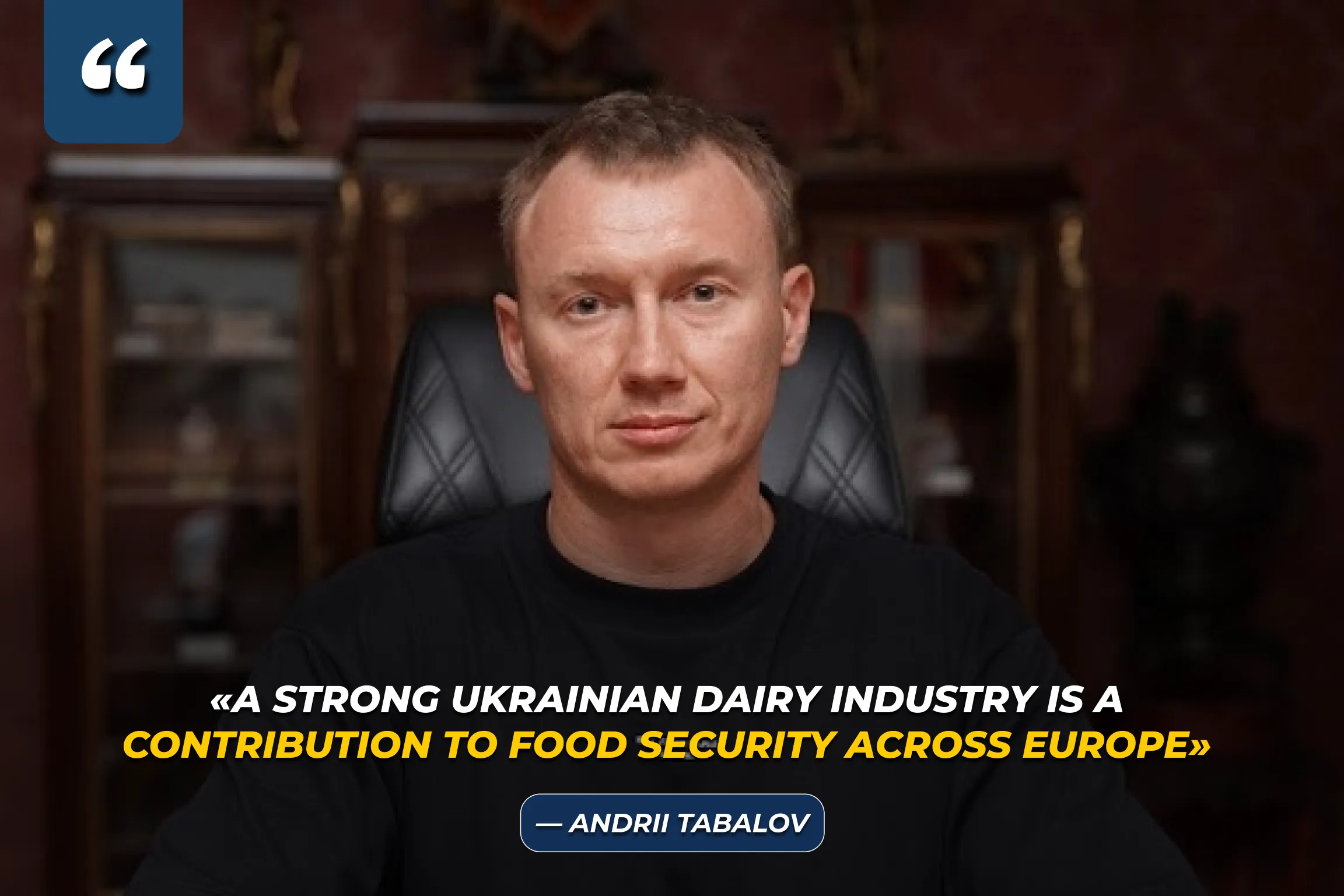
— We are convinced that a strong Ukrainian dairy industry is a contribution to food security across Europe. We are not competing with our European colleagues on a winner-takes-all basis; we share a common goal — a strong European dairy sector. So we will keep expanding cooperation with European partners, protecting the interests of Ukrainian producers and working on the conditions for full integration into the EU market.