
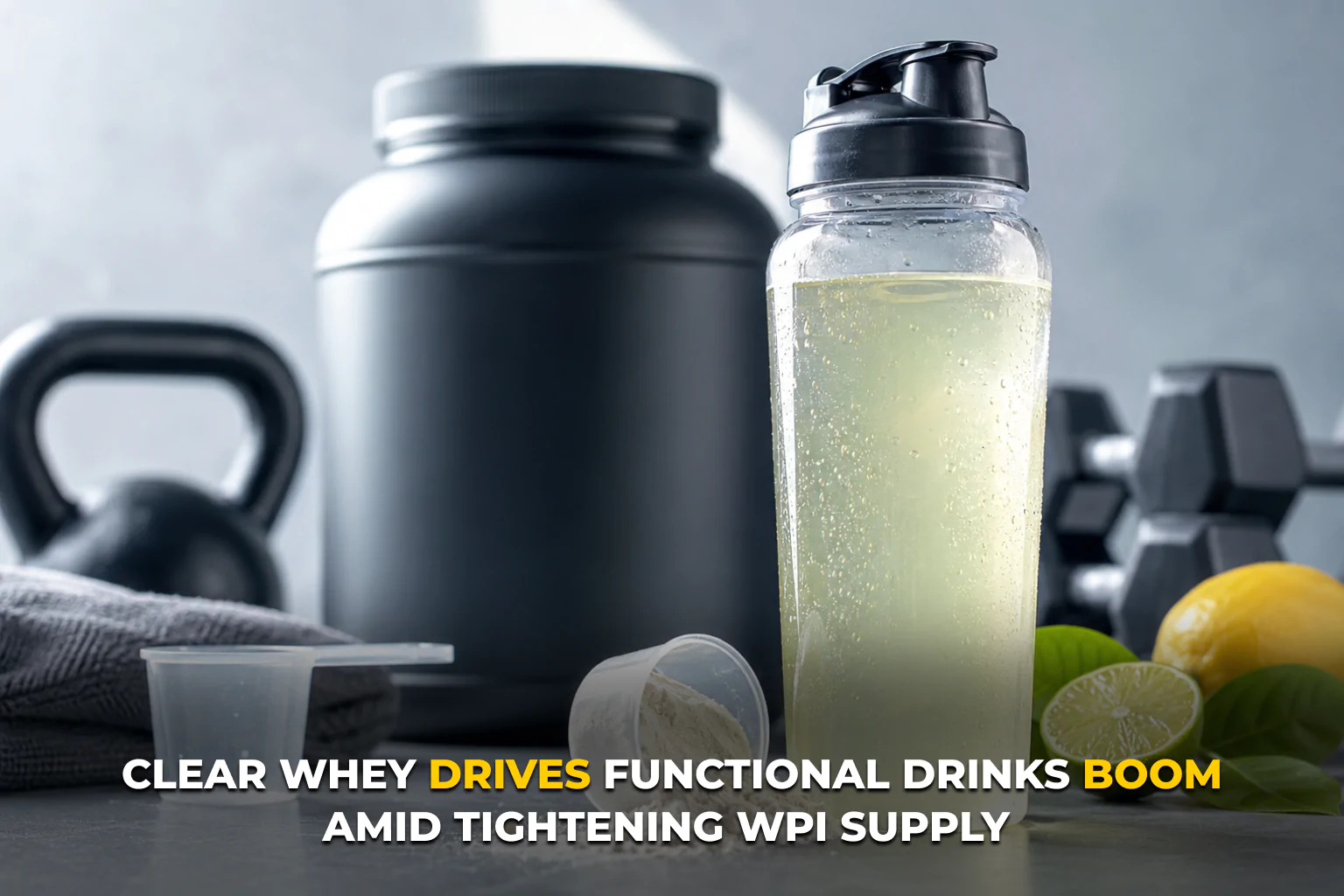
Active consumers want high-protein drinks that are both nutritious and refreshing — and clear whey has become the key ingredient for such formulations. As FoodNavigator reports, demand for whey protein isolate (WPI) is growing fast, but supply remains constrained, and prices are elevated.
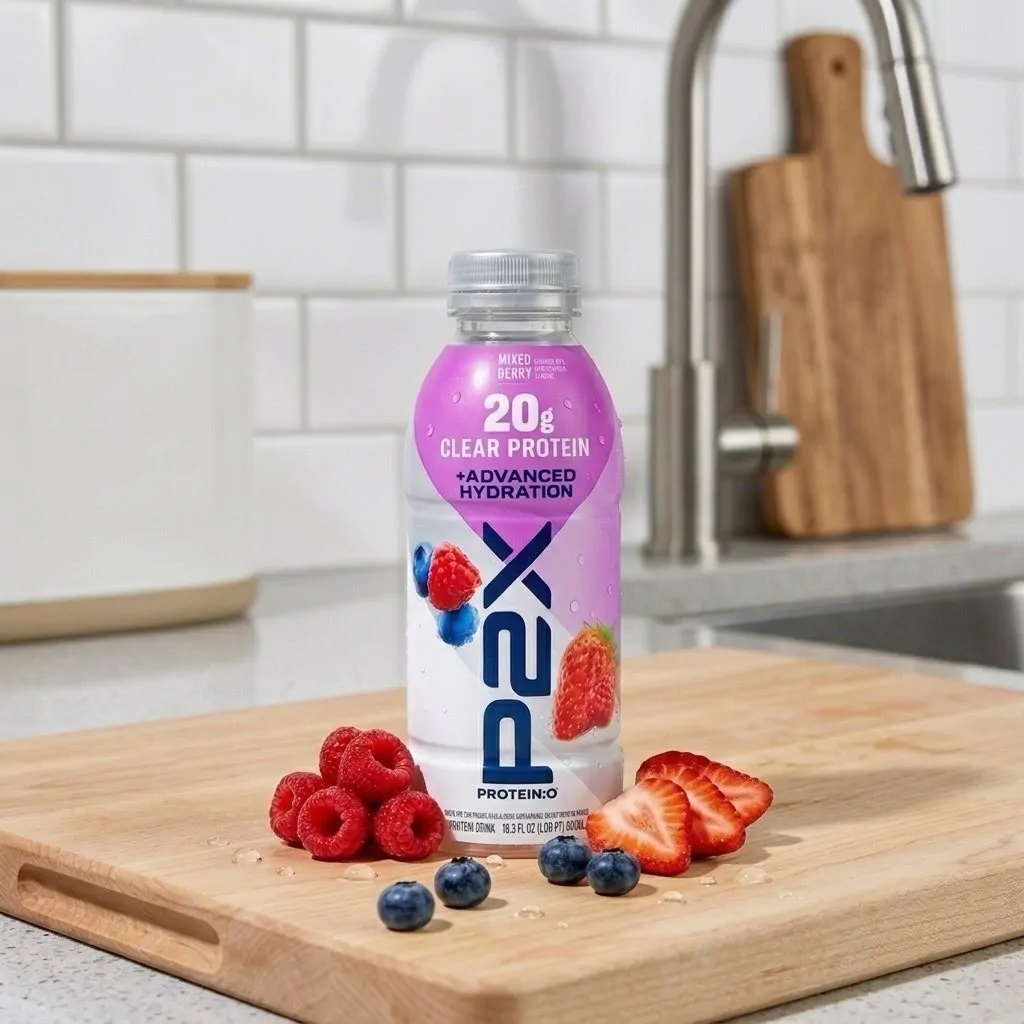
Derived from WPI through additional filtration to remove cloud-forming particles and fats, clear whey combines with water to create juice-like drinks instead of the milky, thick mouthfeel of traditional whey. Just this month, Nestlé Health Science and Glanbia’s Optimum Nutrition both launched clear protein powders. Optimum Nutrition’s Clear Whey delivers 20g of protein per serving, zero fat and sugar, and very low lactose (0.2%). Garden of Life’s Clear Protein Whey and Protein2o’s new P2X Series RTD range round out recent launches.
Dairy-derived whey is the most established complete protein ingredient — WPI features in 48% of supplement and sports nutrition product launches (Innova Market Insights), whey protein concentrate (WPC) in around 45%. Alternatives exist — Vieve Protein Water uses collagen; hydrolysed beef isolate and pea protein isolate are plant-friendly options — but whey retains its dominant position.
Getting hold of WPI, however, is increasingly challenging. “WPI is usually less available than WPC because it needs more processing and produces lower volumes from the same amount of whey,” said Wouter Baan, dairy analyst at DCA Market Intelligence. “Demand is higher than supply for both WPC and WPI. Many manufacturers, therefore, focus more on WPC production. This means less WPI is available in the market, keeping supply relatively tight.”
Prices reflect this: WPI is trading at a significant premium. The DCA benchmark for WPI stood at €31,750/tonne in the most recent week, versus €27,315/tonne for WPC80. “The price gap is mainly driven by more intensive processing, lower production yields, and tighter availability. The price difference between WPI and WPC80 has recently ranged between €500 and €700 per tonne,” Baan said.
Capacity for both WPI and WPC is being expanded, but gradually, taking two to three years before a new facility is fully operational. “Demand is expected to continue growing, creating opportunities for new entrants, although competition from established dairy processors remains strong,” Baan concluded.
Source: FoodNavigator